
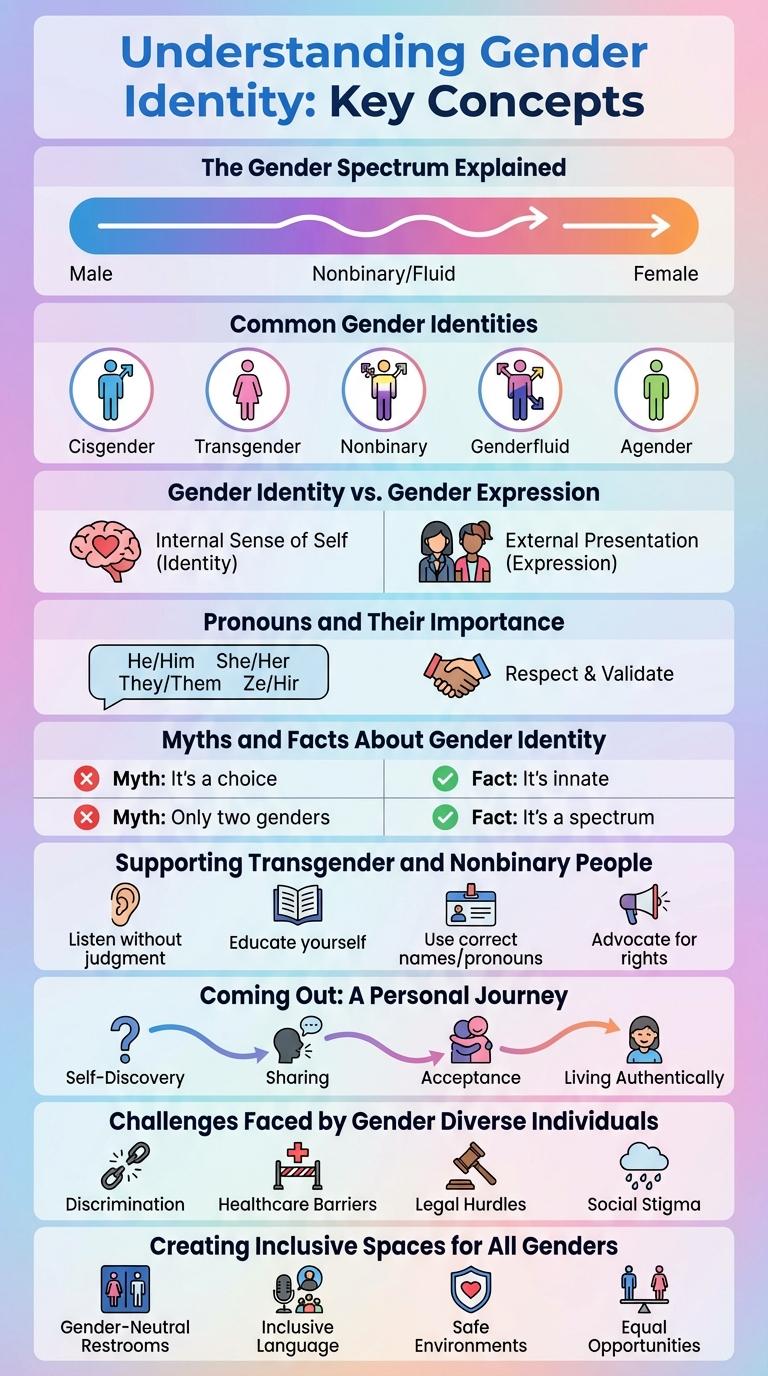
Gender identity refers to a person's deeply felt internal experience of gender, which may or may not correspond with the sex assigned at birth. Understanding the diverse spectrum of gender identities is essential for fostering inclusivity and respect in society. Visual representations like infographics effectively communicate complex information about gender identity, making it more accessible and engaging.
Understanding Gender Identity: Key Concepts
What is gender identity? Gender identity refers to a person's deeply felt internal experience of gender, which may or may not align with the sex assigned at birth. It encompasses a broad spectrum beyond just male or female.
How is gender identity different from biological sex? Biological sex is based on physical attributes such as chromosomes, hormones, and anatomy, while gender identity is an internal sense of self. Gender identity reflects psychological and social aspects rather than solely biological factors.
What are common gender identities? Common identities include male, female, transgender, non-binary, and genderqueer, among others. These identities highlight the diversity of human experiences with gender.
Why is understanding gender identity important? Awareness fosters respect, reduces discrimination, and supports mental health for individuals expressing diverse gender identities. It creates inclusive environments in schools, workplaces, and communities.
How can one respectfully engage with someone's gender identity? Use chosen names and pronouns, avoid assumptions, and listen actively to individuals' experiences. Respect promotes acceptance and validates a person's identity.
The Gender Spectrum Explained
The gender spectrum represents a range of gender identities beyond the traditional categories of male and female. It includes identities such as non-binary, genderqueer, genderfluid, and agender, reflecting the diversity of human experiences. Understanding the gender spectrum promotes inclusivity and respect for individual self-identification.
Common Gender Identities
Gender identity refers to a person's deeply-felt internal experience of gender. It may or may not align with the sex assigned at birth.
- Female - Identifies as a woman, typically aligning with the sex assigned at birth.
- Male - Identifies as a man, often corresponding to the sex assigned at birth.
- Non-binary - Does not exclusively identify as male or female, embracing a spectrum of gender identities.
- Genderqueer - Rejects traditional gender norms and may blend or shift between genders.
- Agender - Experiences no internal sense of gender or identifies as gender-neutral.
Gender Identity vs. Gender Expression
Gender identity refers to a person's deeply felt internal experience of gender. Gender expression is how an individual outwardly shows their gender through behavior, clothing, or appearance.
This infographic highlights the differences between gender identity and gender expression to foster understanding.
- Gender Identity - It is an internal sense of being male, female, a blend of both, neither, or another gender altogether.
- Gender Expression - It involves external presentation including clothes, hairstyle, voice, and mannerisms.
- Independent Concepts - A person's gender expression may not necessarily align with their gender identity.
Pronouns and Their Importance
| Pronouns | Significance |
|---|---|
| She/Her | Indicates a female gender identity or expression, reflecting respect and acknowledgment. |
| He/Him | Represents a male gender identity or expression, reinforcing recognition and inclusivity. |
| They/Them | Used for non-binary, genderqueer, or gender non-conforming individuals; supports visibility and acceptance of diverse identities. |
| Ze/Hir | Gender-neutral pronouns that affirm non-binary identities, promoting respect and understanding. |
| Importance | Using correct pronouns validates individual identity, fosters inclusivity, reduces discrimination, and enhances mental well-being. |
Myths and Facts About Gender Identity
Gender identity is a personal sense of one's own gender, which may or may not align with the sex assigned at birth. Misunderstandings about gender identity often lead to myths that do not reflect the lived experiences of many people.
- Myth: Gender identity is a choice - Gender identity is an intrinsic aspect of a person's identity, not a decision or preference.
- Myth: Only two gender identities exist - Gender identity spans a spectrum that includes non-binary, genderqueer, and other identities beyond male and female.
- Myth: Gender identity can be changed through therapy - Attempts to change gender identity through psychological interventions are ineffective and harmful.
- Fact: Gender identity is separate from sexual orientation - Gender identity refers to who someone is, while sexual orientation describes who someone is attracted to.
- Fact: Affirming gender identity improves well-being - Support and acceptance of one's gender identity significantly enhance mental health and quality of life.
Understanding the facts about gender identity fosters respect, inclusion, and accurate awareness across communities.
Supporting Transgender and Nonbinary People
Supporting transgender and nonbinary people involves recognizing and respecting diverse gender identities beyond the traditional binary framework. Creating inclusive environments helps reduce discrimination and promotes mental health and well-being.
Access to affirming healthcare and legal recognition are critical components of support for transgender and nonbinary individuals. Advocating for inclusive policies and educating communities fosters acceptance and equality across all social spaces.
Coming Out: A Personal Journey
Coming out is a deeply personal journey that involves sharing one's true gender identity with others. It varies greatly from person to person, influenced by emotional readiness and social environment.
The process can include feelings of relief, fear, and empowerment as individuals seek acceptance and understanding. Supportive communities and resources play a crucial role in fostering confidence throughout this path.
Challenges Faced by Gender Diverse Individuals
Gender diverse individuals experience significant challenges including social stigma, discrimination, and limited access to healthcare. Mental health issues such as anxiety and depression are more prevalent due to societal exclusion and lack of acceptance. Employment discrimination and legal barriers further hinder their ability to live openly and safely.