
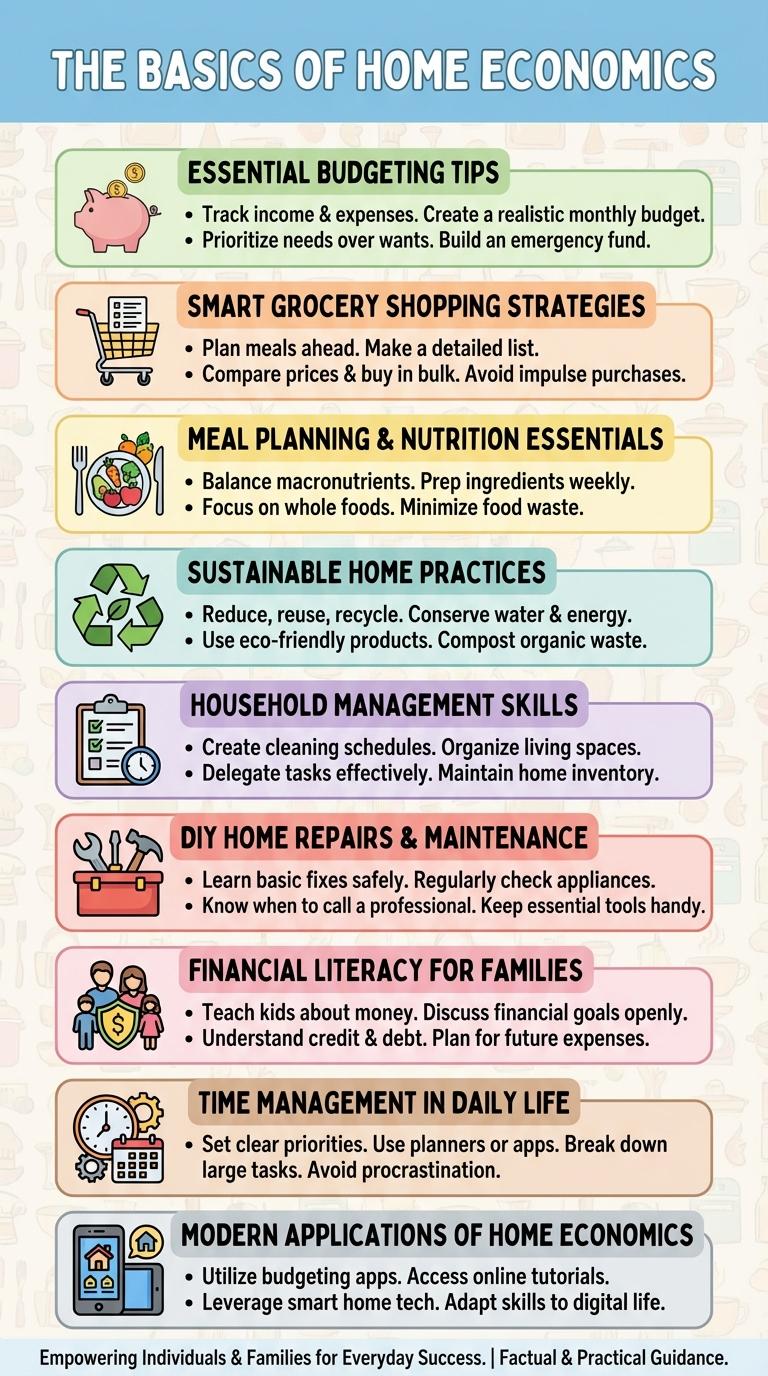
Home economics plays a vital role in developing essential life skills, from budgeting and nutrition to household management and sustainable living. This infographic visually breaks down key concepts, practical tips, and educational benefits that empower individuals to make informed decisions for their families and communities. Understanding home economics enhances both personal well-being and overall financial stability.
The Basics of Home Economics
Home economics is the study of managing household resources efficiently. It encompasses skills and knowledge essential for everyday living and family well-being.
- Financial Management - Teaches budgeting, saving, and spending to maintain household stability.
- Nutrition and Food Preparation - Focuses on creating balanced meals and understanding dietary needs.
- Home Maintenance - Covers cleaning, organizing, and repairing the living environment for comfort and safety.
Mastering these basics enhances quality of life and promotes sustainable living practices.
Essential Budgeting Tips
Essential budgeting tips for home economics include tracking all income and expenses to gain a clear understanding of financial flow. Prioritizing needs over wants ensures that essential bills and savings goals are met consistently. Utilizing digital budgeting tools can simplify the process and help maintain financial discipline effectively.
Smart Grocery Shopping Strategies
Smart grocery shopping reduces waste and saves money by planning meals and making detailed lists. Prioritizing fresh, seasonal produce ensures better nutrition and lower costs.
Comparing prices, using coupons, and buying in bulk for staples can cut expenses significantly. Avoiding impulse buys and shopping with a full stomach prevents unnecessary spending.
Meal Planning & Nutrition Essentials
Effective meal planning enhances nutrition and supports a balanced diet. Understanding core nutrition principles is essential for healthy home economics practices.
- Balanced Meals - Incorporate a variety of food groups to ensure adequate intake of vitamins, minerals, proteins, and carbohydrates.
- Portion Control - Manage serving sizes to maintain energy balance and prevent overeating.
- Meal Timing - Schedule meals and snacks to sustain energy levels and support metabolism effectively.
Sustainable Home Practices
| Sustainable Home Practice | Benefits |
|---|---|
| Energy-efficient Lighting | Reduces electricity bills and lowers carbon footprint through LED bulbs and smart switches. |
| Water Conservation Techniques | Minimizes water usage with low-flow fixtures and rainwater harvesting, promoting resource sustainability. |
| Waste Reduction and Recycling | Decreases landfill waste by composting organic materials and sorting recyclables properly. |
| Eco-Friendly Cleaning Products | Improves indoor air quality and reduces chemical pollution using biodegradable and non-toxic cleaners. |
| Home Insulation and Ventilation | Enhances energy efficiency by maintaining consistent indoor temperatures and reducing heating/cooling needs. |
Household Management Skills
Household management skills are essential for running an efficient and organized home. These skills include budgeting, time management, and resource allocation.
Mastering budgeting helps families control expenses and save money effectively. Time management allows for balancing chores, work, and leisure activities. Proper resource allocation ensures optimal use of household supplies and energy, reducing waste.
DIY Home Repairs & Maintenance
Home economics empowers individuals to manage household tasks effectively, focusing on practical skills for daily living. DIY home repairs and maintenance save money and extend the life of property components by enabling timely interventions.
- Cost Savings - Performing basic repairs and maintenance reduces the need for expensive professional services.
- Skill Development - Learning DIY techniques enhances problem-solving abilities and self-sufficiency.
- Preventive Care - Regular maintenance prevents major damages, conserving the home's long-term value.
Financial Literacy for Families
How can families improve their financial literacy to secure a better future? Understanding budgeting, saving, and smart spending empowers families to manage their resources effectively. Financial literacy promotes responsible decision-making and long-term financial stability.
Time Management in Daily Life
Home economics emphasizes efficient time management to enhance daily life productivity and reduce stress. Allocating specific time slots for tasks like meal preparation, budgeting, and household chores ensures balanced routines. Effective time use fosters better decision-making and improves overall family well-being.