
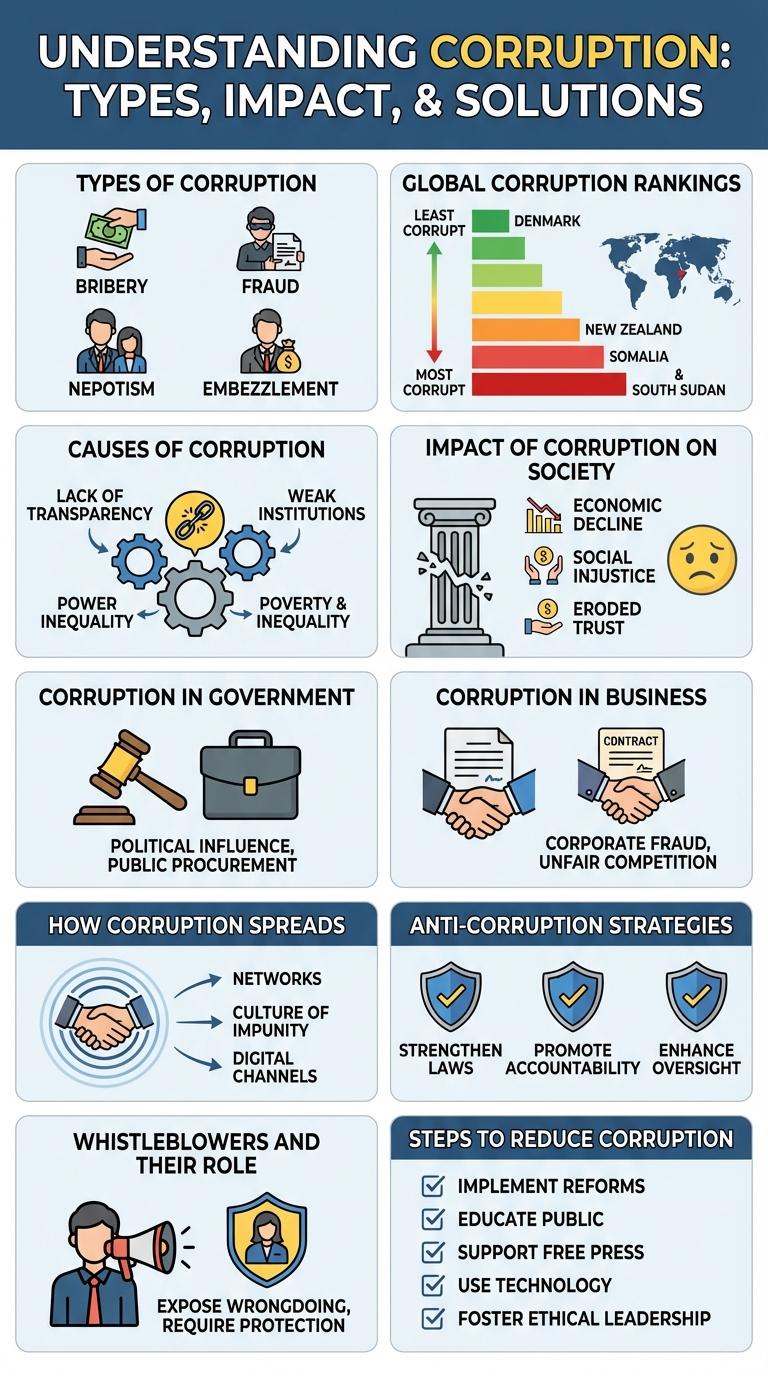
Corruption undermines trust in public institutions and hampers economic development worldwide. This infographic highlights key statistics and examples that reveal the pervasive impact of corrupt practices on societies. By understanding these patterns, stakeholders can better target efforts to promote transparency and accountability.
Types of Corruption
Corruption manifests in various forms, undermining economic development and social trust. Common types include bribery, embezzlement, favoritism, extortion, and nepotism. Understanding these categories helps in creating targeted anti-corruption strategies that promote transparency and accountability.
Global Corruption Rankings
Global corruption rankings provide a clear insight into the levels of corruption perceived in various countries worldwide. These rankings help identify nations with the most significant governance challenges and spotlight areas requiring transparency reforms.
Countries like Denmark and New Zealand consistently rank as the least corrupt, highlighting strong institutional integrity. In contrast, nations with political instability often appear at the bottom of these rankings, emphasizing the need for anti-corruption measures.
Causes of Corruption
| Cause | Description |
|---|---|
| Weak Governance | Inadequate laws and enforcement allow corrupt practices to flourish. |
| Poor Transparency | Lack of openness in government and business operations hides corrupt activities. |
| Low Salaries | Insufficient pay for public officials increases temptation for bribery. |
| Concentration of Power | Excessive authority without checks leads to misuse and favoritism. |
| Cultural Factors | Social norms that tolerate or encourage bribery and nepotism. |
Impact of Corruption on Society
Corruption undermines trust in institutions and hampers economic development. It distorts public services and disproportionately affects vulnerable communities.
- Economic Impact - Corruption leads to inefficient allocation of resources, reducing economic growth and increasing poverty.
- Social Inequality - It widens the gap between rich and poor by granting unfair advantages to the privileged.
- Governance Erosion - Corruption diminishes transparency and accountability, weakening democratic institutions.
Addressing corruption is essential for building fair, prosperous, and stable societies.
Corruption in Government
Corruption in government erodes trust and impedes economic development. It involves the misuse of public power for private gain, affecting citizens and institutions alike.
Common forms include bribery, embezzlement, and nepotism. Transparency International reports that over 60% of countries experience significant government corruption. Efforts to combat it involve strong legal frameworks, independent anti-corruption bodies, and active civil society engagement.
Corruption in Business
Corruption in business undermines fair competition and distorts economic growth by enabling unethical practices such as bribery and fraud. Companies engaging in corrupt activities often face legal penalties, reputational damage, and loss of investor trust. Transparent corporate governance and strict regulatory enforcement are critical to minimizing corruption and promoting sustainable business environments.
How Corruption Spreads
Corruption spreads through complex social, economic, and political mechanisms that undermine trust and transparency. Understanding how corruption proliferates is crucial for implementing effective prevention strategies.
- Weak Institutional Frameworks - Lack of accountability and inadequate legal enforcement enable corrupt practices to flourish unchecked.
- Economic Inequality - Disparities in wealth create environments where bribery and favoritism become tools for gaining advantage.
- Cultural Normalization - Societal acceptance of corrupt behaviors perpetuates cycles of unethical conduct and diminishes public resistance.
Anti-Corruption Strategies
Corruption weakens institutions, undermines development, and distorts markets. Implementing effective anti-corruption strategies fosters transparency and accountability in governance.
- Legal Frameworks - Establishing strong laws and regulations deters corrupt practices and ensures punishments for violations.
- Transparency Initiatives - Promoting open access to government data reduces opportunities for corrupt behavior and builds public trust.
- Public Engagement - Encouraging citizen participation in monitoring activities enhances oversight and accountability of public officials.
Whistleblowers and Their Role
Whistleblowers play a crucial role in exposing corruption by providing insider information that uncovers unethical practices. Their actions often lead to investigations, legal reforms, and increased transparency.
Protecting whistleblowers is essential to encourage more individuals to come forward without fear of retaliation. Effective whistleblower policies enhance accountability and help reduce corruption in public and private sectors.