
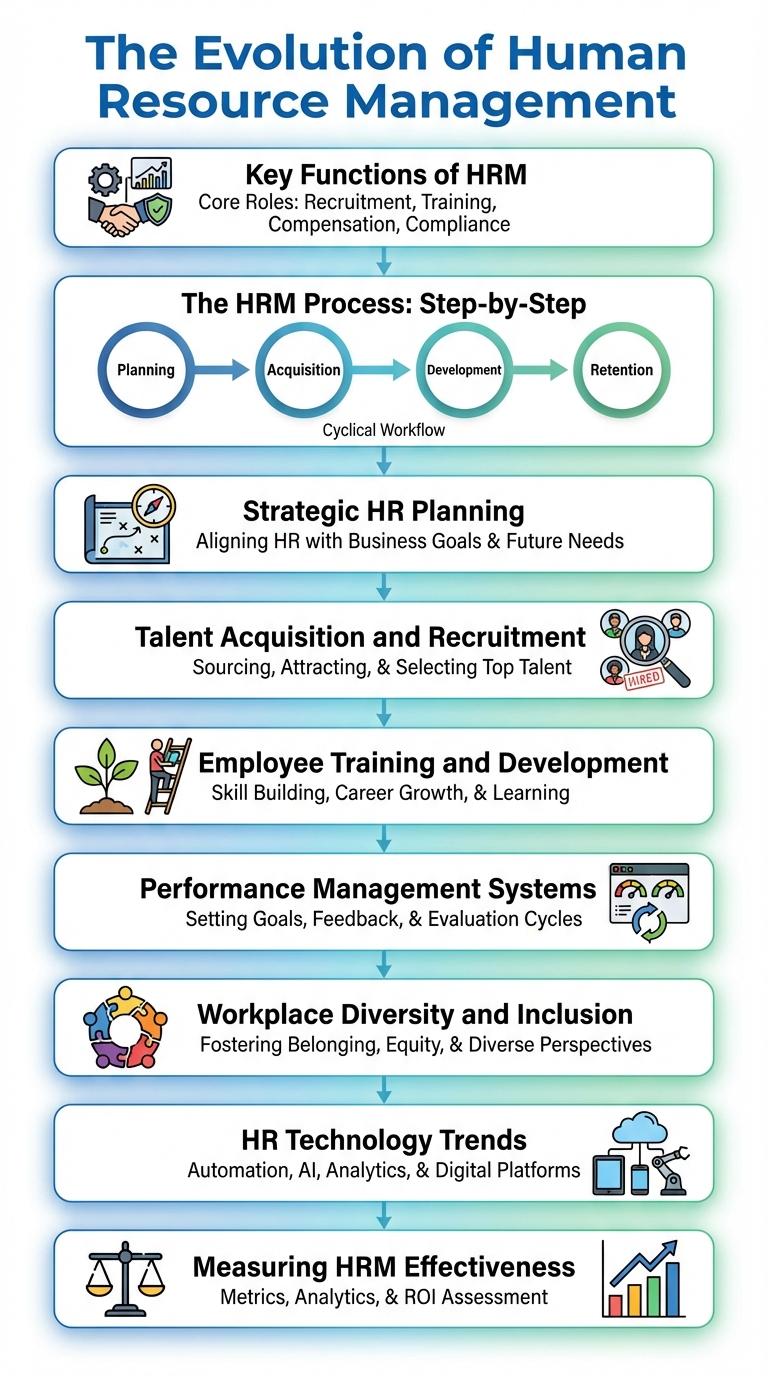
Human resource management (HRM) is essential for optimizing workforce productivity and fostering employee engagement. Infographics effectively simplify complex HRM concepts, making data more accessible and visually appealing. Understanding these visuals helps organizations streamline recruitment, training, and performance management processes.
The Evolution of Human Resource Management
What is the evolution of Human Resource Management (HRM)? HRM has transformed from administrative personnel management to a strategic organizational function. This evolution highlights the increasing importance of managing workforce talent to achieve business goals.
| Era | HRM Characteristics |
|---|---|
| Pre-1900s | Focus on labor relations and basic employee welfare. |
| 1900s - 1950s | Introduction of personnel management and labor laws. |
| 1960s - 1980s | Emphasis on employee relations and organizational development. |
| 1990s - 2000s | Integration of strategic HRM with business objectives. |
| 2010s - Present | Use of technology, data analytics, and employee engagement. |
Key Functions of HRM
Human Resource Management (HRM) plays a crucial role in managing an organization's workforce effectively. It encompasses various functions aimed at optimizing employee performance and organizational growth.
- Recruitment and Selection - Identifying and hiring the right talent to meet organizational needs.
- Training and Development - Enhancing employee skills and knowledge through continuous learning programs.
- Performance Management - Monitoring and evaluating employee performance to improve productivity.
- Compensation and Benefits - Designing competitive salary packages and benefits to motivate employees.
- Employee Relations - Maintaining positive workplace relationships and addressing employee grievances.
These core functions ensure a motivated workforce aligned with the company's strategic goals.
The HRM Process: Step-by-Step
Human Resource Management (HRM) involves a strategic approach to managing people within an organization. It ensures the effective use of human capital to achieve company goals.
The HRM process consists of several key steps designed to attract, develop, and retain talent. Each phase plays a critical role in optimizing workforce performance and organizational success.
| Step | Description |
|---|---|
| 1. Recruitment | Identifying job vacancies and attracting qualified candidates through targeted sourcing strategies. |
| 2. Selection | Evaluating candidates using interviews, tests, and background checks to choose the best fit. |
| 3. Training & Development | Providing employees with the necessary skills and knowledge to enhance job performance. |
| 4. Performance Management | Monitoring employee outcomes and offering feedback for continuous improvement. |
| 5. Compensation & Benefits | Designing competitive salary packages and benefits to motivate and retain employees. |
Strategic HR Planning
| Aspect | Details |
|---|---|
| Definition | Strategic HR Planning aligns human resource management with organizational goals to ensure workforce readiness and competitive advantage. |
| Key Components | Workforce analysis, talent forecasting, skill gap assessment, succession planning, and resource allocation. |
| Objectives | Optimize talent acquisition, enhance employee development, reduce turnover, and support business growth. |
| Benefits | Improved productivity, cost-efficiency, better employee engagement, and alignment with market demands. |
| Tools & Techniques | HR analytics, competency mapping, scenario planning, and performance management systems. |
Talent Acquisition and Recruitment
Talent acquisition and recruitment are critical components of Human Resource Management (HRM) focused on attracting, selecting, and hiring the best candidates. Effective strategies ensure organizations build a skilled workforce aligned with business goals.
- Talent Sourcing - Identifying and engaging potential candidates through multiple channels like job boards, social media, and networking events.
- Candidate Screening - Utilizing assessment tools and interviews to evaluate skills, experience, and cultural fit.
- Onboarding Process - Structured programs that integrate new hires into the company culture and workflows efficiently.
Employee Training and Development
Employee Training and Development is a critical component of Human Resource Management (HRM). It focuses on enhancing employees' skills and knowledge to improve overall organizational performance.
Effective training programs increase employee engagement and productivity by providing relevant learning opportunities. Development initiatives prepare employees for future roles, promoting career growth and retention. Investing in these areas helps organizations adapt to changing market demands and maintain a competitive edge.
Performance Management Systems
Performance Management Systems (PMS) are essential tools in Human Resource Management (HRM) that help organizations evaluate and enhance employee performance. PMS integrates goal setting, continuous feedback, and performance appraisals to align individual contributions with business objectives. Effective implementation of PMS drives employee development, productivity, and organizational success.
Workplace Diversity and Inclusion
Workplace Diversity and Inclusion (D&I) enhances organizational performance by fostering varied perspectives and innovative solutions. Effective Human Resource Management (HRM) strategies promote a culture of respect, equity, and belonging across all employee demographics. Implementing targeted training, unbiased recruitment, and inclusive policies drives employee engagement and reduces turnover rates.
HR Technology Trends
Human Resource Management (HRM) is evolving rapidly with the integration of advanced technologies. HR technology trends are transforming how organizations manage recruitment, employee engagement, and performance.
Key HR technology trends include AI-driven recruitment tools that enhance candidate matching and diversity. Cloud-based HR platforms enable real-time data analytics and seamless remote workforce management.