
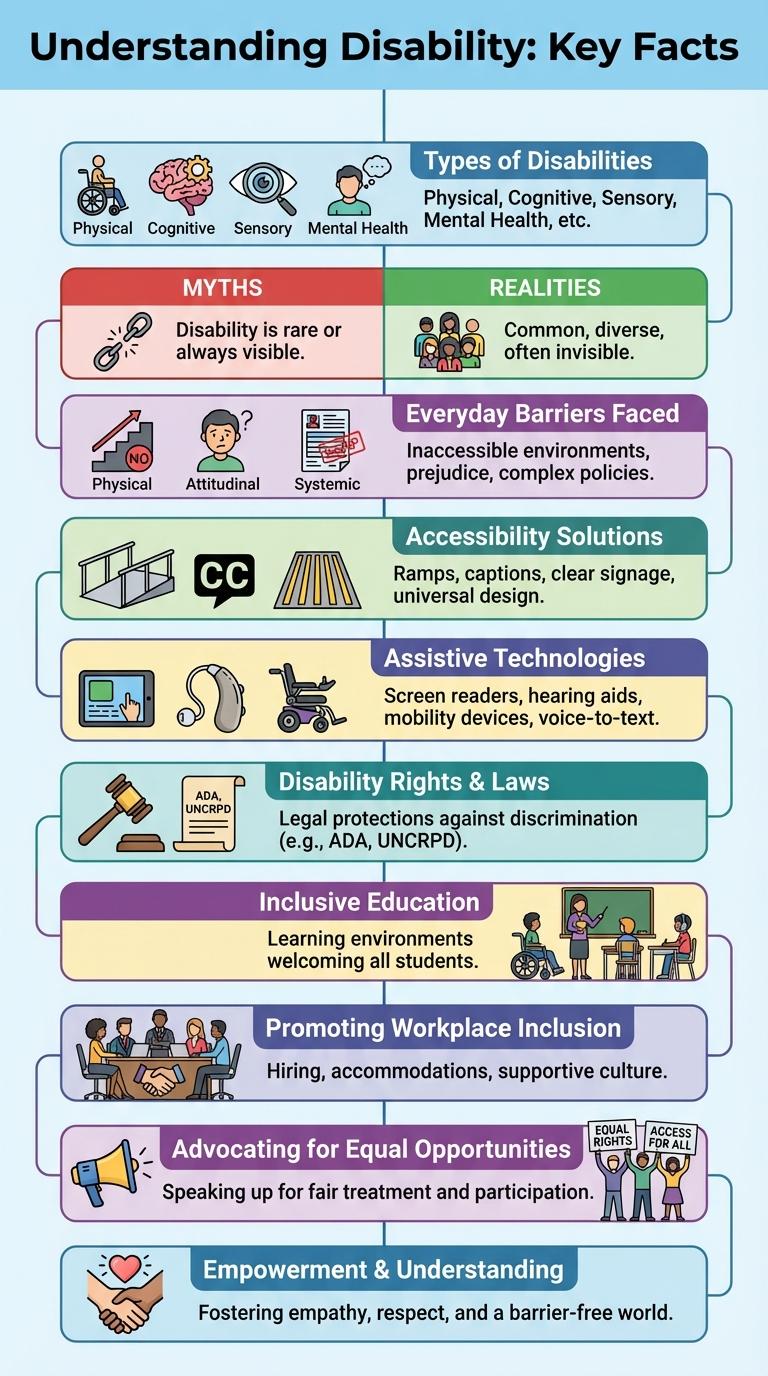
Infographics about persons with disabilities visually represent key information, statistics, and resources to raise awareness and promote inclusion. They highlight challenges faced, accessibility solutions, and ways to support equal opportunities. Clear, concise graphics make complex data easily understandable for diverse audiences.
Understanding Disability: Key Facts
Disability affects over 1 billion people worldwide, encompassing a wide range of physical, sensory, intellectual, and mental health conditions. Understanding the diverse nature of disability is essential to foster inclusion and accessibility in society.
Approximately 15% of the global population experiences some form of disability, with many facing significant barriers in education, employment, and social participation. Awareness and support can improve quality of life and empower individuals with disabilities.
Types of Disabilities
People with disabilities experience a wide range of challenges that affect their daily lives. Understanding the different types helps in providing appropriate support and accommodations.
- Physical Disabilities - Conditions that limit a person's motor skills or physical capacity, such as paralysis or amputations.
- Sensory Disabilities - Impairments affecting the senses like vision or hearing, including blindness and deafness.
- Cognitive Disabilities - Disorders that impact thinking, learning, and memory, such as intellectual disabilities or autism spectrum disorders.
Myths vs. Realities
| Myths | Realities |
|---|---|
| People with disabilities cannot work. | Many individuals with disabilities have successful careers across diverse industries. |
| Disability means inability to communicate effectively. | Various communication methods and technologies empower people with disabilities to express themselves clearly. |
| Persons with disabilities always require assistance. | Many people with disabilities live independently and manage their daily activities without help. |
| Disabilities are always visible. | Invisible disabilities such as chronic pain or mental health conditions affect millions globally. |
| People with disabilities are dependent and less productive. | With proper support and accessibility, people with disabilities contribute equally to society and the economy. |
Everyday Barriers Faced
People with disabilities encounter numerous challenges that impact their daily lives. These barriers affect mobility, communication, and access to essential services.
- Physical Barriers - Inaccessible buildings and transportation limit movement and independence for many individuals.
- Communication Barriers - Lack of alternative communication methods hinders effective interaction in social and professional settings.
- Attitudinal Barriers - Negative stereotypes and misconceptions create social exclusion and reduce opportunities for participation.
Addressing these everyday barriers is crucial for fostering inclusivity and equal opportunities for persons with disabilities.
Accessibility Solutions
What are the key accessibility solutions for persons with disabilities? Accessibility solutions include ramps, tactile paving, and assistive technologies that improve mobility and communication. These adaptations ensure inclusive environments in public spaces, workplaces, and digital platforms.
Assistive Technologies
Assistive technologies play a crucial role in enhancing the independence and daily functioning of persons with disabilities. These innovations include devices, software, and equipment designed to support various physical, sensory, and cognitive challenges.
Common assistive technologies include screen readers, hearing aids, mobility scooters, and speech recognition software. These tools improve access to education, employment, and social activities, fostering greater inclusion. Continued advancements in assistive technology drive better quality of life and equal opportunities for individuals with disabilities.
Disability Rights & Laws
Disability rights and laws are designed to protect individuals with disabilities from discrimination and ensure equal access to opportunities. Key legislation includes the Americans with Disabilities Act (ADA), which prohibits discrimination in employment, public accommodations, and transportation. These laws empower people with disabilities to participate fully in society by providing necessary accommodations and enforcing accessibility standards.
Inclusive Education
Inclusive education ensures that students with disabilities receive equitable learning opportunities alongside their peers. This approach promotes diversity, reduces stigma, and fosters a supportive environment for all learners.
Educational institutions integrating inclusive practices benefit from improved social skills, academic performance, and self-esteem among students with disabilities.
- Equal Access - Ensures students with disabilities participate fully in classrooms with appropriate accommodations.
- Support Services - Provides tailored resources such as assistive technology and specialized instruction to meet diverse learning needs.
- Teacher Training - Equips educators with strategies to effectively include and support students with disabilities.
Promoting Workplace Inclusion
Promoting workplace inclusion for persons with disabilities enhances diversity and drives innovation. Accessible work environments and inclusive policies improve job satisfaction and productivity. Employers benefit from a wider talent pool and demonstrate social responsibility.