
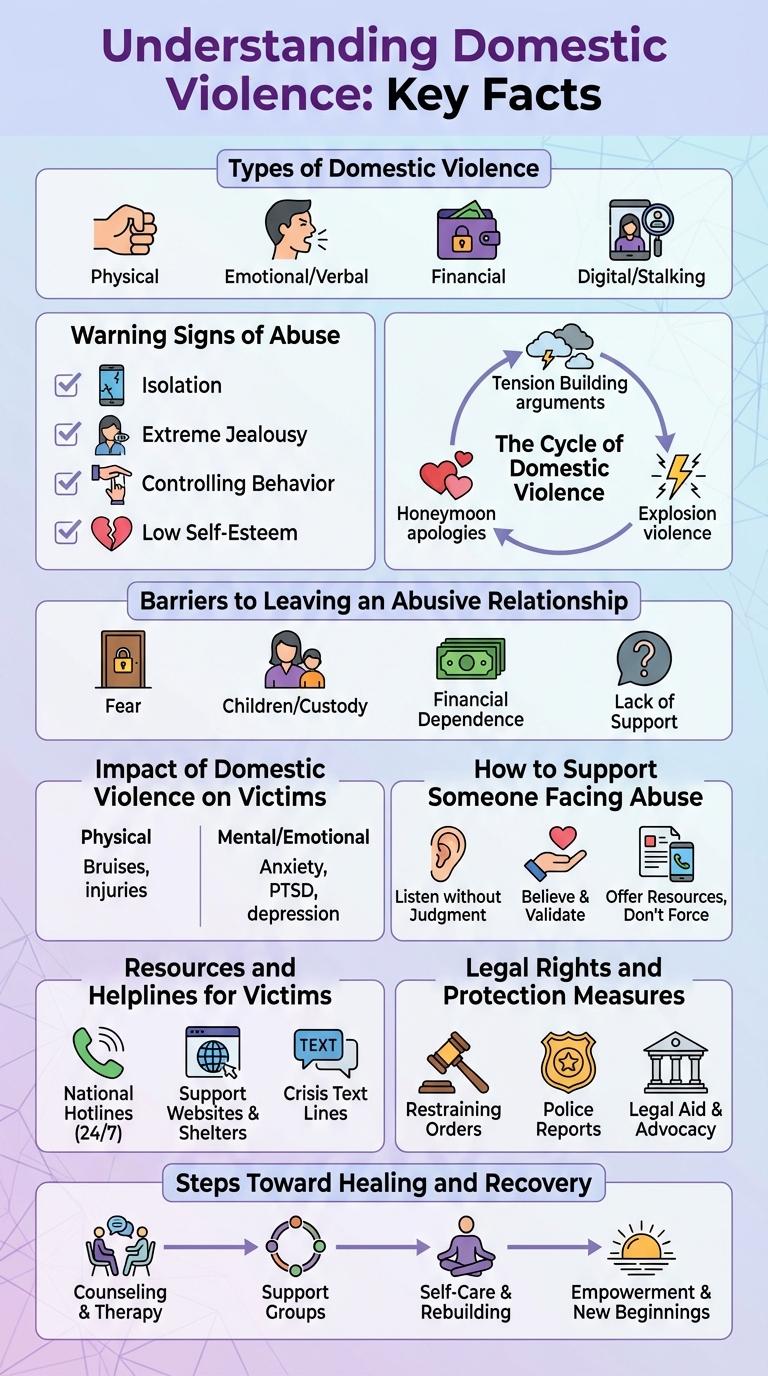
Domestic violence affects millions worldwide, impacting individuals and families across all demographics. This infographic presents critical statistics and key facts to raise awareness and promote understanding of the scope and severity of domestic abuse. Visualizing this data helps emphasize the urgent need for support, prevention, and intervention programs.
Understanding Domestic Violence: Key Facts
Domestic violence affects one in four women and one in nine men in their lifetime, encompassing physical, emotional, and psychological abuse. It occurs across all demographics, regardless of age, ethnicity, or socioeconomic status. Recognizing the signs of control, isolation, and intimidation is crucial for early intervention and support.
Types of Domestic Violence
Domestic violence encompasses various abusive behaviors intended to control or harm a partner or family member. Recognizing different types helps in identifying and addressing abuse effectively.
- Physical Violence - Involves acts of hitting, slapping, choking, or any physical harm.
- Emotional Abuse - Includes verbal insults, threats, and manipulation to undermine confidence.
- Sexual Violence - Encompasses forced sexual acts or coercion without consent.
- Financial Abuse - Restricts access to money or economic resources to control the victim.
- Psychological Abuse - Uses intimidation, isolation, or mind games to instill fear and dependency.
Understanding these types allows better support for victims and promotes awareness in communities.
Warning Signs of Abuse
Domestic violence can manifest through various warning signs that indicate an abusive relationship. Recognizing these signs early is crucial for prevention and support.
- Controlling Behavior - Attempting to limit a partner's freedom and isolate them from friends or family is a common warning sign of abuse.
- Physical Harm - Unexplained bruises, cuts, or injuries may signal physical violence in the relationship.
- Emotional Manipulation - Frequent criticism, humiliation, or threats are tactics abusers use to undermine a partner's confidence and independence.
The Cycle of Domestic Violence
The Cycle of Domestic Violence consists of three phases: Tension Building, Incident, and Honeymoon. During the Tension Building phase, stress and anger gradually increase, leading to heightened conflict. The Incident phase involves abusive behavior, followed by the Honeymoon phase where the abuser may apologize and show remorse, temporarily reducing tension before the cycle repeats.
Barriers to Leaving an Abusive Relationship
Domestic violence victims often face significant obstacles when attempting to leave abusive relationships. Understanding these barriers is crucial for providing effective support and intervention.
- Fear of Retaliation - Many victims fear increased violence or threats if they attempt to leave their abuser.
- Financial Dependence - Lack of independent income or resources can trap individuals in abusive environments.
- Lack of Support - Isolation from family and friends reduces access to emotional and practical help.
- Emotional Attachment - Complex feelings and hope for change can delay decisions to leave.
- Legal and Custody Concerns - Worries about child custody and navigating legal systems discourage leaving.
Impact of Domestic Violence on Victims
How does domestic violence affect the mental health of victims?
Domestic violence often leads to long-term psychological trauma, including anxiety, depression, and post-traumatic stress disorder (PTSD). Victims may experience feelings of helplessness and low self-esteem, which impact their daily functioning.
What are the physical health consequences faced by victims of domestic violence?
Physical injuries such as bruises, fractures, and chronic pain are common among survivors of domestic violence. Repeated abuse can also cause lasting health problems like gastrointestinal disorders and cardiovascular issues.
In what ways does domestic violence influence a victim's social relationships?
Victims frequently withdraw from family and friends due to shame, fear, or isolation imposed by the abuser. This social isolation can reduce their support network, increasing feelings of loneliness and vulnerability.
How does domestic violence impact a victim's economic stability?
Abuse can limit a victim's ability to maintain employment or pursue education, leading to financial dependence on the abuser. Economic instability makes it more difficult to escape abusive situations and rebuild an independent life.
What long-term effects does domestic violence have on a victim's overall quality of life?
Survivors often face ongoing emotional and physical health challenges that affect their ability to thrive personally and professionally. The trauma from domestic violence can hinder their recovery and future well-being without proper support.
How to Support Someone Facing Abuse
Supporting someone facing domestic violence requires empathy and a non-judgmental attitude. Listening carefully and believing their experience can provide essential emotional relief.
Encourage them to create a safety plan tailored to their situation. Connect them with local resources such as shelters, hotlines, and legal aid for professional help and protection.
Resources and Helplines for Victims
Domestic violence affects millions worldwide, creating urgent needs for support and safety. Access to reliable resources and confidential helplines empowers victims to seek help and regain control of their lives.
National helplines provide 24/7 assistance, counseling, and emergency intervention. Local shelters and advocacy groups offer safe housing, legal aid, and emotional support tailored to individual needs.
Legal Rights and Protection Measures
| Legal Right | Protection Measure |
|---|---|
| Restraining Orders | Court-issued injunctions to prevent abusers from contacting or approaching victims |
| Criminal Charges | Prosecution of offenders under laws criminalizing domestic violence, assault, and harassment |
| Emergency Shelter Access | Legal guarantees for victims to obtain temporary safe housing and support services |
| Child Custody Protections | Court considerations prioritizing child's safety in custody decisions involving abusive parents |
| Confidentiality Rights | Legal provisions ensuring victim information is protected from public disclosure |