
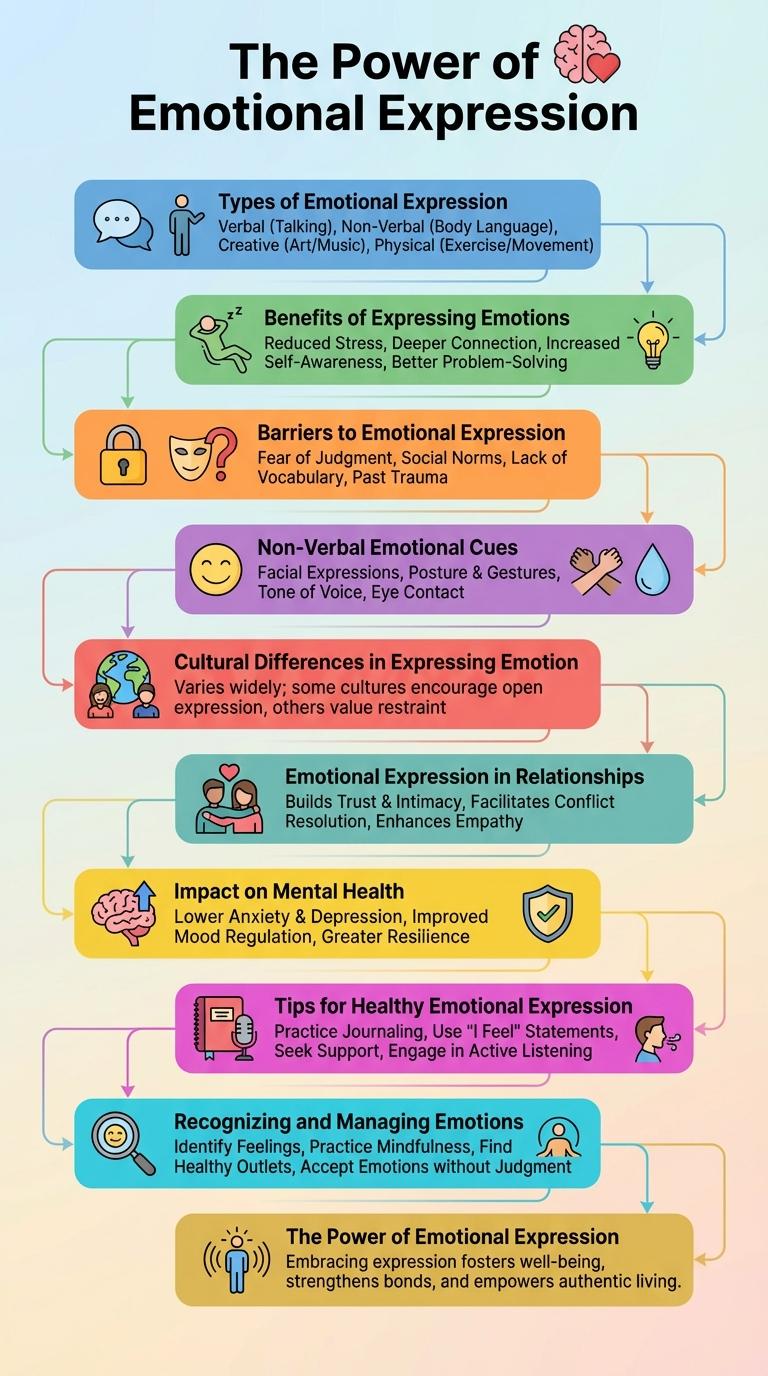
Emotional expression reveals the rich spectrum of human feelings through facial cues, body language, and tone of voice. Understanding these signals enhances communication and fosters deeper connections in personal and professional interactions. Infographics visually capture this complex information, making the nuances of emotional expression easier to comprehend and apply.
The Power of Emotional Expression
Emotional expression is a fundamental aspect of human communication that allows individuals to convey feelings and connect with others. It plays a vital role in mental health and interpersonal relationships.
Expressing emotions openly can reduce stress and enhance emotional well-being. It fosters empathy and strengthens social bonds by promoting understanding between people. Recognizing and validating emotions is essential for personal growth and resilience.
Types of Emotional Expression
What are the main types of emotional expression? Emotional expression can be categorized into verbal and non-verbal types. Verbal expression involves spoken or written words, while non-verbal expression includes facial expressions, body language, and tone of voice.
How do different types of emotional expression affect communication? Verbal emotional expression conveys feelings directly through language. Non-verbal cues often provide deeper insight into true emotions and enhance understanding in social interactions.
Benefits of Expressing Emotions
Expressing emotions openly supports mental well-being by helping individuals process their feelings effectively. Sharing emotions can strengthen relationships through improved understanding and empathy.
- Improves Mental Health - Expressing emotions reduces stress and lowers the risk of depression.
- Enhances Communication - Open emotional expression fosters clearer and more honest interactions.
- Builds Stronger Relationships - Sharing feelings encourages trust and deeper connections.
Barriers to Emotional Expression
Barriers to emotional expression can stem from societal norms that discourage open sharing of feelings. People often fear judgment or misunderstanding when revealing their true emotions.
Internal factors like past trauma or low self-esteem also hinder emotional openness. These obstacles prevent individuals from forming deep, authentic connections with others.
Non-Verbal Emotional Cues
Non-verbal emotional cues play a crucial role in communicating feelings without words. Facial expressions, body language, and gestures convey emotions instantly and often more genuinely than spoken language.
Eye contact reveals attention and sincerity, while posture can indicate confidence or defensiveness. Understanding these signals enhances interpersonal connection and emotional intelligence.
Cultural Differences in Expressing Emotion
Emotional expression varies significantly across cultures, influenced by social norms and values. In collectivist societies like Japan and China, emotions are often expressed subtly to maintain group harmony. Contrastingly, individualistic cultures such as the United States and Italy encourage more overt and direct emotional displays.
Emotional Expression in Relationships
Emotional expression plays a vital role in building trust and intimacy in relationships. Understanding and sharing emotions enhances communication and emotional connection.
Healthy emotional expression helps partners navigate conflicts and promotes mutual support.
- Improves communication - Open emotional expression allows partners to share thoughts and feelings clearly, reducing misunderstandings.
- Builds emotional intimacy - Sharing emotions strengthens the bond and fosters empathy between partners.
- Enhances conflict resolution - Expressing feelings constructively aids in resolving disagreements and preventing resentment.
Impact on Mental Health
Emotional expression plays a vital role in maintaining mental health by allowing individuals to process and release feelings effectively. Suppressing emotions can lead to increased stress, anxiety, and depression. Open emotional communication fosters resilience and improves overall psychological well-being.
Tips for Healthy Emotional Expression
Expressing emotions in a healthy way improves mental well-being and strengthens relationships. Understanding and managing emotions fosters personal growth and resilience.
- Identify Your Feelings - Recognize and name emotions to better understand your internal state.
- Practice Mindful Communication - Share your emotions honestly and respectfully with others to build trust.
- Use Creative Outlets - Engage in activities like writing or art to release emotions constructively.
- Set Boundaries - Protect your emotional space by establishing clear personal limits.
- Seek Support When Needed - Reach out to friends, family, or professionals for help processing emotions.
Healthy emotional expression promotes balance and empowers positive interactions in daily life.