
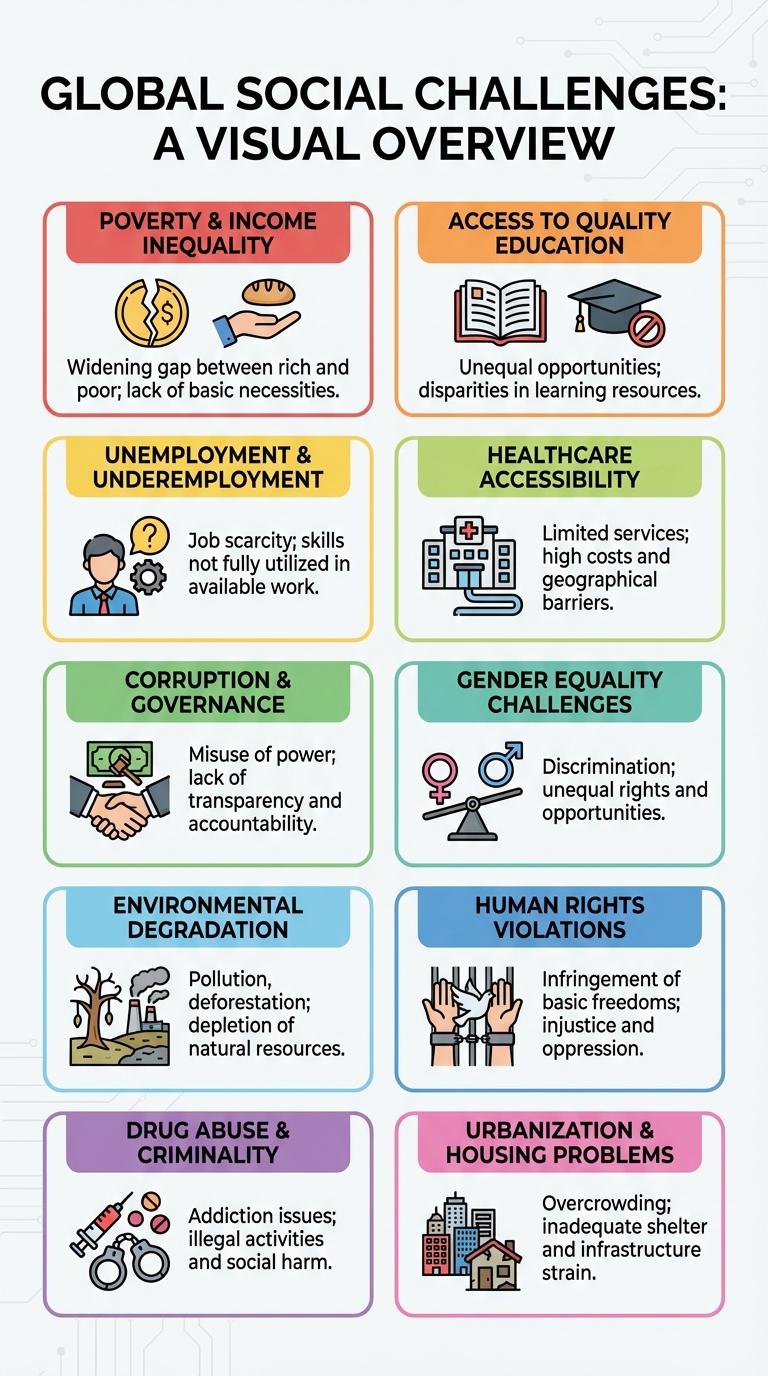
The infographic highlights key social issues affecting the Philippines, including poverty, education gaps, and healthcare challenges. It presents data-driven insights that reveal the urgency of addressing these problems for sustainable development. Visual elements emphasize the impact on communities and the need for collaborative solutions.
Poverty and Income Inequality
Poverty and income inequality remain critical social challenges in the Philippines, affecting millions of Filipinos. These issues impede sustainable development and social cohesion nationwide.
Efforts to address poverty and income disparity require targeted policies and inclusive economic growth strategies.
- High Poverty Incidence - Approximately 16.6% of the Philippine population lives below the national poverty line, highlighting widespread deprivation.
- Significant Income Gap - The top 20% of earners hold more than half of the total income, underscoring severe income inequality.
- Rural Poverty Prevalence - Poverty rates in rural areas are double those in urban centers, with agriculture-dependent communities most affected.
Access to Quality Education
Access to quality education remains a significant social issue in the Philippines, impacting economic growth and social equity. Many Filipino students face challenges such as lack of resources, infrastructure, and qualified teachers.
- High Dropout Rates - Many students leave school early due to financial difficulties and limited access to support services.
- Unequal Resource Distribution - Schools in rural areas often lack essential learning materials and facilities compared to urban centers.
- Teacher Shortage - Insufficient numbers of trained educators hinder the delivery of quality education nationwide.
Unemployment and Underemployment
Unemployment and underemployment are significant social issues in the Philippines, affecting millions of Filipinos. These problems contribute to poverty, economic instability, and hinder national development.
- High Unemployment Rate - The Philippines recorded an unemployment rate of approximately 5.2% in 2023, highlighting the challenge of job creation.
- Prevalence of Underemployment - Around 15% of the workforce is underemployed, working fewer hours than desired or in jobs below their skill level.
- Youth Unemployment - Young adults aged 15-24 face higher unemployment rates, often exceeding 20%, due to limited job opportunities and skills mismatch.
Addressing unemployment and underemployment is essential for improving living standards and promoting inclusive economic growth in the Philippines.
Healthcare Accessibility
Healthcare accessibility remains a significant social issue in the Philippines, impacting millions of citizens across urban and rural areas. Limited resources and uneven distribution of medical facilities contribute to disparities in healthcare services.
Rural communities often face long travel times to reach the nearest health center, causing delays in treatment and preventive care. Public healthcare facilities frequently experience shortages of essential medicines and trained medical staff. Efforts to improve accessibility include government programs aimed at expanding rural health services and increasing funding for public hospitals.
Corruption and Governance
Corruption remains a significant social issue in the Philippines, undermining public trust and hindering economic growth. Governance challenges, including weak institutions and lack of transparency, exacerbate the problem. Efforts to improve accountability and implement anti-corruption measures are critical for national development.
Gender Equality Challenges
Gender equality remains a significant challenge in the Philippines, with disparities visible in employment, education, and political representation. Women often face wage gaps and limited access to leadership roles despite legal frameworks promoting equal rights.
Violence against women and discriminatory social norms continue to hinder progress toward gender equality. Efforts by government agencies and NGOs aim to raise awareness and implement policies to protect and empower women nationwide.
Environmental Degradation
What are the key causes of environmental degradation in the Philippines? Deforestation, mining activities, and improper waste disposal contribute significantly to environmental damage. These actions lead to loss of biodiversity and pollution of water sources.
How does environmental degradation impact the population in the Philippines? Communities face health risks due to air and water pollution, and agricultural productivity declines. Vulnerable groups, especially those in coastal and rural areas, suffer the most.
What measures are being taken to combat environmental degradation in the Philippines? Government initiatives include reforestation programs and stricter enforcement of environmental laws. Non-government organizations also play a crucial role in raising awareness and implementing sustainable practices.
| Environmental Issue | Impact |
|---|---|
| Deforestation | Loss of habitat, increased carbon emissions |
| Mining | Soil erosion, water contamination |
| Waste Pollution | Health hazards, marine ecosystem damage |
| Climate Change | Increased frequency of natural disasters |
Human Rights Violations
Human rights violations in the Philippines remain a critical social issue, with cases involving extrajudicial killings, enforced disappearances, and restrictions on freedom of expression. Vulnerable groups such as activists, indigenous peoples, and journalists often face threats and violence. Efforts by human rights organizations and the international community aim to address these challenges and promote justice and accountability.
Drug Abuse and Criminality
Drug abuse remains a critical social issue in the Philippines, affecting thousands of families and communities across the nation. The government has implemented extensive anti-drug campaigns to curb the rise of substance dependence and related health problems.
Criminality in the Philippines is closely linked to socio-economic challenges such as poverty and unemployment. Efforts to improve law enforcement and community programs aim to reduce crime rates and promote safer neighborhoods.