
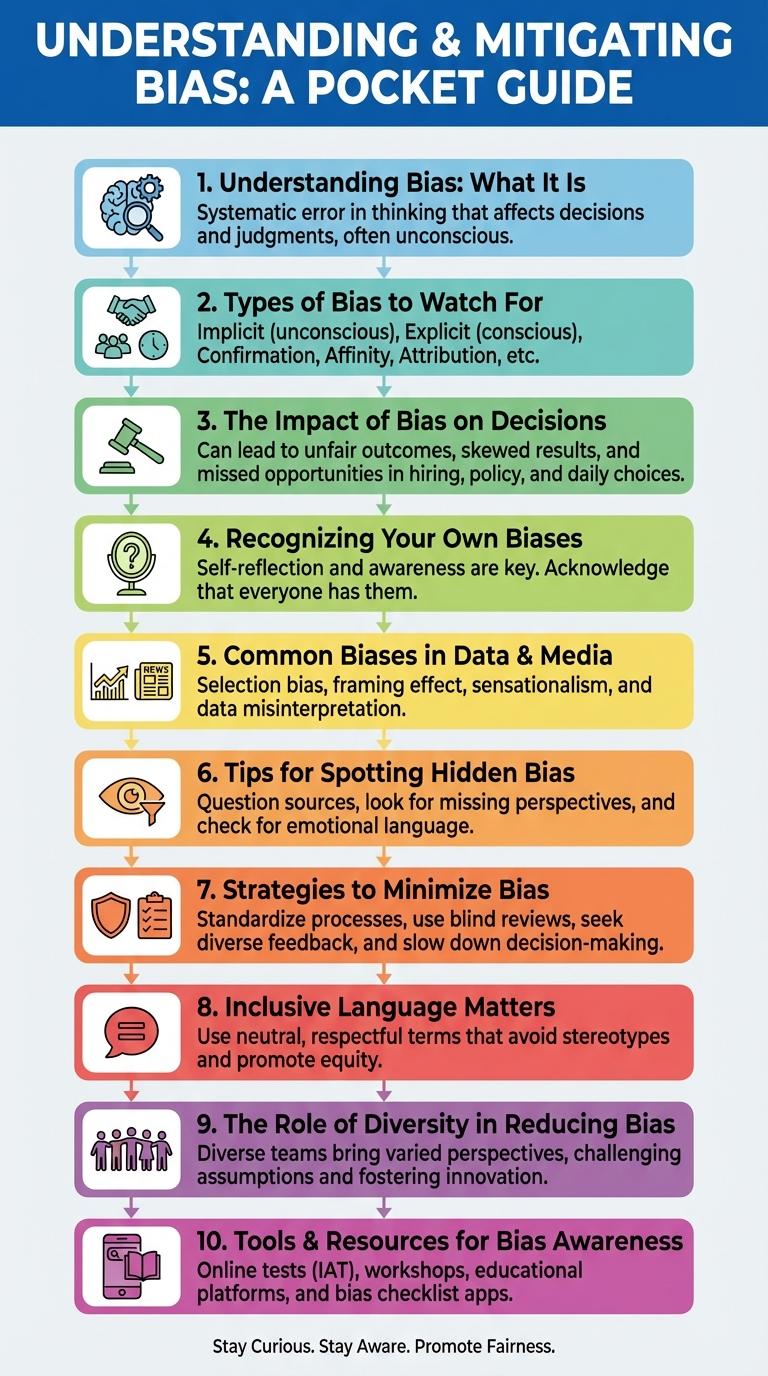
Recognizing and avoiding bias is crucial for making informed decisions and fostering fair communication. Visual elements in an infographic simplify complex concepts, highlighting common bias types and strategies to mitigate them. This approach promotes critical thinking and helps individuals develop a more balanced perspective in various contexts.
Understanding Bias: What It Is
| Aspect | Description |
|---|---|
| Definition of Bias | Bias refers to a tendency or preference that affects impartial judgment, often leading to unfair outcomes. |
| Types of Bias | Cognitive bias, confirmation bias, implicit bias, and selection bias are common forms influencing perception and decisions. |
| Sources of Bias | Bias originates from personal experiences, cultural background, social environment, and media exposure. |
| Impact of Bias | Bias can distort reality, reinforce stereotypes, limit opportunities, and reduce objectivity in analysis. |
| Recognizing Bias | Awareness involves critical thinking, questioning assumptions, and seeking diverse perspectives to reduce bias. |
Types of Bias to Watch For
Avoiding bias is essential for making fair and accurate decisions. Recognizing common types of bias helps improve objectivity in various contexts.
- Confirmation Bias - Favoring information that confirms existing beliefs while ignoring contradictory evidence.
- Anchoring Bias - Relying too heavily on the first piece of information encountered.
- Availability Bias - Overestimating the importance of information that is easily recalled or recent.
- Sampling Bias - Drawing conclusions from a non-representative subset of data or people.
- Hindsight Bias - Viewing past events as predictable after they have already occurred.
The Impact of Bias on Decisions
Bias affects decision-making by distorting perception and leading to unfair outcomes. Recognizing bias is critical to improving judgment accuracy and fairness in various contexts.
Biased decisions can result in missed opportunities, reduced diversity, and compromised trust. Awareness of common biases such as confirmation bias and stereotyping helps mitigate their influence. Implementing structured decision-making processes supports more objective and balanced outcomes.
Recognizing Your Own Biases
Recognizing your own biases is the first step toward fair and objective decision-making. Biases influence how you interpret information and interact with others without conscious awareness.
Self-awareness helps identify personal prejudices and fosters more balanced judgments. Regular reflection and seeking diverse perspectives reduce the impact of unconscious biases.
Common Biases in Data & Media
What are common biases found in data and media? Confirmation bias leads people to favor information that supports their existing beliefs. Selection bias occurs when data samples are not representative of the population.
How does framing bias affect media consumption? Framing bias shapes how information is presented, influencing perception and interpretation. Media outlets may emphasize certain aspects to sway public opinion.
Why is survivorship bias problematic in data analysis? Survivorship bias focuses only on successful cases, ignoring failures that provide crucial context. This skews conclusions and decision-making in business and research.
What role does anchoring bias play in interpreting statistics? Anchoring bias causes individuals to rely too heavily on the first piece of information encountered. This can distort judgments about data trends and significance.
How can one reduce bias when evaluating information? Cross-checking multiple sources helps identify and mitigate bias. Employing critical thinking and awareness of common biases improves data and media literacy.
Tips for Spotting Hidden Bias
Bias can influence decisions and perceptions without being obvious. Recognizing hidden bias requires awareness and critical thinking.
- Question Assumptions - Examine the basis of your beliefs to identify any unsupported or biased foundations.
- Analyze Language - Look for emotionally charged or subjective words that may indicate prejudice.
- Seek Diverse Perspectives - Consult varied sources to challenge and broaden your understanding.
Spotting hidden bias improves fairness and accuracy in judgment and communication.
Strategies to Minimize Bias
Effective strategies to minimize bias include increasing awareness of unconscious prejudices and actively seeking diverse perspectives. Implementing structured decision-making processes helps reduce subjective judgments. Regular training and fostering an inclusive environment promote fair and balanced outcomes.
Inclusive Language Matters
Using inclusive language promotes respect and understanding among diverse groups. Avoiding bias in communication helps create a more equitable environment.
- Use Gender-Neutral Terms - Replace gender-specific words with neutral alternatives to embrace all identities.
- Avoid Stereotypes - Steer clear of language that reinforces negative or limiting assumptions about groups.
- Respect Cultural Differences - Incorporate terms that recognize and honor diverse cultural backgrounds.
The Role of Diversity in Reducing Bias
Diversity plays a crucial role in reducing bias by bringing varied perspectives and experiences into decision-making processes. Teams with diverse backgrounds challenge assumptions and promote critical thinking, minimizing the risk of unconscious bias. Embracing diversity fosters an inclusive environment where different viewpoints are valued and bias is actively addressed.