
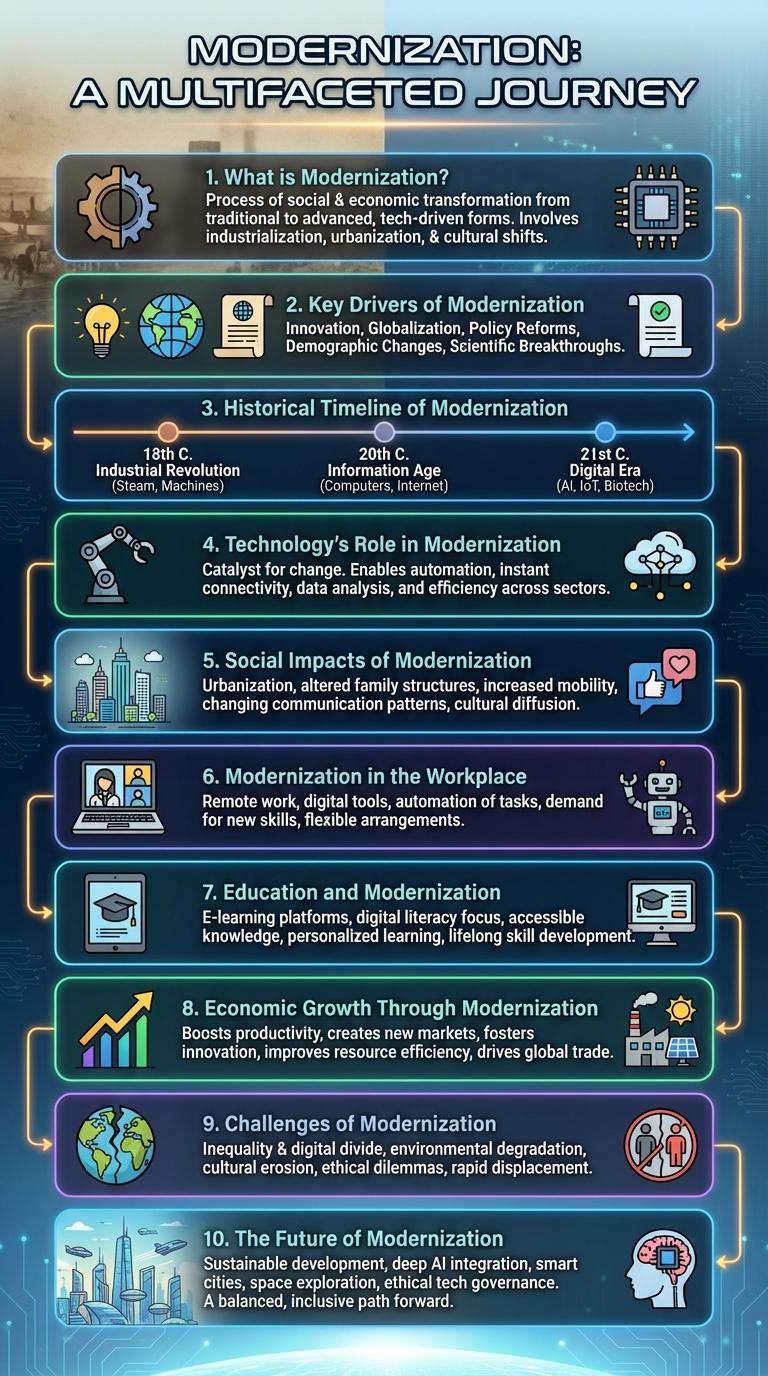
Modernization transforms industries by integrating advanced technologies and innovative processes to enhance efficiency and competitiveness. It drives economic growth through improved infrastructure and digital connectivity, enabling businesses to adapt to dynamic market demands. Embracing modernization fosters sustainable development and elevates quality of life across communities.
What is Modernization?
Modernization refers to the process of transforming societies from traditional to contemporary states by adopting new technologies, ideas, and institutions. It drives economic growth, social change, and improved living standards across various sectors.
- Technological Advancement - Modernization involves integrating innovative technologies to enhance productivity and efficiency.
- Social Transformation - This process fosters changes in cultural values, social structures, and education systems.
- Economic Development - Modernization promotes industrialization and infrastructure growth, boosting national economies.
Key Drivers of Modernization
Modernization is driven by technological advancements and evolving market demands. These factors push organizations to update processes and systems for improved efficiency.
Digital transformation plays a crucial role, enabling faster and more flexible operations. Customer expectations for personalized experiences compel businesses to innovate continuously. Regulatory changes also force companies to adopt modern standards and practices.
Historical Timeline of Modernization
Modernization represents the transformation from traditional to contemporary societies through technological, economic, and social advancements. It has evolved through distinct historical phases that mark significant changes in human civilization.
- Industrial Revolution (18th-19th Century) - Mechanization and factory systems revolutionized production and urbanization.
- Technological Advancements (20th Century) - Introduction of electricity, automobiles, and communication technologies accelerated modernization.
- Digital Revolution (Late 20th - 21st Century) - Computers, the internet, and digital communication reshaped global connectivity and economies.
Technology's Role in Modernization
Technology plays a crucial role in modernization by driving innovation across industries and improving efficiency. Digital tools and automation streamline processes, reduce costs, and enhance productivity in businesses and government sectors. The integration of advanced technologies such as artificial intelligence and the Internet of Things accelerates economic growth and modern infrastructure development.
Social Impacts of Modernization
| Social Impact | Description |
|---|---|
| Urbanization | Mass migration from rural to urban areas, leading to expanded cities and increased demand for infrastructure and services. |
| Educational Growth | Improved access to education and higher literacy rates contribute to skilled labor forces and informed citizens. |
| Social Mobility | Expansion of job opportunities allows individuals to improve their social status and economic conditions. |
| Changing Family Structures | Shift from extended to nuclear families due to urban living and modern work demands. |
| Cultural Integration | Diverse populations blend traditions and values, fostering innovation and societal change. |
Modernization in the Workplace
Modernization in the workplace transforms traditional methods into efficient, technology-driven processes. It enhances productivity by integrating advanced tools and improving communication.
- Digital Collaboration Tools - Platforms like Microsoft Teams and Slack enable seamless communication and remote teamwork.
- Automation of Tasks - Automated workflows reduce manual labor, increase accuracy, and save time on repetitive jobs.
- Cloud Computing - Cloud services provide flexible access to data and applications from any location, supporting hybrid work models.
Embracing workplace modernization drives innovation, employee satisfaction, and competitive advantage in today's market.
Education and Modernization
Modernization significantly transforms education by integrating advanced technologies and innovative teaching methods. This shift enhances learning experiences and equips students with skills for a rapidly evolving digital world.
Access to online resources and interactive platforms supports diverse learning styles and improves educational outcomes. Modern education systems prioritize critical thinking, creativity, and digital literacy to prepare learners for future challenges.
Economic Growth Through Modernization
Modernization drives economic growth by increasing productivity through advanced technologies and improved infrastructure. It fosters innovation, attracting investment and creating new job opportunities across various sectors. Enhanced education and skilled labor contribute to a competitive economy, propelling sustainable development.
Challenges of Modernization
Modernization introduces complex challenges including socio-economic disparities and environmental impact. These issues require strategic planning and sustainable solutions to ensure balanced growth.
Technological advancement often outpaces infrastructure development, causing gaps in accessibility and efficiency. Addressing cultural resistance and workforce adaptation remains critical for successful modernization.