
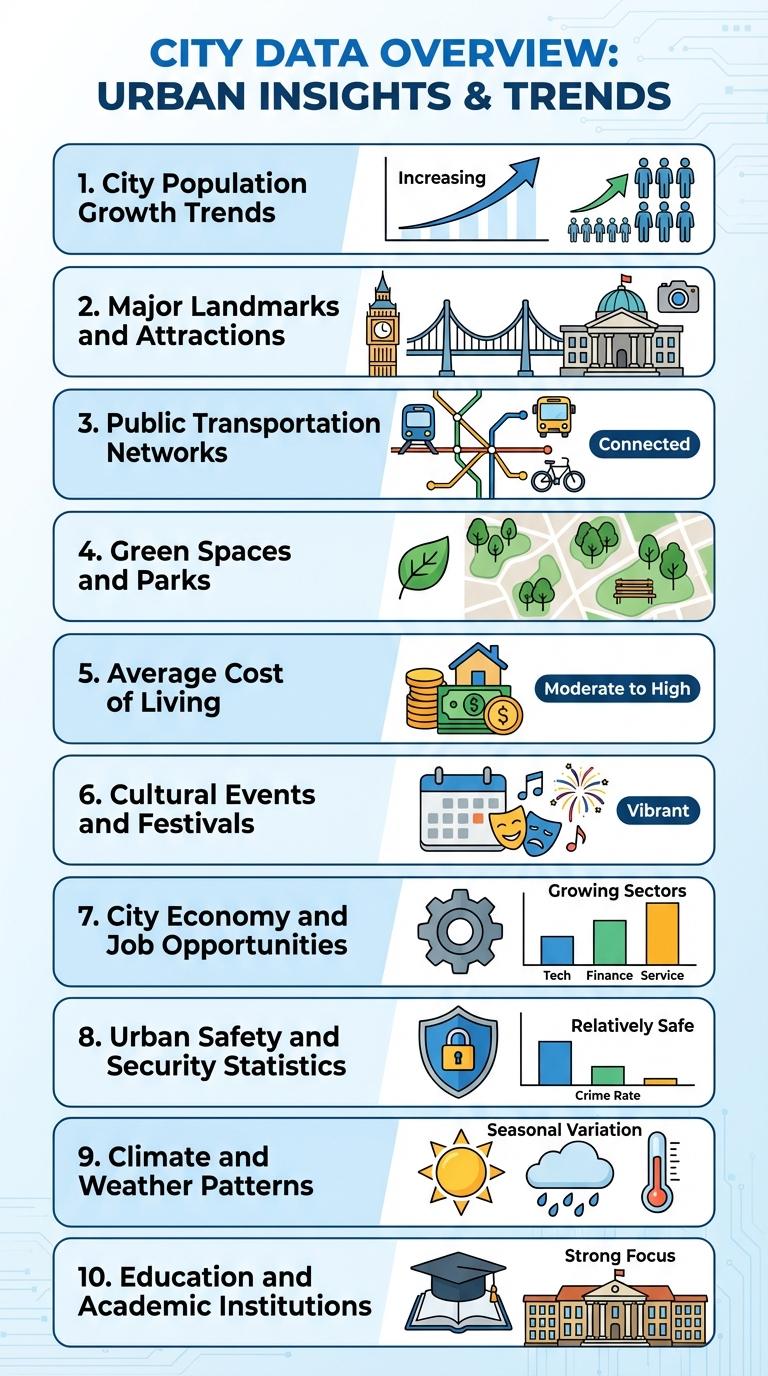
Explore the dynamic visual representation of urban life through an infographic about the city, highlighting key aspects such as population growth, transportation networks, and cultural landmarks. This graphic offers a clear snapshot of how cities evolve, showcasing data on economic development, infrastructure, and environmental impact. Insights drawn from the infographic help understand urban trends and guide future city planning initiatives.
City Population Growth Trends
City population growth reflects dynamic changes in urbanization, driven by factors like economic opportunities and migration patterns. Rapid expansion challenges infrastructure, housing, and public services.
Analyzing growth trends helps planners forecast future needs and balance development with sustainability. Key cities show varying growth rates, influenced by policy, industry, and quality of life.
Major Landmarks and Attractions
Discover the city's iconic landmarks, including the historic Old Town Hall and the towering Skyline Tower, offering panoramic views. Visitors flock to the Grand Central Park, a green oasis perfect for relaxation and outdoor activities. The Riverside Museum showcases the city's rich cultural heritage, drawing art lovers and history enthusiasts alike.
Public Transportation Networks
Public transportation networks are essential for efficient urban mobility and reducing traffic congestion. Cities with well-developed transit systems promote sustainable travel options and improve quality of life.
- Extensive Subway Systems - Major cities like New York and Tokyo feature subway networks spanning hundreds of miles, enabling rapid transit across urban areas.
- Bus Rapid Transit (BRT) - BRT corridors provide reliable, high-frequency bus service with dedicated lanes, reducing commute times in cities like Bogota and Guangzhou.
- Integrated Fare Systems - Contactless payment methods and unified ticketing allow seamless transfers across buses, trains, and trams in cities such as London and Seoul.
Investment in multimodal transportation infrastructure continues to expand accessibility and connectivity in metropolitan regions worldwide.
Green Spaces and Parks
What role do green spaces and parks play in urban environments? Green spaces and parks improve air quality by absorbing pollutants and producing oxygen. These areas provide essential recreational spaces for residents to relax, exercise, and connect with nature.
Average Cost of Living
The average cost of living in major cities varies significantly based on housing, utilities, and transportation expenses. Understanding these costs is essential for budgeting and lifestyle planning.
- Housing Costs - Rent or mortgage payments generally make up the largest portion of monthly expenses in urban areas.
- Utilities and Services - Electricity, water, internet, and other services contribute to overall living costs and fluctuate by region.
- Transportation Expenses - Public transit, fuel, and vehicle maintenance add to daily commuting costs in city environments.
Cultural Events and Festivals
Cities worldwide host a vibrant array of cultural events and festivals that celebrate local heritage, art, and traditions. These gatherings attract tourists and residents alike, fostering community spirit and economic growth.
Annual festivals often feature music, dance, food, and crafts, representing the unique identity of each city. Cultural events provide opportunities for education, entertainment, and cultural exchange, enriching urban life.
City Economy and Job Opportunities
| Aspect | Details |
|---|---|
| Key Industries | Technology, Finance, Healthcare, Manufacturing, Tourism |
| Employment Rate | 95% (latest government data) |
| Average Annual Salary | $65,000 |
| Job Growth Rate | 4.2% per year |
| Business Support | Startup incubators, tax incentives, workforce training programs |
Urban Safety and Security Statistics
Urban safety remains a critical concern for city planners and residents alike, as crime rates and emergency response times directly impact quality of life. The following statistics highlight key aspects of safety and security in metropolitan areas.
- Crime Rate Reduction - Recent data shows a 12% decrease in violent crimes over the past year.
- Emergency Response Time - Average police response time is currently 7 minutes, improving from 9 minutes two years ago.
- Public Surveillance Coverage - Over 85% of urban public spaces are monitored by CCTV systems for enhanced security.
Climate and Weather Patterns
Cities experience diverse climate and weather patterns influenced by geographical location, urbanization, and elevation. Urban heat islands cause city temperatures to be higher than surrounding rural areas. Precipitation levels and seasonal variations significantly affect city planning and infrastructure development.