
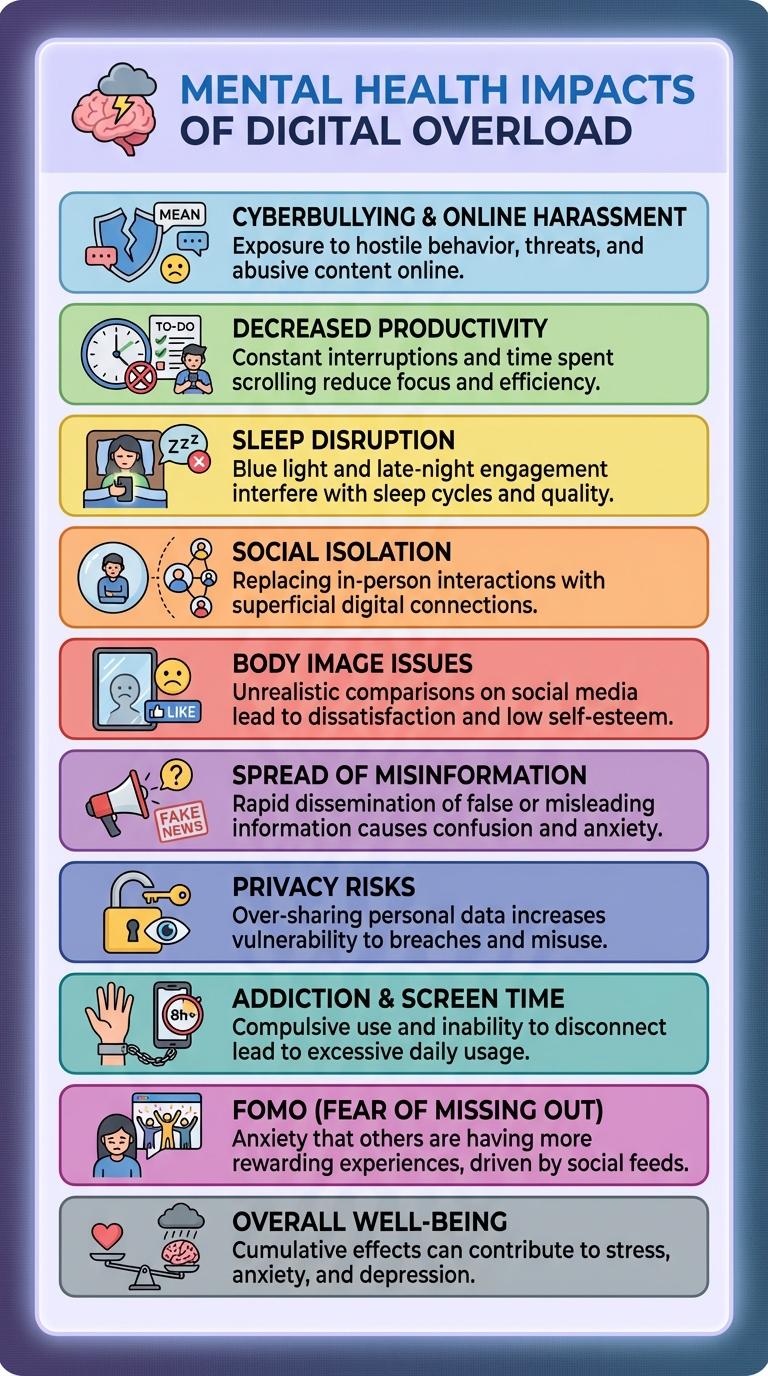
Social media can significantly impact mental health by increasing feelings of anxiety and depression. Excessive use often leads to decreased productivity and disrupted sleep patterns. Exposure to unrealistic standards on these platforms can harm self-esteem and body image.
Mental Health Impacts
Social media platforms significantly influence mental health, often leading to adverse effects. Users, especially adolescents and young adults, experience increased levels of anxiety, depression, and stress due to prolonged usage and exposure to negative content.
- Increased Anxiety - Constant notifications and social comparison contribute to heightened anxiety symptoms among frequent social media users.
- Depression Risks - Exposure to curated images and negative interactions can trigger feelings of inadequacy and depressive moods.
- Sleep Disruption - Excessive screen time before bed impairs sleep quality, exacerbating mental health problems.
Cyberbullying and Online Harassment
How does social media contribute to the rise of cyberbullying and online harassment?
Social media platforms provide an anonymous space where individuals can easily target others with harmful messages. Cyberbullying on these platforms often leads to severe emotional and psychological distress for victims.
What are the psychological impacts of online harassment on social media users?
Victims of online harassment experience increased anxiety, depression, and low self-esteem. Persistent exposure to harmful content can result in long-term mental health issues.
Which groups are most vulnerable to cyberbullying on social media?
Teenagers, young adults, and marginalized communities face the highest risk of cyberbullying. These groups often encounter targeted harassment due to age, identity, or social status.
How does the anonymity of social media users worsen online harassment?
Anonymity allows perpetrators to act without accountability, increasing the frequency and intensity of bullying. This lack of transparency creates a hostile environment that is difficult to regulate.
What measures can social media platforms take to reduce cyberbullying and online harassment?
Implementing strict content moderation policies and effective reporting tools helps identify and remove harmful content promptly. Educating users about safe online behavior also plays a crucial role in prevention.
Decreased Productivity
Social media use often leads to decreased productivity in both professional and academic settings. Frequent interruptions and distractions impair focus and efficiency throughout the day.
- Time Consumption - Excessive scrolling on social platforms reduces available time for tasks and responsibilities.
- Interrupted Workflow - Notifications and alerts disrupt concentration and break work momentum.
- Reduced Task Completion - Multitasking between social media and work causes incomplete or lower quality outcomes.
Minimizing social media use during work hours can significantly improve productivity and task performance.
Sleep Disruption
Social media use before bedtime can significantly disrupt sleep patterns by delaying the onset of sleep and reducing overall sleep quality. The blue light emitted from screens suppresses melatonin production, making it harder for the body to relax and fall asleep. Consistent sleep disruption from social media leads to fatigue, decreased cognitive function, and increased risk of mental health issues.
Social Isolation
| Negative Effect | Description |
|---|---|
| Social Isolation | Excessive social media use reduces face-to-face interactions, leading to feelings of loneliness and disconnection. |
| Emotional Impact | Users may experience anxiety and depression as online interactions replace real-world relationships. |
| Reduced Empathy | Limited personal engagement weakens emotional understanding and social skills. |
| Distorted Reality | Social media often presents unrealistic lifestyles, causing dissatisfaction and withdrawal from social activities. |
| Dependency | Reliance on social media for connection decreases motivation to build meaningful offline relationships. |
Body Image Issues
Social media often promotes unrealistic beauty standards that negatively impact body image. Constant exposure to edited and filtered images can lead to feelings of inadequacy and low self-esteem.
Users frequently compare themselves to idealized portrayals, fueling dissatisfaction with their own appearance. This comparison can contribute to anxiety, depression, and eating disorders. Young people, especially teenagers, are particularly vulnerable to these harmful effects on mental health and body confidence.
Spread of Misinformation
Social media platforms often become breeding grounds for misinformation, impacting public opinion and decision-making. The rapid spread of false information can lead to widespread misunderstanding and social division.
- Viral False News - Misinformation spreads quickly due to sharable content formats and algorithms favoring engagement.
- Reduced Trust in Media - Frequent exposure to fake news lowers public trust in legitimate news sources and institutions.
- Harmful Consequences - False information can result in real-world harm, including public health risks and political polarization.
Privacy Risks
Social media platforms often collect vast amounts of personal information, increasing the risk of data breaches and unauthorized access. Users may unknowingly share sensitive details, making them vulnerable to identity theft and cyber attacks.
Privacy settings on social media are frequently complex or misleading, leading to unintentional exposure of private content. Advertisers and third parties may exploit this data for targeted marketing, compromising user privacy further.
Addiction and Screen Time
Social media addiction significantly increases daily screen time, leading to reduced productivity and impaired mental health. Excessive use triggers dopamine release, reinforcing compulsive checking behaviors.
Long screen time negatively impacts sleep patterns and contributes to eye strain and headaches. These effects cumulatively harm overall well-being and cognitive function.