
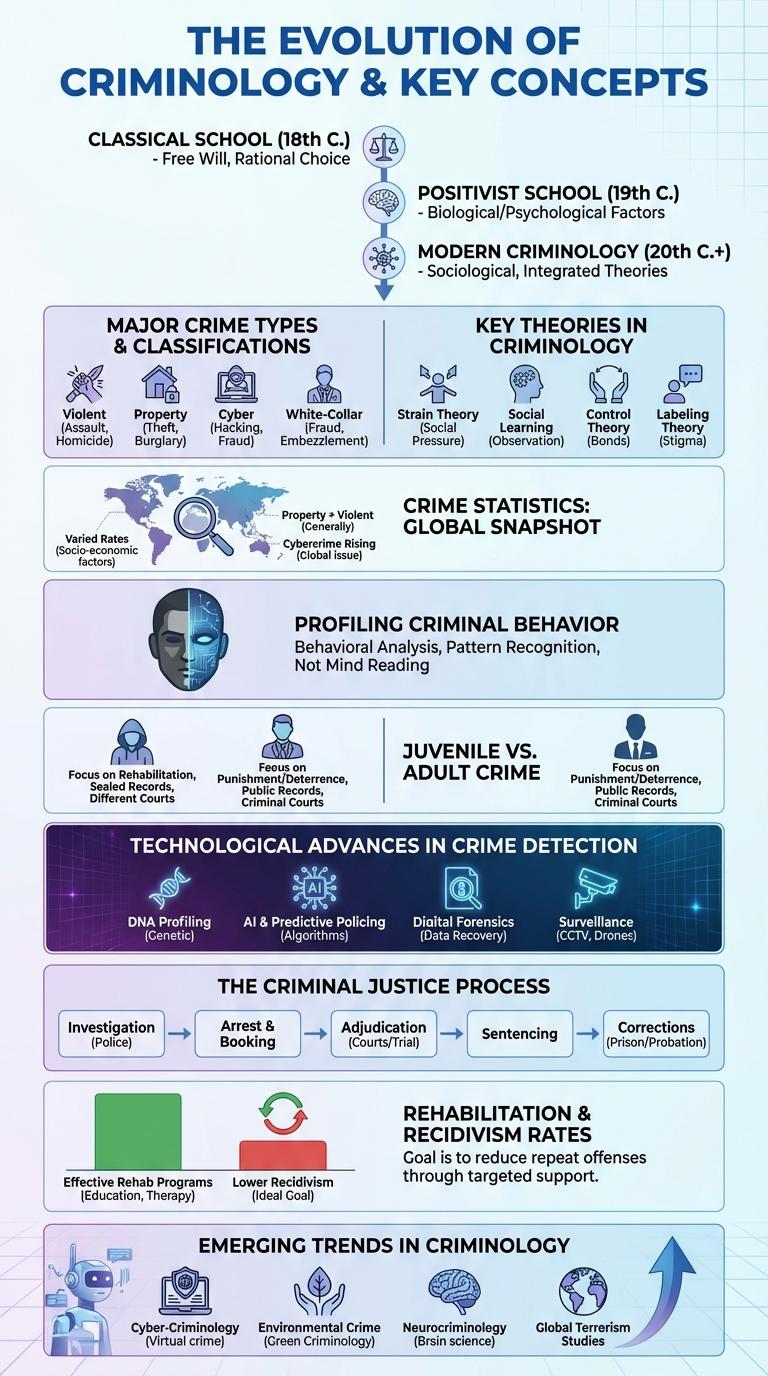
Criminology explores the causes, consequences, and prevention of criminal behavior through scientific analysis and research. Infographics simplify complex data by visually presenting crime statistics, theories, and patterns for better understanding. This visual tool enhances learning and awareness about the multifaceted nature of crime and justice systems.
The Evolution of Criminology
Criminology has evolved from simplistic views of crime as a moral failing to a complex, multidisciplinary study integrating sociology, psychology, and biology. Early theories focused on punishment and deterrence, while modern criminology emphasizes understanding underlying social factors and rehabilitation. Technological advances and data analysis now play crucial roles in profiling, crime prevention, and policy development.
Major Crime Types and Classifications
| Major Crime Types | Classifications and Examples |
|---|---|
| Violent Crimes | Crimes involving force or threat of force. Examples: homicide, assault, robbery, sexual assault. |
| Property Crimes | Offenses aimed at theft or destruction of property. Examples: burglary, larceny, motor vehicle theft, arson. |
| White-Collar Crimes | Non-violent crimes for financial gain. Examples: fraud, embezzlement, insider trading, identity theft. |
| Organized Crimes | Crimes conducted by structured groups. Examples: drug trafficking, human trafficking, racketeering, money laundering. |
| Cyber Crimes | Crimes involving computer technology. Examples: hacking, phishing, cyberstalking, data breaches. |
Key Theories in Criminology
Criminology explores the causes, consequences, and prevention of criminal behavior through various theoretical frameworks. Key theories include the Strain Theory, which examines social pressures that drive individuals to crime, and the Social Learning Theory, emphasizing the role of environmental influences and peer groups. Another important perspective is the Routine Activity Theory, focusing on the circumstances that enable criminal acts to occur.
Crime Statistics: Global Snapshot
Crime statistics provide crucial insight into the prevalence and types of offenses committed worldwide. Analyzing global crime data helps identify trends and inform law enforcement strategies.
According to the United Nations Office on Drugs and Crime (UNODC), theft, assault, and drug-related offenses remain the most reported crimes globally. Developed countries report higher rates of cybercrime and fraud, while violent crimes are more prevalent in certain developing regions. Accurate data collection is essential for effective criminological research and policy-making.
Profiling Criminal Behavior
Criminology studies the patterns and motives behind criminal behavior to aid law enforcement in solving crimes. Profiling criminal behavior involves analyzing psychological, social, and environmental factors to predict offender characteristics.
Profilers use evidence from crime scenes and offender history to create behavioral profiles. These profiles help narrow suspect lists and improve investigative strategies.
Juvenile vs. Adult Crime
Criminology studies the differences between juvenile and adult crime to understand developmental and social factors influencing behavior. Juvenile offenders face distinct legal processes and rehabilitation focused on their age and psychological growth.
Juvenile crime rates and patterns differ significantly from adult crime, impacting law enforcement strategies and prevention programs.
- Age of Offenders - Juvenile crime involves individuals typically under 18, while adult crime pertains to those legally recognized as adults.
- Legal System - Juveniles are processed through specialized juvenile courts emphasizing rehabilitation rather than punishment.
- Types of Crimes - Juvenile offenses often include status crimes like truancy, whereas adult crimes more frequently involve violent and property crimes.
Technological Advances in Crime Detection
Technological advances have revolutionized crime detection, making investigations faster and more accurate. Modern tools enable law enforcement agencies to solve cases that were once considered unsolvable.
- DNA Profiling - Enables precise identification of suspects by analyzing genetic material found at crime scenes.
- Digital Forensics - Extracts and examines data from electronic devices to uncover crucial evidence.
- Surveillance Systems - Utilizes high-definition cameras and AI to monitor and analyze suspicious activities in real time.
These technologies continue to evolve, enhancing the overall effectiveness of criminology and public safety.
The Criminal Justice Process
Understanding the criminal justice process is essential for studying criminology and ensuring fairness in law enforcement. This process involves multiple stages that guide the handling of criminal cases from investigation to resolution.
The criminal justice process aims to uphold justice, protect society, and rehabilitate offenders through structured legal steps.
- Investigation and Arrest - Law enforcement gathers evidence and apprehends suspects based on probable cause.
- Prosecution and Charging - Prosecutors review evidence and formally charge individuals with crimes.
- Trial and Sentencing - Courts conduct trials to determine guilt and assign appropriate penalties if convicted.
Rehabilitation and Recidivism Rates
Rehabilitation in criminology focuses on transforming offenders into law-abiding citizens through education, therapy, and skill development. Effective rehabilitation programs aim to address the root causes of criminal behavior, reducing the likelihood of reoffending.
Recidivism rates measure the percentage of former inmates who return to prison within a specific period, often highlighting the success of rehabilitation efforts. Lower recidivism rates indicate more effective rehabilitation strategies and improved societal reintegration.