
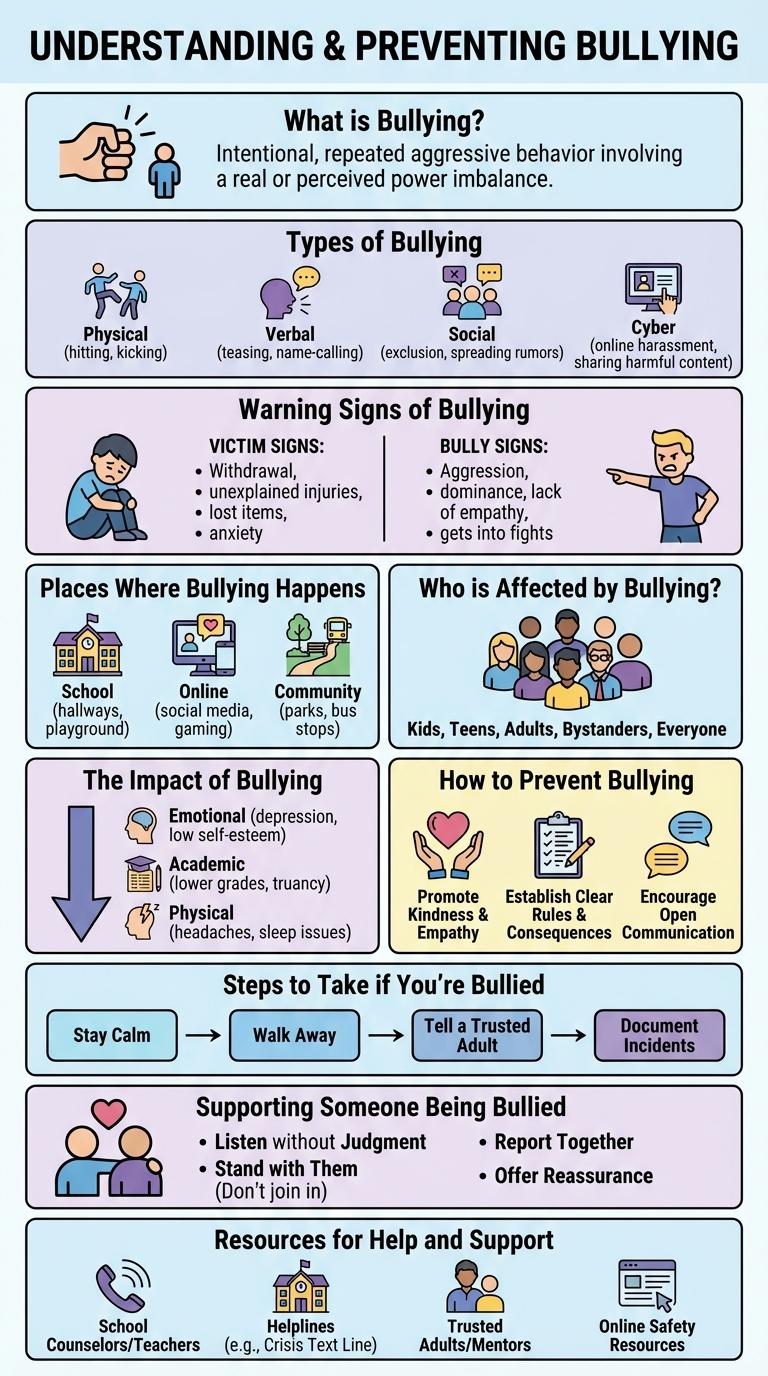
Bullying remains a significant issue affecting individuals across all ages and backgrounds, causing emotional and psychological harm. This infographic visually highlights key statistics, common forms, and the impact of bullying to raise awareness and promote prevention. Understanding these elements is crucial for fostering safer and more supportive environments.
What is Bullying?
Bullying is the repeated aggressive behavior intended to hurt or intimidate another person physically, verbally, or psychologically. It often occurs in schools, workplaces, and online environments.
This harmful behavior can take many forms, including verbal abuse, social exclusion, and physical violence. Victims of bullying frequently experience emotional distress, low self-esteem, and anxiety. Recognizing bullying early is crucial to providing support and preventing long-term damage.
Types of Bullying
Bullying manifests in various forms, each causing significant emotional and physical harm. Common types include physical bullying, verbal bullying, social exclusion, and cyberbullying, which occurs through digital platforms. Understanding these types helps in identifying and addressing bullying effectively.
Warning Signs of Bullying
Bullying often manifests through warning signs such as sudden changes in behavior, unexplained injuries, and a drop in academic performance. Victims may exhibit increased anxiety, withdrawal from social activities, and reluctance to attend school. Recognizing these indicators early can help intervene and provide necessary support to those affected.
Places Where Bullying Happens
Bullying can occur in various environments where individuals interact daily. Understanding common locations helps in identifying and preventing bullying behaviors.
These places often provide opportunities for bullying to happen unnoticed or unchecked.
- School Hallways - Crowded and less supervised areas where students can easily target peers.
- Playgrounds - Open spaces with minimal adult supervision, making bullying more frequent.
- Online Platforms - Virtual environments where cyberbullying can occur anytime and anywhere.
- Classrooms - Settings where power imbalances may lead to bullying during group activities.
- Public Transportation - Places with diverse crowds where bullying can happen during commutes.
Who is Affected by Bullying?
Who is affected by bullying?
Bullying impacts children, teens, and adults across various environments such as schools, workplaces, and online platforms. Both victims and bystanders experience emotional and psychological consequences.
The Impact of Bullying
Bullying significantly affects mental health, leading to anxiety, depression, and low self-esteem in victims. It disrupts academic performance and social relationships, creating long-term emotional scars.
Schools implementing anti-bullying programs report a decrease in incidents and improved student well-being. Early intervention and support systems are crucial in reducing the negative impact of bullying.
How to Prevent Bullying
Bullying prevention starts with creating a safe and inclusive environment where respect is prioritized. Encouraging open communication helps identify and address issues before they escalate.
Teaching empathy and promoting kindness among students reduces the likelihood of bullying behavior. Schools and communities must implement clear policies and support systems to protect victims.
Steps to Take if You're Bullied
Bullying affects millions worldwide, causing emotional and physical harm. Taking immediate and effective steps helps ensure safety and support.
- Speak Up - Tell a trusted adult or friend about the bullying to get help and advice.
- Document Evidence - Keep records of bullying incidents, including dates, times, and descriptions.
- Seek Support - Reach out to counselors, teachers, or support groups for guidance and protection.
Supporting Someone Being Bullied
Supporting someone being bullied requires empathy and proactive action. Effective support can significantly improve the victim's emotional well-being.
- Listen Actively - Give full attention and validate their feelings to build trust and safety.
- Encourage Speaking Up - Motivate the person to share experiences with a trusted adult or authority figure.
- Offer Practical Help - Assist in reporting the bullying or finding resources like counselors or support groups.
Providing consistent emotional support and practical assistance helps empower individuals facing bullying and fosters resilience.