
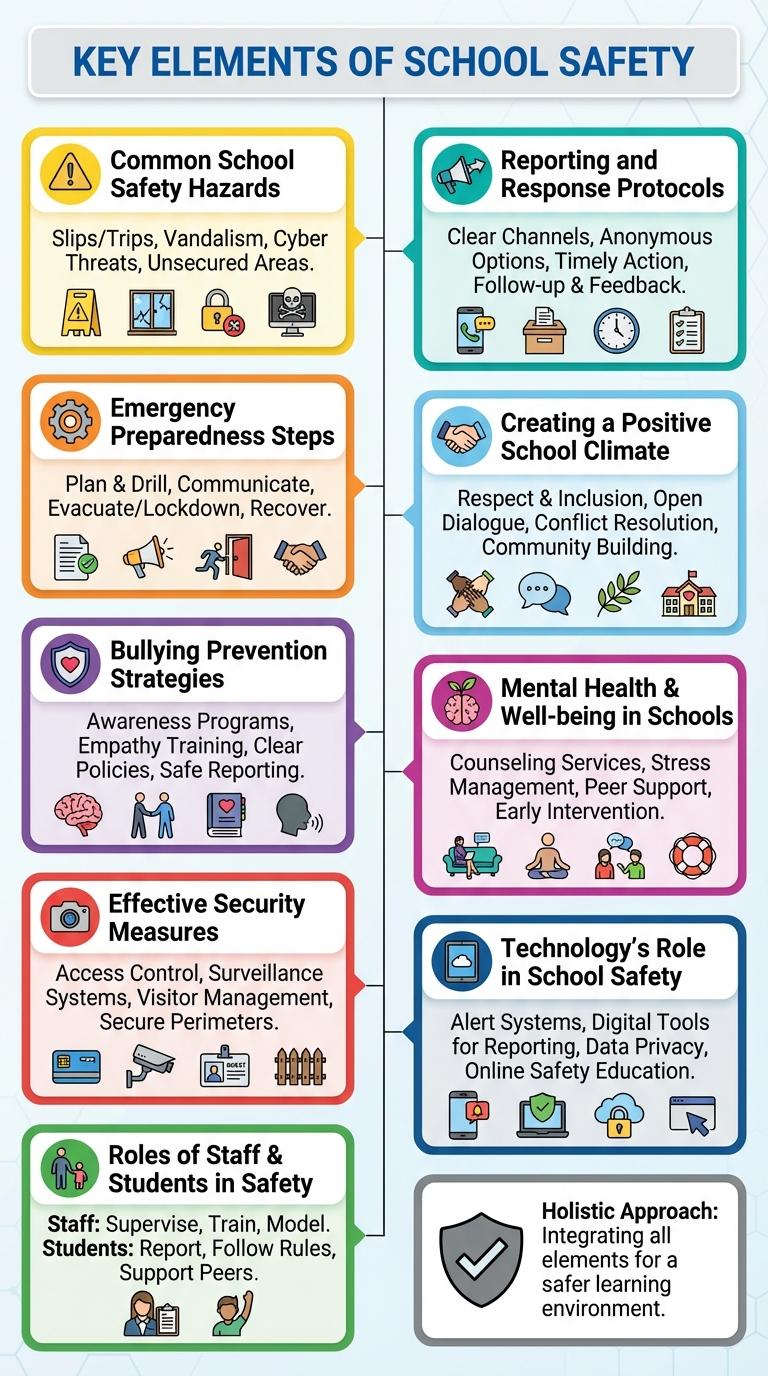
School safety infographics present critical data and guidelines to enhance protective measures in educational environments. Visual representations highlight key statistics, emergency protocols, and preventive strategies to ensure student well-being. Clear, concise graphics help administrators, teachers, and parents implement effective safety practices.
Key Elements of School Safety
Ensuring school safety is essential for creating a secure and supportive learning environment. Key elements address physical, emotional, and procedural aspects to protect students and staff.
- Access Control - Securing school entrances and monitoring visitor entry help prevent unauthorized access.
- Emergency Preparedness - Regular drills and clear communication plans prepare students and staff for potential crises.
- Bullying Prevention - Programs and policies promoting respect reduce incidents and foster a positive school climate.
Common School Safety Hazards
School safety is a critical concern that requires identifying and addressing common hazards. Understanding these risks helps create a secure learning environment for students and staff.
Awareness of potential dangers enables schools to implement effective safety protocols and reduce accidents or incidents.
- Slip and Fall Hazards - Wet floors, uneven surfaces, and cluttered hallways increase the risk of slips and falls within school premises.
- Fire Safety Risks - Blocked fire exits and faulty electrical equipment can lead to dangerous fire emergencies in schools.
- Bullying and Violence - Inadequate supervision and lack of anti-bullying policies contribute to unsafe emotional and physical environments.
Emergency Preparedness Steps
Emergency preparedness in schools involves clear protocols for lockdowns, evacuations, and shelter-in-place situations. Staff and students participate in regular drills to ensure everyone knows their roles during an emergency. Access to emergency supplies and communication systems enhances the school's readiness for unforeseen events.
Bullying Prevention Strategies
What are the most effective bullying prevention strategies in schools? Implementing comprehensive programs that promote empathy and respect among students reduces bullying incidents significantly. Training staff to recognize and address bullying behaviors early creates a safer school environment.
How can schools engage students in bullying prevention? Encouraging peer support groups and student-led initiatives fosters a community of inclusion and accountability. Positive reinforcement of kind behaviors builds a culture where bullying is less likely to occur.
Effective Security Measures
| Effective Security Measures | Description |
|---|---|
| Controlled Access Points | Restrict entry to authorized personnel using ID badges and security checkpoints. |
| Surveillance Systems | Install CCTV cameras in strategic locations to monitor activities and deter threats. |
| Emergency Response Plans | Develop and practice clear procedures for lockdowns, evacuations, and medical emergencies. |
| Staff Training Programs | Provide regular safety training and drills to prepare staff for various security scenarios. |
| Visitor Management Systems | Implement sign-in protocols and issue visitor badges to track non-staff individuals on campus. |
Roles of Staff & Students in Safety
School safety depends on the proactive involvement of both staff and students. Clear roles help create a secure and supportive environment.
Staff members are responsible for monitoring the premises, enforcing safety protocols, and responding promptly to emergencies. Students contribute by reporting suspicious activities and following established safety rules. Collaboration between staff and students enhances overall security and fosters a culture of trust.
Reporting and Response Protocols
School safety depends heavily on effective reporting and response protocols designed to address incidents promptly. Clear procedures enable staff and students to act quickly, minimizing risks and ensuring a secure learning environment.
- Immediate Reporting - Encourage students and staff to report suspicious behavior or emergencies without delay to designated authorities.
- Designated Response Teams - Schools should have trained teams prepared to assess and respond to safety threats efficiently.
- Confidentiality Assurance - Maintain privacy for reporters to promote trust and encourage ongoing communication about safety concerns.
Consistent training and communication of protocols help maintain vigilance and preparedness within the school community.
Creating a Positive School Climate
Creating a positive school climate is essential for fostering student safety and well-being. Key elements include promoting respect, encouraging open communication, and implementing anti-bullying programs. Schools with supportive environments see increased student engagement and reduced incidents of violence.
Mental Health & Well-being in Schools
Creating a safe school environment prioritizes the mental health and well-being of students. Schools that implement comprehensive mental health programs see improved student engagement and academic performance.
Regular mental health screenings and access to counseling services help identify early signs of distress. Promoting emotional resilience and stress management fosters a supportive school community.