
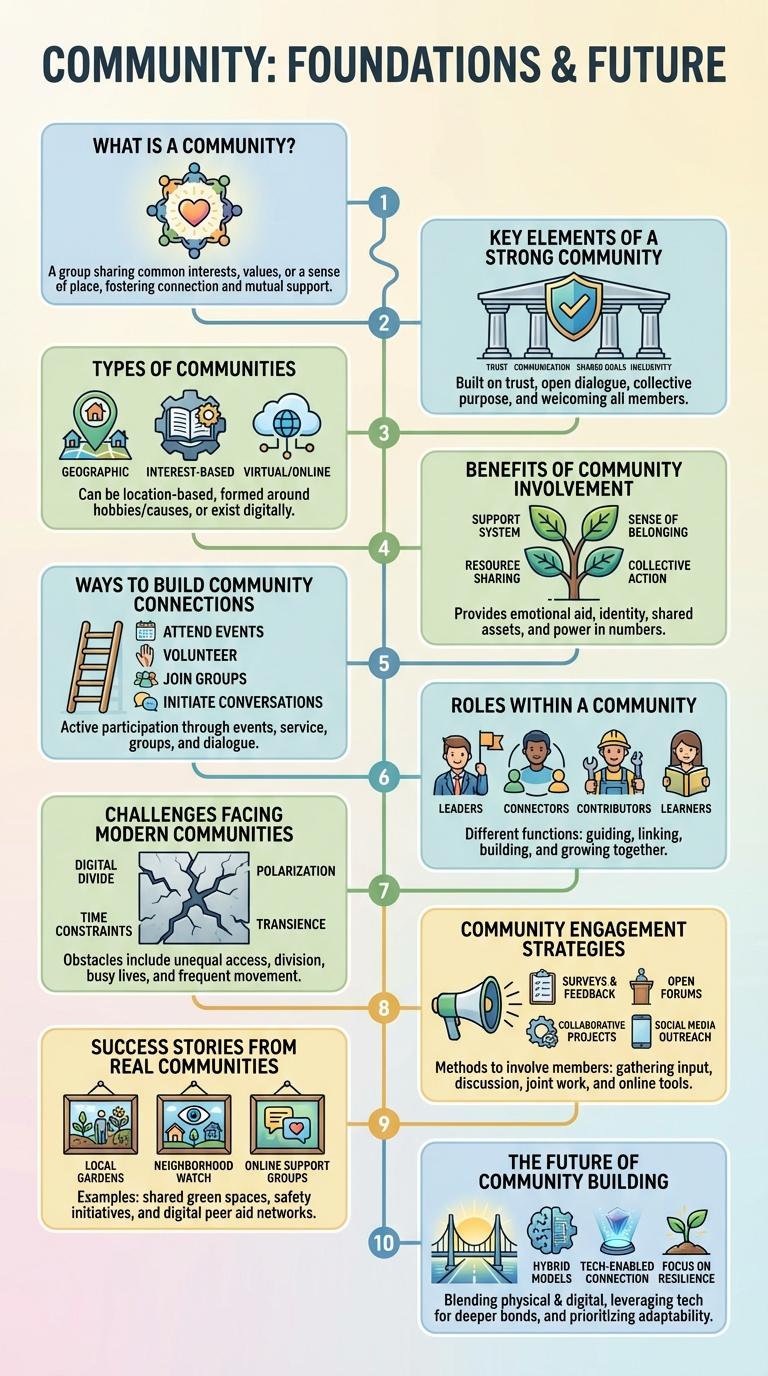
An infographic about community visually highlights the core elements that make up strong and vibrant social groups. It breaks down key factors such as shared values, collaboration, and support networks, making complex data easy to understand at a glance. This format effectively communicates how communities foster connection, growth, and resilience.
What Is a Community?
| Aspect | Description |
|---|---|
| Definition | A community is a group of individuals connected by shared interests, location, values, or goals. |
| Types | Geographical, interest-based, cultural, professional, and virtual communities. |
| Key Elements | Social interaction, common goals, shared norms, and mutual support. |
| Functions | Provides identity, emotional support, resource sharing, and collective problem-solving. |
| Examples | Neighborhood groups, online forums, cultural associations, and workplace teams. |
Key Elements of a Strong Community
A strong community is built on trust, open communication, and shared values. Active participation and mutual support foster a sense of belonging and collective responsibility. Inclusive leadership and collaboration empower members to work towards common goals effectively.
Types of Communities
Communities form the foundation of social interaction and support. Understanding different types of communities helps in recognizing how people connect and cooperate.
- Geographical Communities - These communities are based on shared location, such as neighborhoods or towns, where members interact physically.
- Interest-Based Communities - Formed around common hobbies or activities, these communities connect individuals with shared passions.
- Online Communities - Virtual groups that exist on digital platforms, enabling people to collaborate and communicate regardless of physical distance.
Benefits of Community Involvement
Community involvement strengthens social bonds and fosters a sense of belonging among members. It promotes collaboration and shared responsibility for local well-being.
Active participation in community activities enhances mental health and reduces feelings of isolation. It provides opportunities for skill development and personal growth. Engaging with the community also leads to improved local services and safer neighborhoods.
Ways to Build Community Connections
Building strong community connections fosters trust, collaboration, and a sense of belonging among members. Effective strategies create lasting relationships that support growth and resilience.
Organizing local events, such as workshops and social gatherings, encourages face-to-face interaction and shared experiences. Volunteering initiatives and neighborhood projects promote active participation and unity.
Roles Within a Community
Communities thrive through diverse roles that contribute to social cohesion and development. Each role supports the wellbeing and growth of community members.
- Leader - Guides the community by making decisions and inspiring collective action.
- Organizer - Coordinates events and resources to address community needs effectively.
- Advocate - Represents community interests and works to influence policies.
- Volunteer - Offers time and skills to support community projects and initiatives.
- Member - Participates actively, contributing ideas and fostering connections.
Challenges Facing Modern Communities
Modern communities face diverse challenges that impact social cohesion and development. Urbanization, economic disparity, and environmental concerns are key issues shaping their futures.
Access to affordable housing and healthcare remains limited for many residents. Social isolation and digital divides further complicate efforts to build inclusive communities.
Community Engagement Strategies
Community engagement strategies foster meaningful interactions between organizations and local residents, enhancing collaboration and trust. Effective approaches include organizing events, facilitating open dialogues, and leveraging social media platforms to reach diverse audiences. These tactics empower communities, promote inclusivity, and drive sustainable development initiatives.
Success Stories from Real Communities
How do real communities achieve lasting success? Communities thrive by fostering collaboration and leveraging local strengths. Success stories highlight the power of shared goals and collective action.
What makes these community success stories inspiring? They showcase diverse achievements, from economic growth to social cohesion. Each narrative demonstrates the impact of dedicated members working together.
Why are success stories crucial for community development? They provide evidence-based models that others can replicate or adapt. Inspiring examples motivate ongoing participation and innovation.
How do community-driven projects contribute to sustainable progress? Local initiatives address specific needs and harness resident expertise. This approach ensures relevance and resilience over time.
What role does storytelling play in strengthening communities? Sharing real experiences builds trust and connection among members. It encourages a culture of openness and mutual support.