
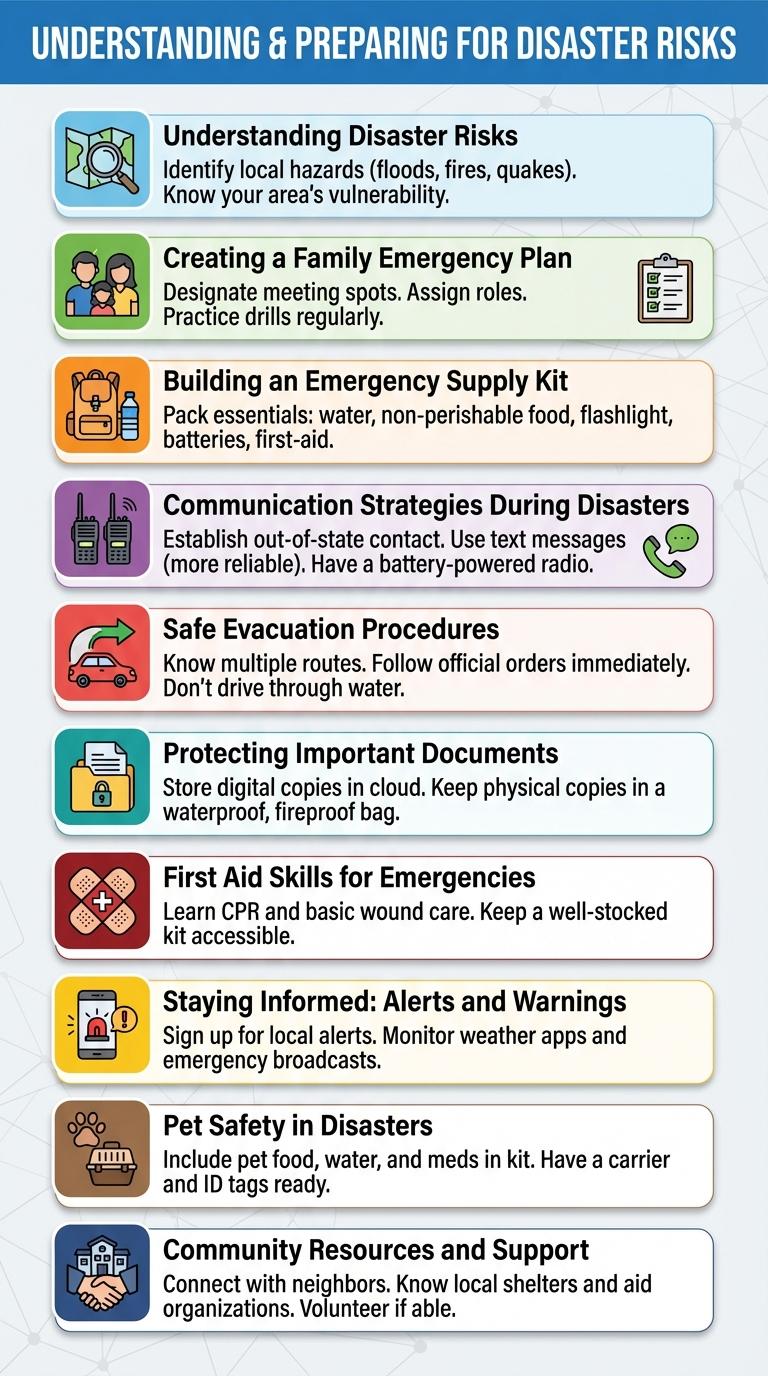
Disaster preparedness is essential for minimizing risks and protecting lives during emergencies. Effective planning involves understanding potential hazards, creating emergency kits, and establishing clear communication strategies. Visual infographics simplify complex information, making it easier to grasp critical steps for readiness and response.
Understanding Disaster Risks
What are the key factors in understanding disaster risks? Understanding disaster risks involves identifying potential hazards and assessing the vulnerability of communities. This knowledge helps in creating effective preparedness plans and minimizing the impact of disasters.
| Disaster Risk Factor | Impact Example |
|---|---|
| Natural Hazards | Earthquakes, floods, hurricanes |
| Exposure | Population density in flood-prone areas |
| Vulnerability | Buildings with poor structural integrity |
| Capacity | Community emergency response resources |
Creating a Family Emergency Plan
| Step | Action |
|---|---|
| 1. Communication | Designate emergency contacts and establish meeting points for family members. |
| 2. Emergency Supplies | Assemble a kit with water, food, first aid items, flashlights, and batteries for at least 72 hours. |
| 3. Evacuation Routes | Identify multiple evacuation routes from home, work, and school locations. |
| 4. Special Needs | Plan for family members with disabilities, pets, or specific medical conditions. |
| 5. Practice | Conduct regular drills to ensure everyone understands the plan and can react quickly. |
Building an Emergency Supply Kit
Building an Emergency Supply Kit ensures you have essential items ready during disasters like earthquakes, hurricanes, or floods. Include water, non-perishable food, a flashlight, batteries, first aid supplies, and important documents. Regularly check and update the kit to maintain preparedness and safety for your family.
Communication Strategies During Disasters
Effective communication during disasters is critical to ensure public safety and coordinate response efforts. Clear, timely messages help reduce panic and provide essential information to affected communities.
Multiple communication channels, including social media, radio, and emergency alert systems, increase message reach and reliability. Establishing pre-disaster communication plans with local authorities and media ensures smooth information flow. Training communities on how to access and interpret emergency messages enhances preparedness and resilience.
Safe Evacuation Procedures
Safe evacuation procedures are essential for minimizing risk during disasters. Knowing the correct steps can save lives and reduce chaos.
- Identify Evacuation Routes - Familiarize yourself with multiple exit paths from your home or building to ensure quick escape.
- Prepare an Emergency Kit - Carry essentials such as water, food, medications, and important documents in a portable bag.
- Follow Official Instructions - Adhere strictly to guidance from emergency services and local authorities for safe evacuation.
Regular practice of evacuation drills helps reinforce safe and efficient responses in real emergency situations.
Protecting Important Documents
Protecting important documents is essential during disaster preparedness to ensure quick access and recovery. Store documents such as IDs, insurance policies, and medical records in a secure, waterproof container.
Create digital copies of all critical documents and save them on a trusted cloud service or encrypted USB drive. Regularly update these backups and verify their accessibility before an emergency occurs.
First Aid Skills for Emergencies
First aid skills are crucial for effective disaster preparedness, enabling immediate care during emergencies. Knowing how to perform CPR, control bleeding, and treat burns can save lives before professional help arrives. Regular training and having a well-stocked first aid kit ensure readiness for sudden disasters.
Staying Informed: Alerts and Warnings
Staying informed during a disaster is crucial for safety and timely response. Alerts and warnings provide real-time updates about potential hazards and necessary actions.
Emergency alert systems use multiple channels such as mobile notifications, sirens, and broadcast media to reach the public quickly. Understanding these alerts helps individuals and communities prepare and respond effectively.
Pet Safety in Disasters
Preparing for disasters includes ensuring the safety of pets, a critical component often overlooked. Proper planning helps protect pets from injury, loss, or trauma during emergencies.
- Identification - Use collars with ID tags and microchips to help reunite pets with owners if separated during a disaster.
- Emergency Kit - Prepare a pet emergency kit with food, water, medications, and comfort items to sustain pets during evacuation.
- Safe Shelter - Identify pet-friendly shelters or safe rooms within your home to ensure pets have a secure place during a disaster.