
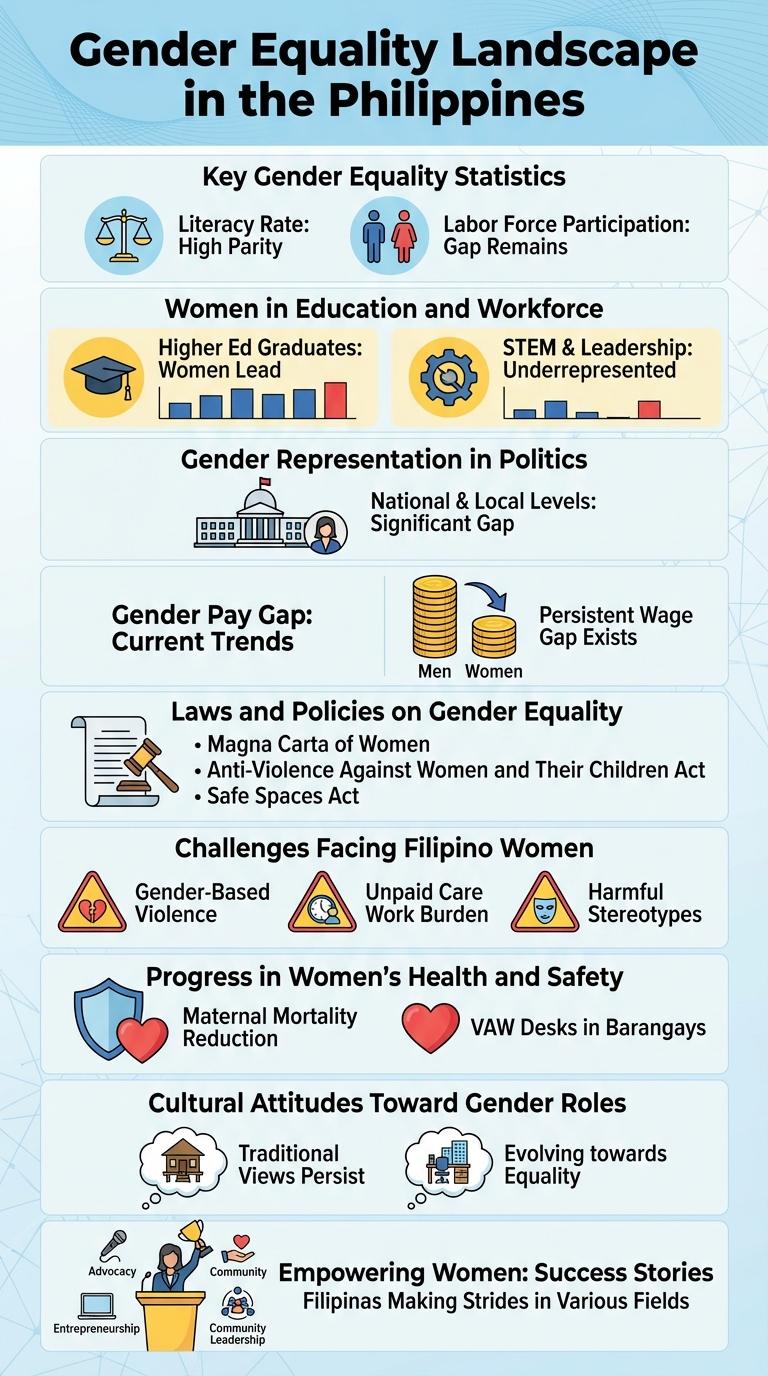
Gender equality in the Philippines reflects significant progress and ongoing challenges, with visual data highlighting disparities in education, employment, and political representation. The infographic presents key statistics that showcase the country's efforts to promote equal opportunities and address gender-based inequalities. Clear depiction of trends and gaps supports informed discussions on achieving a more inclusive society.
Gender Equality Landscape in the Philippines
The Philippines demonstrates a progressive stance on gender equality, ranking consistently high in Southeast Asia. Government policies and social initiatives aim to bridge gender gaps across various sectors.
- High Gender Equality Ranking - The Philippines ranks 16th globally in the World Economic Forum's Global Gender Gap Report 2023, leading Southeast Asia.
- Women in Leadership - Women hold 28% of seats in the Philippine Congress, reflecting growing political representation.
- Economic Participation - Female labor force participation stands at 49%, showing ongoing efforts to close employment gaps.
Key Gender Equality Statistics
Gender equality in the Philippines shows progressive trends with women holding 28% of seats in the national parliament. Female labor force participation stands at 47%, close to the male rate of 72%.
Literacy rates for women and men exceed 96%, reflecting strong educational access. However, the gender pay gap remains at around 20%, signaling ongoing economic disparities.
Women in Education and Workforce
Gender equality in the Philippines shows significant progress in women's access to education. Female enrollment rates in primary and secondary schools have reached parity with male students.
Women make up nearly half of the workforce, with increasing representation in professional and managerial roles. Despite this, gender wage gaps and underrepresentation in top leadership persist, highlighting areas for improvement.
Gender Representation in Politics
| Category | Data |
|---|---|
| Women in Congress (2023) | 28% of House Representatives |
| Women Senators (2023) | 20% of the Senate |
| Female Local Government Executives | 18% of Governors and Mayors |
| Gender Quotas | Republic Act No. 9710 mandates 20% participation in party-list representations |
| Trends | Gradual increase in female political participation since 1990s |
Gender Pay Gap: Current Trends
What is the current state of the gender pay gap in the Philippines? Women in the Philippines earn approximately 80% of what men earn on average. This wage disparity persists despite increased female participation in the workforce.
| Year | Gender Pay Gap (%) |
|---|---|
| 2018 | 21.5% |
| 2019 | 19.8% |
| 2020 | 18.7% |
| 2021 | 19.2% |
Which industries report the largest gender pay gaps in the Philippines? The finance and insurance sectors show some of the highest disparities, with women earning significantly less than men. Efforts to close this gap focus on policy reforms and gender-sensitive workplace practices.
Laws and Policies on Gender Equality
The Philippines has enacted several landmark laws promoting gender equality, including the Magna Carta of Women, which guarantees equal rights and opportunities for all genders. The Anti-Violence Against Women and Their Children Act addresses gender-based violence, providing protection and legal recourse for victims. Government policies emphasize gender mainstreaming across agencies to ensure inclusive development and equal participation in economic, social, and political spheres.
Challenges Facing Filipino Women
Gender equality remains a critical issue in the Philippines despite progress in various sectors. Filipino women continue to face numerous social, economic, and cultural challenges limiting their full participation in society.
- Economic Disparities - Filipino women earn approximately 20% less than their male counterparts in similar roles, highlighting persistent wage gaps.
- Underrepresentation in Leadership - Women occupy only about 28% of leadership positions in government and corporate sectors.
- Gender-Based Violence - One in four Filipino women experiences physical or sexual violence, indicating a serious public health and human rights issue.
Addressing these challenges is essential to promoting inclusive growth and sustainable development in the Philippines.
Progress in Women's Health and Safety
Gender equality in the Philippines has seen significant progress, particularly in women's health and safety. Government initiatives and non-governmental organizations continue to drive positive changes in these areas.
The maternal mortality rate has decreased due to improved healthcare access and maternal services. Policies addressing gender-based violence have strengthened, leading to better protection and support for women. Efforts to raise awareness about women's health issues contribute to ongoing progress in safety and well-being.
Cultural Attitudes Toward Gender Roles
The Philippines demonstrates shifting cultural attitudes toward gender roles, reflecting both traditional values and progressive change. These evolving perspectives influence social norms, workplace dynamics, and policymaking related to gender equality.
- Strong Influence of Traditional Norms - Many Filipino communities maintain conventional beliefs, where men are seen as primary breadwinners and women as caretakers.
- Increasing Female Workforce Participation - Women's growing involvement in various sectors challenges historical gender expectations and promotes economic empowerment.
- Younger Generations' Progressive Views - Filipino youth display more egalitarian beliefs, supporting equal rights and opportunities regardless of gender.