
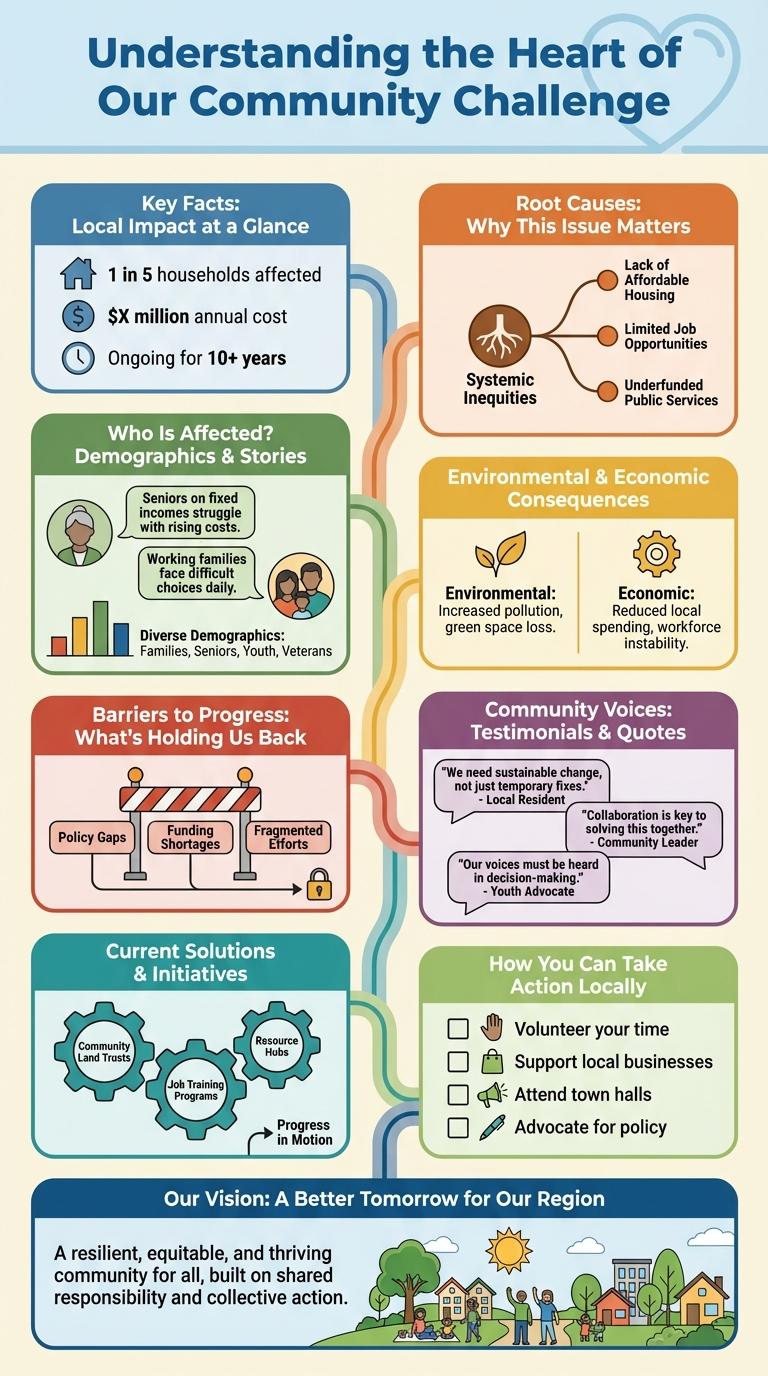
Local communities face unique challenges that impact the daily lives of residents, from environmental concerns to social equity issues. Visualizing data through infographics enhances understanding by presenting complex information in a clear and engaging manner. This infographic highlights key aspects of a regional cause, fostering awareness and motivating community action.
Understanding the Heart of Our Community Challenge
Understanding the core challenges faced by our local community is essential for fostering positive change and building resilience. Addressing these issues requires clear awareness of the factors impacting residents daily.
Local economic decline, limited access to healthcare, and inadequate educational resources form the heart of our community's pressing concerns.
- Economic Impact - Unemployment rates are 15% higher here than the national average, affecting family stability and growth.
- Healthcare Access - 30% of residents lack affordable healthcare, leading to increased chronic illness and emergency visits.
- Education Gap - Only 60% of local high school students graduate on time, limiting future opportunities for youth in the region.
Key Facts: Local Impact at a Glance
Water scarcity affects over 40% of the local population, leading to health risks and reduced agricultural productivity. Regional droughts have caused a 25% decline in crop yields over the past five years. Local businesses have reported a 15% increase in operational costs due to water restrictions.
Root Causes: Why This Issue Matters
| Root Cause | Impact on Community |
|---|---|
| Lack of Affordable Housing | Increased homelessness and housing instability; reduces access to essential services |
| Poor Public Transportation | Limits employment opportunities and access to education; increases social isolation |
| Environmental Pollution | Health problems such as asthma and allergies; degraded local ecosystems |
| Underfunded Schools | Lower educational outcomes and reduced future economic prospects |
| Food Insecurity | Malnutrition and increased health risks; limits children's learning and development |
Who Is Affected? Demographics & Stories
Local communities face significant challenges due to rising air pollution levels. This issue predominantly affects residents in urban and industrial regions with high emission rates.
Children, elderly individuals, and people with respiratory conditions bear the brunt of air quality deterioration. Many families have reported increased asthma cases and other health complications. Efforts to raise awareness and push for stricter regulations are gaining momentum as these stories highlight the human impact behind the data.
Environmental & Economic Consequences
Deforestation in the Amazon rainforest has significant environmental and economic consequences. This regional issue impacts biodiversity and local economies dependent on forest resources.
- Loss of Biodiversity - Over 17,000 species are threatened due to habitat destruction caused by deforestation.
- Carbon Emissions - The region contributes nearly 10% of global carbon emissions through forest burning and logging activities.
- Impact on Indigenous Communities - Thousands of indigenous populations face displacement and loss of livelihood from deforestation.
Addressing deforestation in the Amazon is crucial for preserving ecological balance and sustaining economic activities linked to forest resources.
Barriers to Progress: What's Holding Us Back
Barriers to progress in local and regional communities often stem from limited infrastructure, inadequate funding, and fragmented governance. These obstacles hinder economic development, access to education, and healthcare improvements.
Social challenges such as inequality, lack of community engagement, and resistance to change further delay positive outcomes. Addressing these barriers requires coordinated efforts between public agencies, private sectors, and residents.
Community Voices: Testimonials & Quotes
How do local residents feel about the rising pollution levels in their community?
Community members share heartfelt stories expressing concerns about health risks and environmental damage. Their voices highlight the urgent need for action and sustainable solutions.
| Resident | Testimonial |
|---|---|
| Maria L., Teacher | "The increase in smog affects my students' ability to breathe and focus in class." |
| John D., Small Business Owner | "Pollution is driving customers away. Cleaner air could revive our local economy." |
| Aisha R., Nurse | "I see more patients with respiratory issues. This crisis impacts public health directly." |
| Marco T., Student | "We need greener parks and better policies to protect our future." |
Current Solutions & Initiatives
Local communities implement various initiatives to address plastic pollution, including regular clean-up drives and educational campaigns. These efforts aim to reduce plastic waste and promote sustainable practices among residents.
Recycling programs and bans on single-use plastics have been introduced in many regions to curb environmental damage. Partnerships between local governments and NGOs support these measures, enhancing their reach and effectiveness.
How You Can Take Action Locally
Taking action on local environmental issues starts with understanding your community's specific challenges, such as pollution, deforestation, or waste management. Volunteering for neighborhood cleanups, supporting local sustainability initiatives, and participating in public forums can amplify your impact. Engaging with local leaders and advocating for greener policies ensures long-term positive change at the regional level.