
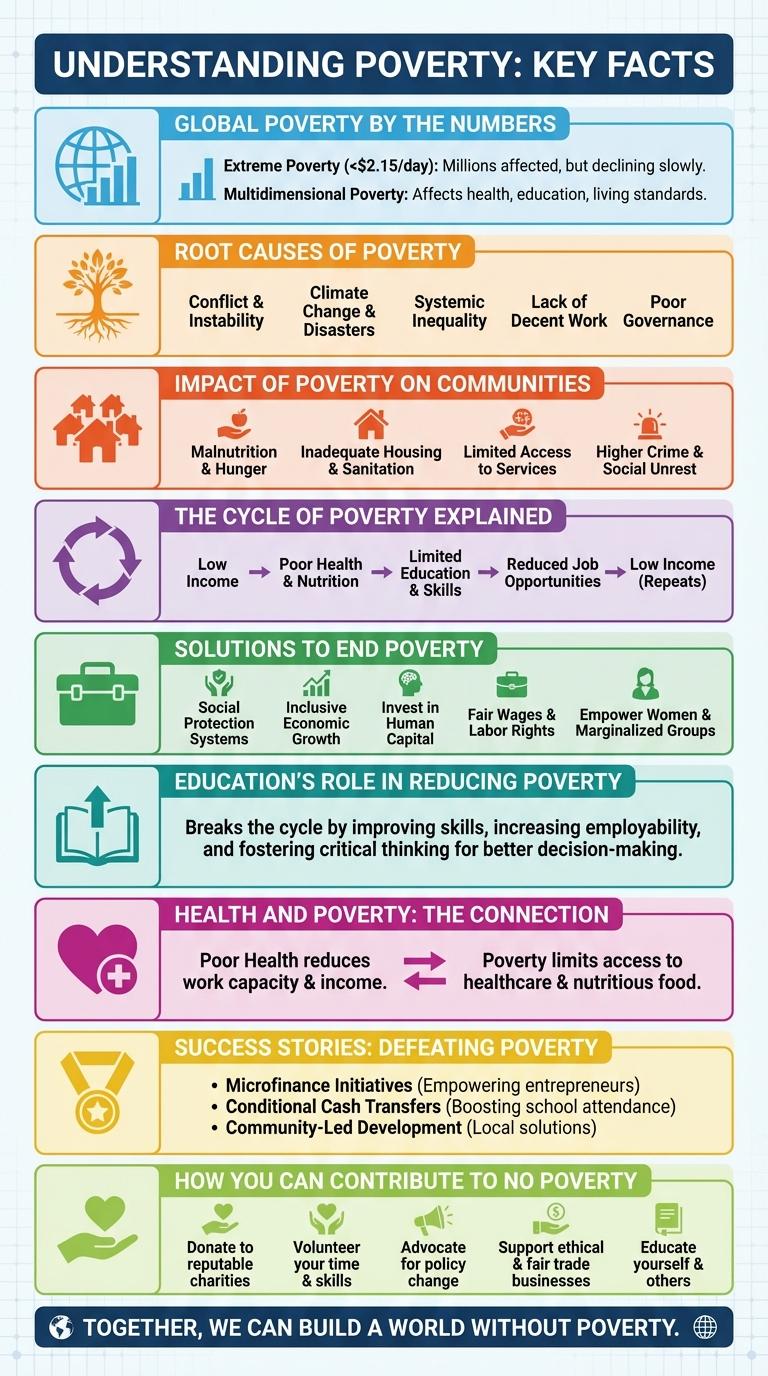
Eradicating poverty is essential for building equitable and sustainable communities worldwide. Visual data in the infographic highlights key statistics, showing the global distribution of poverty and the impact of targeted interventions. Understanding these figures guides effective strategies to reduce poverty and improve living conditions.
Understanding Poverty: Key Facts
| Key Fact | Statistics & Insights |
|---|---|
| Global Poverty Rate | Approximately 9.2% of the world's population lived on less than $2.15 per day in 2021. |
| Children in Poverty | One in six children worldwide grows up in extreme poverty, impacting health and education. |
| Rural Poverty | Over 80% of people living in extreme poverty reside in rural areas with limited access to services. |
| Impact on Education | Poverty restricts access to quality education, resulting in lower literacy rates and fewer job opportunities. |
| Women and Poverty | Women are disproportionately affected by poverty due to gender inequality and reduced economic participation. |
Global Poverty by the Numbers
Global poverty affects over 700 million people living on less than $1.90 a day, the international poverty line. Sub-Saharan Africa has the highest poverty rate, with nearly 40% of its population living in extreme poverty. Efforts to reduce poverty have led to a significant decline, but nearly 10% of the world's population still lives in extreme poverty as of 2023.
Root Causes of Poverty
Poverty stems from complex and interconnected root causes such as lack of education, unemployment, and inadequate access to healthcare. Structural inequalities including discrimination and limited economic opportunities also contribute significantly to the persistence of poverty.
Environmental factors like climate change and natural disasters exacerbate poverty by destroying livelihoods and resources. Addressing these root causes requires targeted policies focused on education, social protection, and inclusive economic growth.
Impact of Poverty on Communities
Poverty significantly undermines the well-being and development of communities worldwide. It restricts access to essential resources, leading to long-term social and economic challenges.
- Health Disparities - Communities facing poverty experience higher rates of chronic illnesses and limited access to healthcare services.
- Educational Barriers - Children in impoverished areas often lack educational opportunities, affecting future employment prospects.
- Economic Instability - Poverty leads to reduced economic growth, increased unemployment, and limited infrastructure development.
Addressing poverty directly enhances community resilience and fosters sustainable development.
The Cycle of Poverty Explained
The cycle of poverty traps individuals and families in ongoing economic hardship, limiting access to resources and opportunities. Breaking this cycle requires targeted interventions that address root causes and empower affected communities.
- Limited Education - Lack of access to quality education reduces employment opportunities and earning potential.
- Unstable Employment - Irregular jobs with low wages hinder financial stability and savings accumulation.
- Inadequate Healthcare - Poor health reduces work capacity and increases medical expenses, deepening poverty.
Solutions to End Poverty
Ending poverty requires targeted actions that address its root causes and create sustainable opportunities. Implementing effective solutions can significantly improve the quality of life for millions worldwide.
- Universal Access to Education - Quality education empowers individuals with skills and knowledge to break the cycle of poverty.
- Inclusive Economic Growth - Promoting job creation and fair wages fosters economic stability for vulnerable populations.
- Social Protection Programs - Safety nets like cash transfers reduce poverty risk and support basic needs during crises.
Education's Role in Reducing Poverty
How does education contribute to reducing poverty worldwide? Education equips individuals with essential skills and knowledge that increase employment opportunities and income potential. It empowers communities to break the cycle of poverty by fostering economic growth and social development.
What are the key educational factors that impact poverty reduction? Access to quality education, literacy rates, and school completion percentages are critical indicators. Higher education levels correlate strongly with lower poverty rates and improved living standards.
Why is early childhood education important for poverty alleviation? Early learning programs build a foundation for cognitive and social skills, improving academic performance and long-term economic prospects. Investing in early education reduces future costs related to poverty and social inequality.
How does education help marginalized groups overcome poverty? Inclusive education policies provide equal opportunities for women, minorities, and rural populations. This inclusion promotes social equity and economic participation, reducing disparities and poverty levels.
| Educational Impact | Poverty Reduction Effect |
|---|---|
| Literacy Improvement | Enhances job prospects and earnings |
| School Completion Rates | Correlates with higher lifetime income |
| Access to Vocational Training | Supports skill development for employment |
| Early Childhood Education | Boosts cognitive development and success |
| Inclusive Education | Promotes social equality and economic access |
Health and Poverty: The Connection
Health and poverty are closely linked, with poor health often leading to increased poverty due to medical expenses and reduced income. Lack of access to healthcare worsens living conditions, creating a cycle that is difficult to break.
Malnutrition, infectious diseases, and chronic conditions disproportionately affect impoverished populations, limiting their ability to work and earn. Children in poverty face higher risks of illness, which impacts their development and future opportunities. Improving healthcare access and affordability can significantly reduce poverty levels globally.
Success Stories: Defeating Poverty
Success stories in defeating poverty showcase remarkable progress across diverse regions, demonstrating that targeted initiatives can uplift communities. Innovative programs focusing on education, employment, and healthcare have transformed lives.
Microfinance institutions empower entrepreneurs by providing access to capital, fueling small business growth. Social protection schemes offer safety nets, reducing vulnerability and promoting economic stability for millions.