
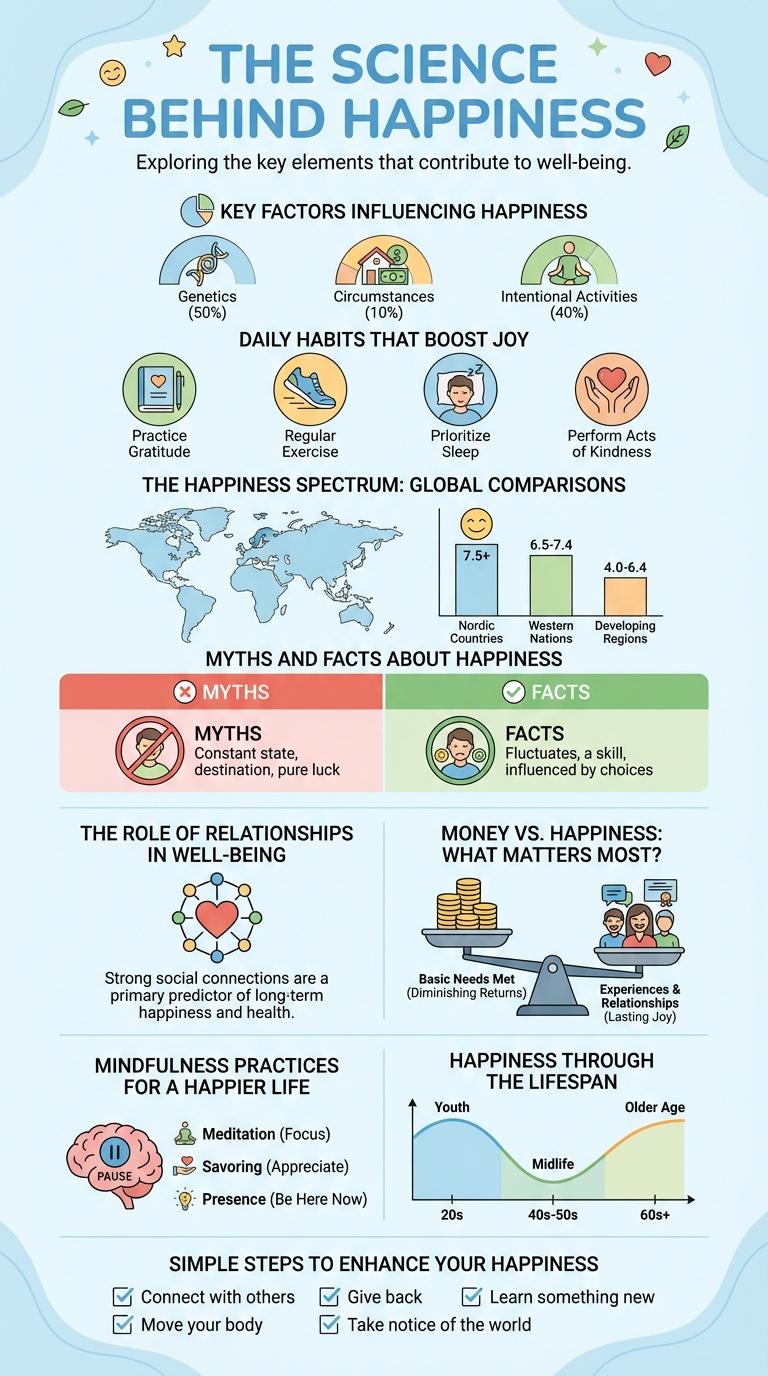
Discover key insights and data points that reveal what contributes to happiness worldwide. This infographic highlights factors such as social connections, health, and economic stability influencing overall well-being. Visualizing these elements helps understand how various aspects impact personal and collective happiness levels.
The Science Behind Happiness
What is the science behind happiness? Researchers define happiness as a combination of life satisfaction, positive emotions, and a sense of purpose. Studies show that brain chemicals such as dopamine, serotonin, and oxytocin play key roles in regulating feelings of happiness.
Key Factors Influencing Happiness
Happiness is influenced by a variety of key factors that shape our overall well-being. Understanding these elements helps individuals and communities foster a more joyful life.
Positive relationships, physical health, financial stability, purpose, and environment are primary contributors to happiness. Each factor plays a crucial role in enhancing emotional and mental wellness.
Daily Habits That Boost Joy
Daily habits significantly influence overall happiness by fostering positive emotions and reducing stress. Incorporating simple, intentional actions each day can elevate joy and improve mental well-being.
- Practice Gratitude - Writing down three things you are grateful for each morning enhances positive thinking and emotional resilience.
- Engage in Physical Activity - Regular exercise releases endorphins that naturally boost mood and energy levels.
- Connect Socially - Spending quality time with friends or family strengthens emotional bonds and increases feelings of happiness.
The Happiness Spectrum: Global Comparisons
| Country | Happiness Score (2023) |
|---|---|
| Finland | 7.9 |
| Denmark | 7.7 |
| Switzerland | 7.6 |
| United States | 6.9 |
| India | 5.2 |
The data reflects global happiness variations measured by multiple factors including income, social support, life expectancy, freedom, trust, and generosity. Northern European countries lead the spectrum with high happiness scores attributed to strong social welfare systems and community cohesion. In contrast, lower scores in some countries indicate challenges such as economic instability and limited access to healthcare that impact overall life satisfaction.
Myths and Facts About Happiness
Happiness is often misunderstood through common myths that can obscure its true nature. Separating fact from fiction helps cultivate a more accurate understanding of what contributes to genuine well-being.
Myth: Happiness depends solely on external circumstances like wealth or success. Fact: Research shows that internal factors such as mindset and relationships play a greater role in lasting happiness.
Myth: Pursuing constant pleasure leads to happiness. Fact: True happiness arises from meaningful experiences and purpose, not just momentary enjoyment.
Myth: People have a fixed happiness level that cannot change. Fact: Studies indicate that happiness can be increased through intentional activities like gratitude and mindfulness.
| Myth | Fact |
| Money guarantees happiness | Money helps only up to basic needs; beyond that, its effect diminishes |
| Happiness is constant | Happiness fluctuates and can be influenced by actions and attitudes |
| Success brings instant happiness | Success without fulfillment or balance often fails to sustain happiness |
| Happiness is solely personal | Social connections and community strongly impact happiness levels |
| Only positive emotions mean happiness | Embracing all emotions contributes to overall well-being |
The Role of Relationships in Well-being
Strong relationships significantly contribute to overall happiness and life satisfaction. Social connections enhance emotional support and reduce stress levels.
- Emotional Support - Close relationships provide comfort and help individuals cope with challenges.
- Increased Longevity - People with strong social ties tend to live longer and healthier lives.
- Improved Mental Health - Positive relationships lower the risk of depression and anxiety.
Building and maintaining meaningful relationships is essential for long-term well-being and happiness.
Money vs. Happiness: What Matters Most?
Happiness research reveals that while money can improve well-being, its impact plateaus after meeting basic needs. Psychological factors such as strong relationships, a sense of purpose, and mental health contribute more significantly to long-term happiness. Balancing financial stability with personal fulfillment is essential for maximizing overall life satisfaction.
Mindfulness Practices for a Happier Life
Mindfulness practices enhance happiness by promoting present-moment awareness and reducing stress. Techniques such as meditation, deep breathing, and mindful walking help improve emotional regulation and increase overall well-being. Consistent mindfulness practice strengthens brain regions associated with positive emotions and resilience.
Happiness Through the Lifespan
Happiness evolves throughout different stages of life, reflecting changes in priorities and experiences. Research shows that emotional well-being often follows a U-shaped curve, peaking in young adulthood and late life.
During childhood, happiness is linked to play and family connections. In middle age, career and relationships greatly influence life satisfaction. Older adults tend to find happiness in social bonds, gratitude, and acceptance, demonstrating resilience despite challenges.