
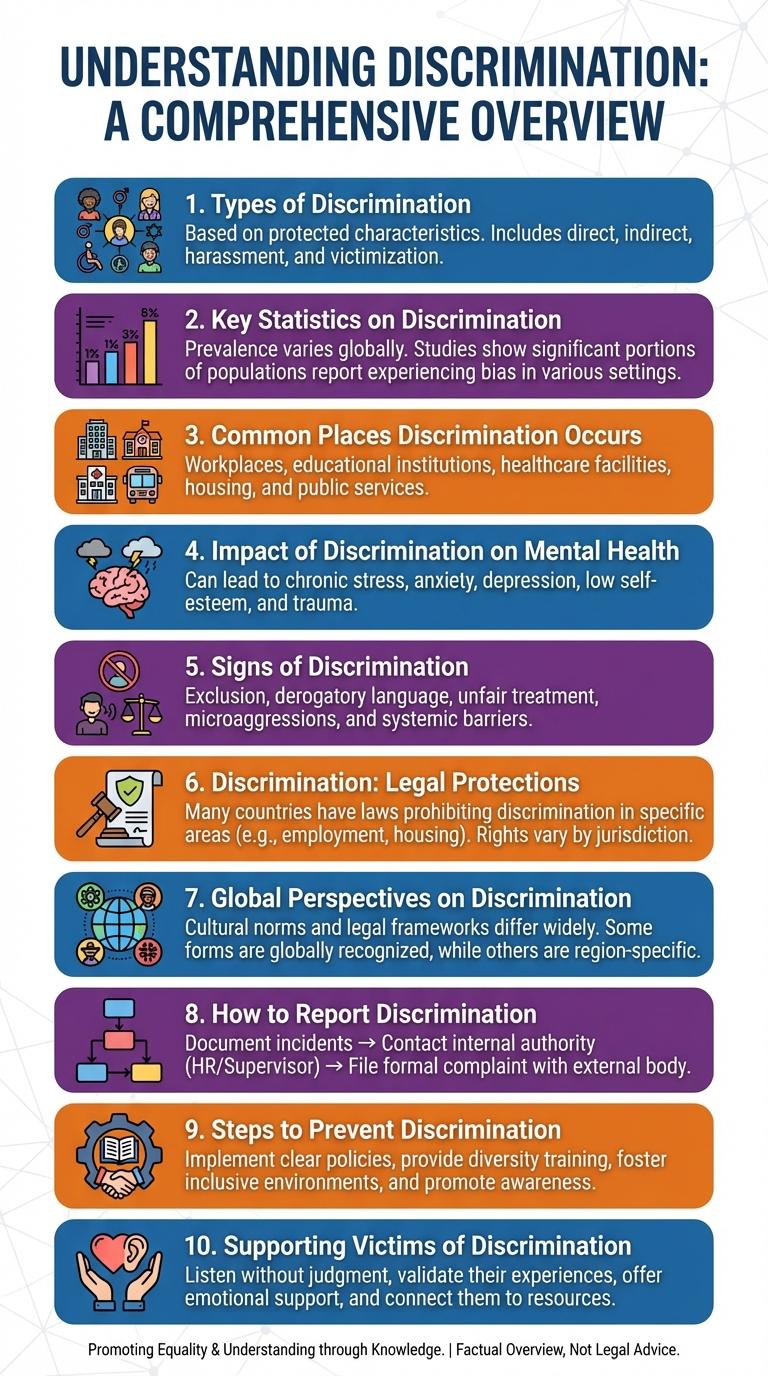
Discrimination undermines equality by unfairly treating individuals based on race, gender, age, or other characteristics. Visual representations highlight key statistics and impact, making complex data more accessible and compelling. Infographics serve as powerful tools to raise awareness and promote social change.
Types of Discrimination
Discrimination manifests in various forms, affecting individuals based on attributes like race, gender, age, and disability. Recognizing these types helps in addressing and preventing unfair treatment in society.
Common types include racial, gender, age, disability, and religious discrimination. Each type impacts people's opportunities, rights, and social inclusion differently.
Key Statistics on Discrimination
Discrimination remains a pervasive issue worldwide, impacting various aspects of life such as employment, education, and healthcare. Understanding key statistics helps highlight the scope and urgency for change.
- Workplace Discrimination - Approximately 31% of employees report experiencing discrimination at work based on race, gender, or age.
- Education Inequality - Minority students are 1.8 times more likely to be suspended or expelled compared to their peers.
- Healthcare Access - 29% of minority groups report receiving lower quality healthcare than the majority population.
These statistics emphasize the need for comprehensive policies to address and reduce discrimination globally.
Common Places Discrimination Occurs
Where does discrimination commonly occur in daily life? Discrimination takes place in various settings, impacting individuals differently depending on the environment. Recognizing these common locations helps address and reduce biased behaviors effectively.
| Place | Description |
|---|---|
| Workplace | Bias in hiring, promotions, and workplace treatment based on race, gender, or religion. |
| Educational Institutions | Unequal access to resources and opportunities for students from marginalized backgrounds. |
| Public Spaces | Harassment or exclusion in parks, transportation, and social venues. |
| Healthcare Facilities | Disparities in medical treatment and patient care quality. |
| Housing | Discrimination in renting, buying, and lending practices against minorities. |
Impact of Discrimination on Mental Health
Discrimination significantly affects mental health by increasing stress, anxiety, and depression levels in affected individuals. Experiencing bias or exclusion can lead to feelings of helplessness and low self-esteem.
Chronic exposure to discrimination contributes to long-term psychological conditions and decreases overall well-being. Supportive environments and mental health resources are essential to mitigate these negative impacts.
Signs of Discrimination
Discrimination manifests through unequal treatment based on race, gender, age, or other characteristics. Common signs include exclusion from activities, biased decision-making, and verbal harassment. Recognizing these indicators is essential to promote equality and inclusiveness in all environments.
Discrimination: Legal Protections
| Type of Discrimination | Legal Protections |
|---|---|
| Race and Ethnicity | Civil Rights Act of 1964, Equal Employment Opportunity Commission (EEOC) enforcement |
| Gender and Sexual Orientation | Title VII of the Civil Rights Act, Equal Pay Act, Employment Non-Discrimination Act (proposed) |
| Disability | Americans with Disabilities Act (ADA), Section 504 of the Rehabilitation Act |
| Age | Age Discrimination in Employment Act (ADEA) |
| Religion | Civil Rights Act, Religious Freedom Restoration Act |
Global Perspectives on Discrimination
Discrimination exists worldwide, affecting individuals based on race, gender, age, and other identities. Different countries face unique challenges shaped by cultural, social, and legal factors. Understanding global perspectives helps promote inclusive policies and human rights protections.
How to Report Discrimination
Discrimination violates fundamental human rights and must be addressed promptly. Knowing how to report discrimination empowers individuals to seek justice and promote equality.
Begin by documenting the incident with detailed notes, including dates, times, locations, and witnesses. Contact your organization's human resources department or an appropriate supervisor to file a formal complaint. If internal resolution fails, reach out to external bodies such as the Equal Employment Opportunity Commission (EEOC) or local anti-discrimination agencies for further assistance.
Steps to Prevent Discrimination
Discrimination undermines equality and social harmony, making prevention essential for inclusive communities. Implementing practical steps can foster respect and reduce bias effectively.
- Educate and Raise Awareness - Conduct training sessions to inform individuals about different forms of discrimination and their impacts.
- Enforce Anti-Discrimination Policies - Establish clear workplace or institutional rules that prohibit discriminatory behavior and ensure accountability.
- Promote Diversity and Inclusion - Encourage representation from diverse groups to create an environment that values all voices equally.