
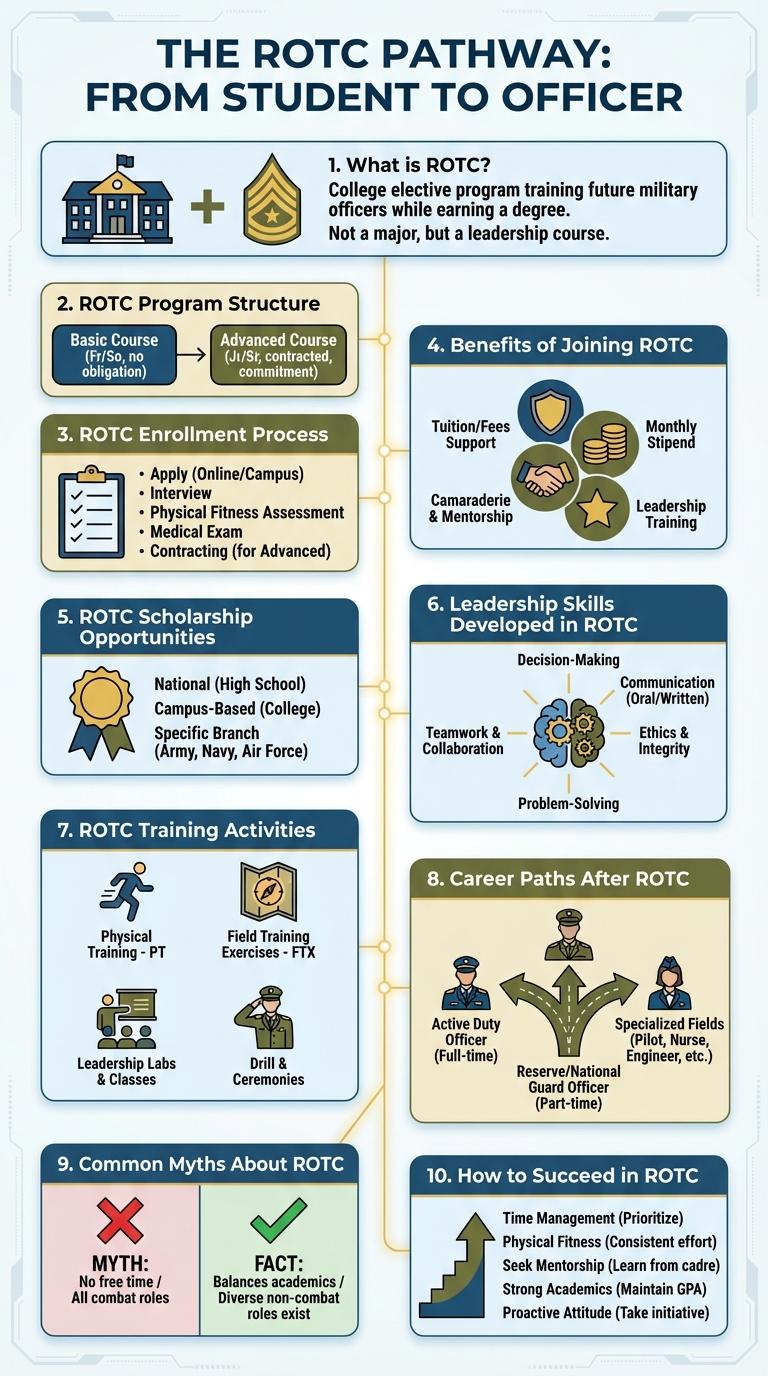
ROTC programs provide college students with military training, leadership development, and scholarship opportunities while they complete their degrees. Participants gain valuable skills in discipline, teamwork, and strategic thinking, preparing them for future careers both in and out of the armed forces. This infographic breaks down key aspects of ROTC, including benefits, requirements, and career paths.
What is ROTC?
ROTC (Reserve Officers' Training Corps) is a college program that trains students to become commissioned officers in the U.S. military. It combines classroom education with military leadership training and physical fitness. Participants earn a degree while preparing for a career in the Army, Navy, Air Force, or Marines.
ROTC Program Structure
The ROTC program combines college education with military training, preparing students for officer roles in the armed forces. It is structured into two main phases: the Basic Course and the Advanced Course, each lasting two years. Cadets participate in leadership labs, physical training, and field exercises to develop essential military skills.
ROTC Enrollment Process
The ROTC enrollment process guides aspiring cadets from application to active participation. Understanding each step ensures a smooth transition into military training and leadership development.
Enrollment involves meeting eligibility criteria, completing necessary paperwork, and undergoing evaluations.
- Eligibility Verification - Applicants must meet age, academic, and physical fitness requirements to qualify for ROTC.
- Application Submission - Candidates submit forms including personal information, academic records, and recommendation letters.
- Assessment and Interview - Prospective cadets undergo physical exams and leadership interviews to evaluate suitability.
Benefits of Joining ROTC
Joining the Reserve Officers' Training Corps (ROTC) offers students a unique opportunity to develop leadership skills while pursuing their college education. Participants gain practical military training alongside academic studies, preparing them for future careers in the armed forces.
ROTC members receive scholarships that can cover tuition, fees, and textbooks, significantly reducing the cost of higher education. They build discipline, physical fitness, and teamwork abilities essential for both military and civilian success. Graduates earn commissions as officers, opening pathways to leadership roles in the Army, Navy, Air Force, or Marines.
ROTC Scholarship Opportunities
Reserve Officers' Training Corps (ROTC) offers scholarships that cover tuition, fees, and textbook costs for students committed to military service. These scholarships provide financial support while developing leadership skills and military training during college.
Applicants can compete for four-year, three-year, or two-year scholarships based on academic achievement and physical fitness. The ROTC scholarship also includes a monthly stipend, helping students with living expenses during their studies.
Leadership Skills Developed in ROTC
ROTC develops essential leadership skills that prepare cadets for military and civilian careers. It offers practical training that enhances strategic thinking and decision-making abilities.
- Effective Communication - Cadets learn to convey ideas clearly in high-pressure situations.
- Team Management - Training emphasizes coordinating teams to achieve mission objectives.
- Problem-Solving - ROTC challenges cadets to analyze information and develop tactical solutions.
ROTC Training Activities
What are the primary training activities involved in ROTC? ROTC training activities focus on leadership development, physical fitness, and military skills. Cadets participate in field exercises, drill practices, and classroom instruction to prepare for military service.
| Training Activity | Description |
|---|---|
| Field Exercises | Simulated combat scenarios to develop tactical skills and teamwork. |
| Drill Practices | Precision marching and formations that promote discipline and unit cohesion. |
| Physical Fitness | Endurance and strength training to ensure cadet readiness. |
| Classroom Instruction | Academic courses covering military science, leadership, and ethics. |
| Leadership Labs | Hands-on activities to build decision-making and command skills. |
Career Paths After ROTC
ROTC prepares cadets for diverse career opportunities in the military and civilian sectors. Graduates often assume leadership roles in the Army, Navy, Air Force, or Marine Corps.
Many ROTC alumni pursue careers in engineering, medicine, law, or business, leveraging military training and education. The program also fosters skills valuable in government and private industries, including management and logistics.
Common Myths About ROTC
ROTC, or Reserve Officers' Training Corps, offers college students a pathway to military leadership and career opportunities. Several misconceptions about ROTC can deter potential candidates from exploring this valuable program.
- ROTC is only for those seeking a military career - Many students participate in ROTC while pursuing diverse academic and civilian career goals.
- ROTC requires full-time military service immediately - Most ROTC contracts require service commitment only after graduation, allowing focus on education first.
- Joining ROTC means sacrificing college life - ROTC programs are designed to balance military training with college academics and social activities.
- ROTC scholarships are limited - A variety of ROTC scholarships are available nationwide for different fields of study and levels of commitment.
- ROTC is physically overwhelming for all students - Physical training is tailored to progressively build fitness and accommodate varying skill levels.
Understanding these facts helps students make informed decisions about ROTC and its benefits.