
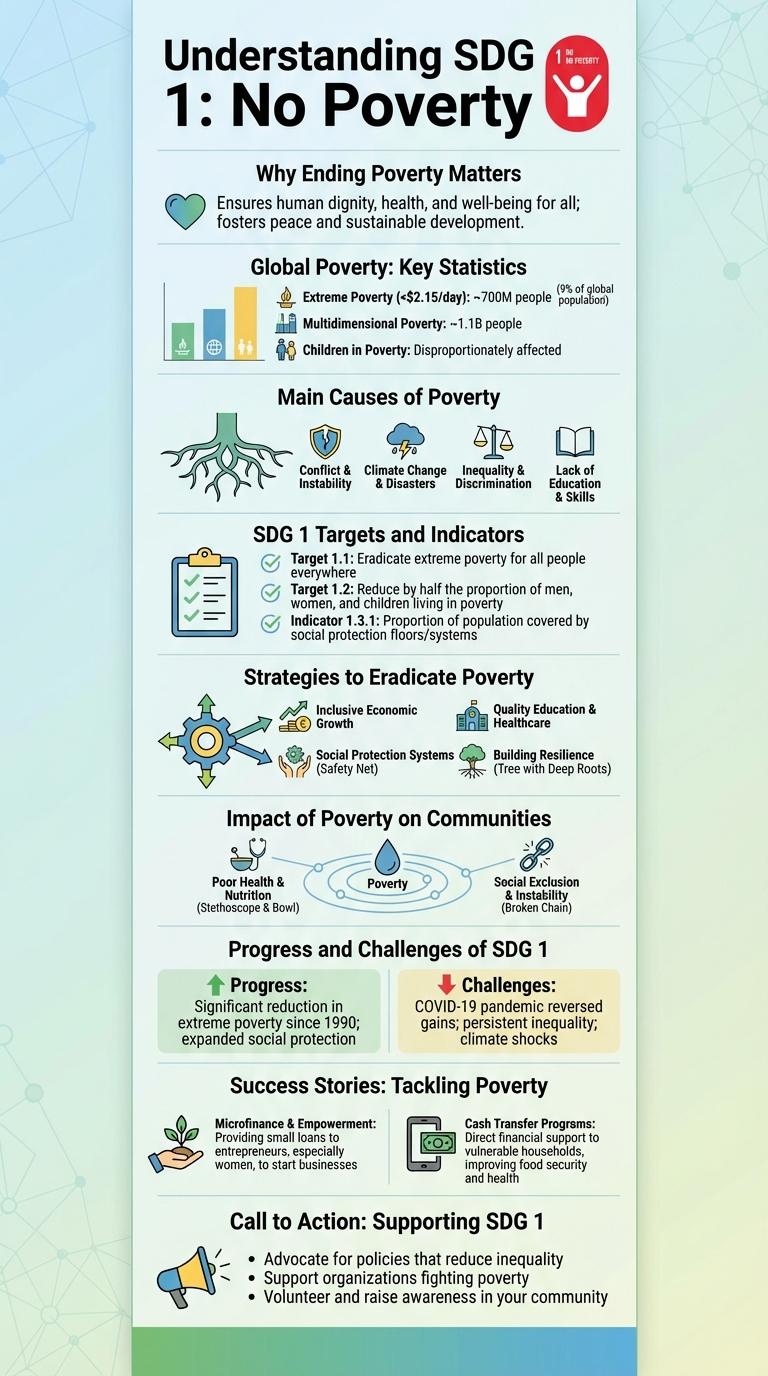
SDG 1 aims to end poverty in all its forms everywhere, targeting extreme poverty and ensuring social protection for the poor and vulnerable. The infographic highlights key statistics, challenges, and actionable strategies to achieve this critical goal. Visualizing these data points helps deepen understanding and mobilize efforts to eradicate poverty globally.
Understanding SDG 1: No Poverty
What is SDG 1: No Poverty? SDG 1 aims to eradicate extreme poverty for all people everywhere by 2030, ensuring social protection and equal rights to economic resources. It focuses on reducing poverty rates and enhancing resilience among vulnerable populations.
Why Ending Poverty Matters
Ending poverty is essential for creating a fair and just society where everyone has access to basic needs such as food, shelter, and education. Poverty eradication improves health outcomes and reduces inequality across communities worldwide.
Achieving Sustainable Development Goal 1 ensures economic growth by empowering individuals to contribute productively to society. Breaking the cycle of poverty fosters social stability and promotes sustainable development globally.
Global Poverty: Key Statistics
Global poverty remains a critical challenge, impacting billions worldwide and hindering sustainable development. Understanding key statistics surrounding poverty is essential for targeted interventions and policy-making.
- Over 700 million people live in extreme poverty - They survive on less than $1.90 a day, the international poverty line defined by the World Bank.
- Children are disproportionately affected - Nearly half of those in extreme poverty are under 18 years old, reflecting vulnerabilities in education and health.
- COVID-19 reversed progress - The pandemic pushed an estimated 97 million additional people into extreme poverty globally in 2020.
Main Causes of Poverty
SDG 1 aims to eradicate poverty in all its forms worldwide. Poverty remains a critical issue, affecting billions and hindering sustainable development.
Main causes of poverty include lack of education, unemployment, and inadequate access to healthcare. Economic inequality and social exclusion also contribute significantly to persistent poverty. Environmental factors such as climate change and natural disasters exacerbate vulnerability among impoverished communities.
SDG 1 Targets and Indicators
Sustainable Development Goal 1 aims to end poverty in all its forms everywhere by 2030. The primary targets include eradicating extreme poverty, reducing the proportion of people living in poverty, and implementing social protection systems. Key indicators measure the percentage of population below the international poverty line, coverage of social protection, and resilience to economic shocks.
Strategies to Eradicate Poverty
SDG 1 aims to eradicate poverty in all its forms globally by 2030. Effective strategies involve multi-dimensional approaches targeting income, social protection, and access to resources.
- Social Protection Programs - Implementing cash transfers and subsidies supports vulnerable populations and reduces income inequality.
- Inclusive Economic Growth - Promoting job creation and entrepreneurship boosts sustainable livelihoods and income generation.
- Access to Education and Healthcare - Enhancing quality education and healthcare services breaks the cycle of poverty and improves well-being.
Integrating these strategies ensures comprehensive progress toward eliminating poverty worldwide.
Impact of Poverty on Communities
Poverty severely affects the well-being and development of communities worldwide. Eradicating poverty fosters healthier, more resilient societies with equal opportunities for all.
- Health Consequences - Poverty limits access to healthcare, increasing disease and mortality rates in affected communities.
- Educational Barriers - Children in impoverished areas often face limited schooling, hindering long-term economic progress.
- Economic Instability - Communities experiencing poverty struggle with unemployment and low income, perpetuating cycles of hardship.
Progress and Challenges of SDG 1
| Progress | Challenges |
|---|---|
| Global extreme poverty rate dropped from 15.7% in 2010 to 9.2% in 2017 | Over 700 million people still live on less than $1.90 a day |
| Access to basic services, such as clean water and sanitation, has improved worldwide | Rural areas continue to face higher poverty rates compared to urban areas |
| Social protection coverage has increased in many countries, reducing vulnerability | Conflict and climate change disproportionately affect the poorest populations |
| International partnerships and funding for poverty eradication have expanded | Inequality within and between countries hinders eradication efforts |
Success Stories: Tackling Poverty
SDG 1 aims to eradicate poverty in all its forms worldwide. Success stories highlight innovative programs empowering vulnerable communities to achieve financial stability.
Microfinance initiatives in Bangladesh have lifted millions out of extreme poverty by providing small loans to entrepreneurs. In Kenya, digital payment platforms have expanded economic opportunities for rural populations.