
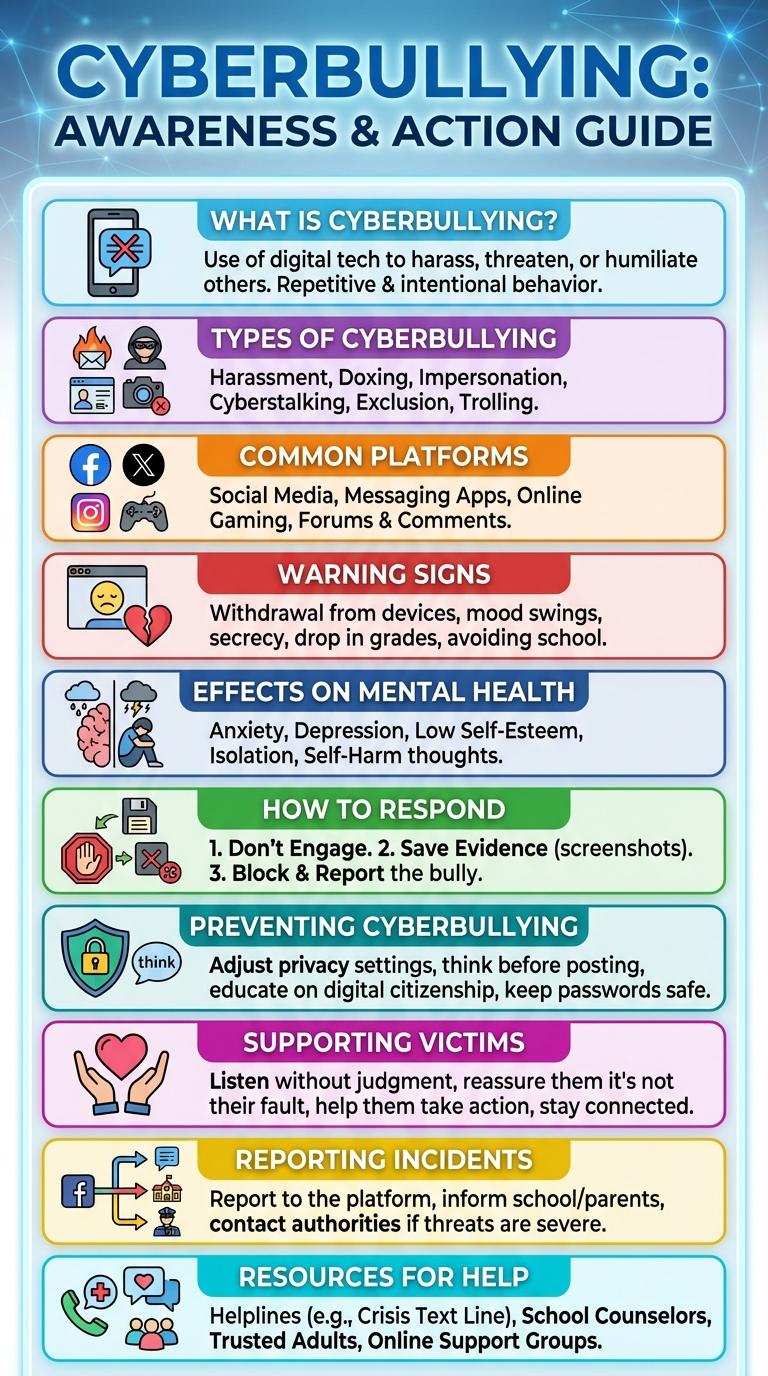
Cyberbullying awareness is crucial in today's digital age, where online harassment affects individuals of all ages. Infographics provide clear and impactful visual representations of the signs, consequences, and prevention methods of cyberbullying. Understanding these elements helps empower communities to foster safer online environments.
What Is Cyberbullying?
Cyberbullying involves using digital platforms to harass, threaten, or humiliate others. It affects individuals of all ages and can lead to serious emotional and psychological harm.
- Definition - Cyberbullying is the intentional use of electronic communication to cause distress or harm.
- Methods - Common tactics include sending threatening messages, spreading rumors, and sharing harmful content online.
- Impact - Victims often experience anxiety, depression, and a decline in self-esteem due to cyberbullying.
Understanding what cyberbullying entails is crucial for preventing and addressing this growing issue.
Types of Cyberbullying
Cyberbullying involves harmful behaviors conducted through digital platforms, targeting individuals to cause emotional distress. Understanding the types of cyberbullying is crucial for effective prevention and intervention.
Common types include harassment, where repeated offensive messages are sent to a victim. Another form is impersonation, involving someone pretending to be another person to damage their reputation.
Common Platforms for Cyberbullying
| Platform | Key Features |
|---|---|
| Large user base, public and private messaging, group interactions | |
| Image and video sharing, direct messaging, comment sections | |
| Snapchat | Temporary messages, stories, private chats |
| Short messages (tweets), public conversations, hashtags | |
| TikTok | Video sharing, comments, live streaming |
Warning Signs of Cyberbullying
Cyberbullying often manifests through sudden changes in online behavior and mood. Victims may withdraw from social interactions or exhibit signs of distress after using digital devices. Recognizing warning signs like secretive phone use or declining academic performance helps in early intervention.
Effects on Mental Health
Cyberbullying significantly impacts mental health, causing emotional distress and long-term psychological effects. Raising awareness helps identify symptoms and support affected individuals effectively.
- Increased Anxiety - Victims often experience heightened anxiety levels that interfere with daily functioning.
- Depression Symptoms - Prolonged exposure to cyberbullying can lead to persistent sadness and loss of interest.
- Lowered Self-Esteem - Negative online interactions erode confidence and self-worth over time.
How to Respond to Cyberbullying
Responding to cyberbullying involves staying calm and avoiding immediate retaliation. Save evidence of the bullying by taking screenshots or saving messages. Report the abuse to the platform and seek support from trusted individuals or authorities.
Preventing Cyberbullying
What are effective strategies for preventing cyberbullying? Encourage open communication between parents, teachers, and students to foster a trusting environment. Implement clear policies and educational programs that teach digital responsibility and respectful online behavior.
How can individuals protect themselves from cyberbullying? Use privacy settings on social media platforms to control who can see your information and posts. Avoid sharing personal details and report any inappropriate or threatening behavior immediately.
Why is raising awareness crucial in stopping cyberbullying? Awareness helps identify signs of cyberbullying early, allowing timely intervention. Educating communities promotes empathy and discourages harmful online conduct.
What role do schools play in preventing cyberbullying? Schools can create safe spaces where students feel comfortable reporting incidents without fear of retaliation. Incorporating cyberbullying prevention into the curriculum supports long-term behavior change.
How can technology assist in combating cyberbullying? Automated tools and software detect harmful language and flag abusive content for review. These technologies empower moderators to respond quickly and keep online spaces safer for everyone.
Supporting Victims of Cyberbullying
Supporting victims of cyberbullying requires immediate emotional and practical assistance. Awareness about available resources empowers affected individuals to seek help confidently.
Creating safe online environments helps reduce the impact of cyberbullying. Encouraging open communication between victims, parents, and educators promotes timely intervention. Professional counseling and support groups provide essential tools for recovery and resilience.
Reporting Cyberbullying Incidents
Reporting cyberbullying incidents is crucial to stopping online harassment and protecting victims. Many platforms offer easy-to-use reporting tools that allow users to flag abusive content quickly.
Timely reporting helps authorities and platform moderators take appropriate action against offenders. Educating users on how to report increases overall awareness and creates safer online environments.