
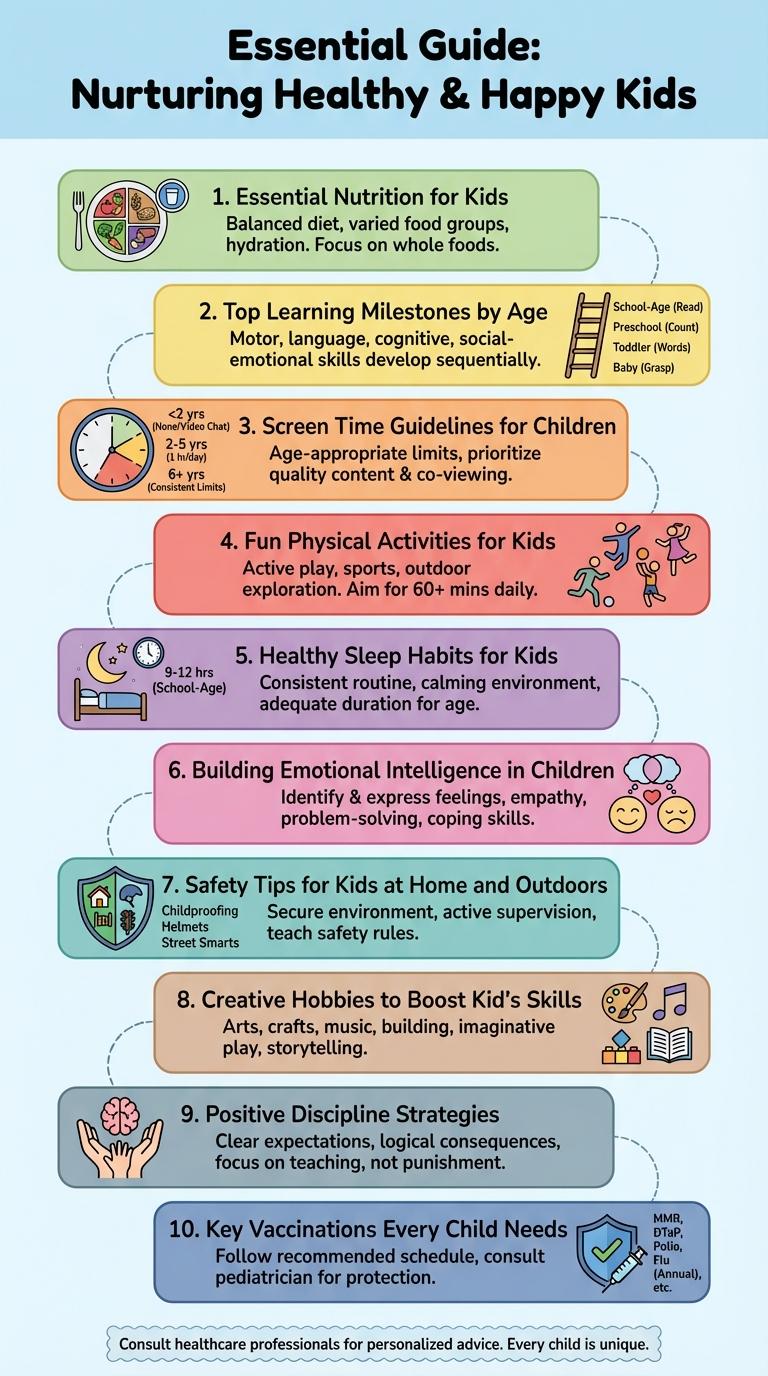
Infographics about kids offer a visually engaging way to understand important statistics and trends related to childhood development, education, and health. These graphics simplify complex data, making it easier for parents, educators, and policymakers to grasp key insights. Clear visual representation enhances awareness and supports informed decision-making for improving children's well-being.
Essential Nutrition for Kids
What are the essential nutrients kids need for healthy growth? Kids require a balanced intake of proteins, vitamins, minerals, and healthy fats to support their development. Proper nutrition enhances brain function, bone strength, and immune health.
| Nutrient | Key Benefits |
|---|---|
| Proteins | Muscle growth and repair |
| Calcium | Strong bones and teeth |
| Vitamin A | Vision and immune support |
| Iron | Healthy blood circulation |
| Omega-3 Fatty Acids | Brain development and function |
How can parents ensure kids get these vital nutrients? Serving a variety of fruits, vegetables, whole grains, lean proteins, and dairy products promotes balanced nutrition. Limiting sugary snacks helps maintain energy and focus throughout the day.
Top Learning Milestones by Age
| Age Range | Top Learning Milestones |
|---|---|
| 0-6 Months | Recognizes caregiver's face, begins to coo and babble, develops basic motor skills like reaching and grasping |
| 6-12 Months | Sits without support, begins crawling, starts to say simple sounds or words like "mama" or "dada" |
| 1-2 Years | Walks independently, follows simple instructions, starts to build vocabulary of 50+ words |
| 2-3 Years | Uses two- to three-word sentences, begins imaginative play, improves fine motor skills like drawing simple shapes |
| 3-5 Years | Recognizes letters and numbers, understands basic concepts of time, engages in social play with peers |
Screen Time Guidelines for Children
Screen time impacts children's development and well-being. Following recommended guidelines helps maintain a healthy balance.
- Under 18 months - Avoid screen time except for video chatting to support natural brain development.
- 2 to 5 years - Limit screen use to one hour per day of high-quality educational content.
- 6 years and older - Set consistent limits to ensure screen time does not interfere with sleep, physical activity, and other healthy behaviors.
Fun Physical Activities for Kids
Engaging kids in fun physical activities boosts their overall health, coordination, and social skills. Activities like jumping rope, cycling, and playing tag encourage movement and improve cardiovascular fitness. Incorporating diverse exercises keeps kids motivated and supports healthy growth and development.
Healthy Sleep Habits for Kids
Establishing healthy sleep habits is essential for children's physical and mental growth. Proper sleep patterns improve mood, cognitive abilities, and overall well-being.
- Consistent Bedtime - Set a regular bedtime to regulate the child's internal clock and promote restful sleep.
- Screen-Free Hour - Avoid screens at least one hour before sleep to reduce blue light exposure and aid melatonin production.
- Comfortable Sleep Environment - Ensure the bedroom is quiet, dark, and cool to enhance sleep quality.
Healthy sleep routines foster better attention spans and enhance academic performance in kids.
Building Emotional Intelligence in Children
Building emotional intelligence in children enhances their ability to recognize, understand, and manage their emotions effectively. Teaching empathy and active listening fosters strong social connections and improves communication skills. Early development of emotional intelligence promotes resilience and overall mental well-being throughout life.
Safety Tips for Kids at Home and Outdoors
Ensuring children's safety both at home and outdoors is essential for their well-being. Parents and caregivers must implement practical safety measures to prevent accidents and injuries.
At home, keep cleaning products and medicines out of reach and secure sharp objects. Outdoors, teach kids about road safety and the importance of staying within supervised areas.
Creative Hobbies to Boost Kid's Skills
Encouraging creative hobbies in children enhances their cognitive and emotional development. These activities nurture problem-solving skills, imagination, and self-expression.
- Drawing and Painting - Improves fine motor skills and stimulates visual learning through color and shape exploration.
- Music and Instrument Playing - Enhances auditory processing and memory while fostering discipline and coordination.
- Storytelling and Writing - Boosts language skills, critical thinking, and creativity by encouraging idea organization and expression.
Positive Discipline Strategies
Positive discipline strategies help children learn self-control and responsibility through encouragement and clear expectations. These methods promote a nurturing environment where kids feel respected and understood.
Effective strategies include setting consistent rules, using positive reinforcement, and offering choices to empower children. Praise efforts rather than outcomes to build confidence and motivation. Time-ins, rather than time-outs, encourage children to express emotions and solve problems constructively.