
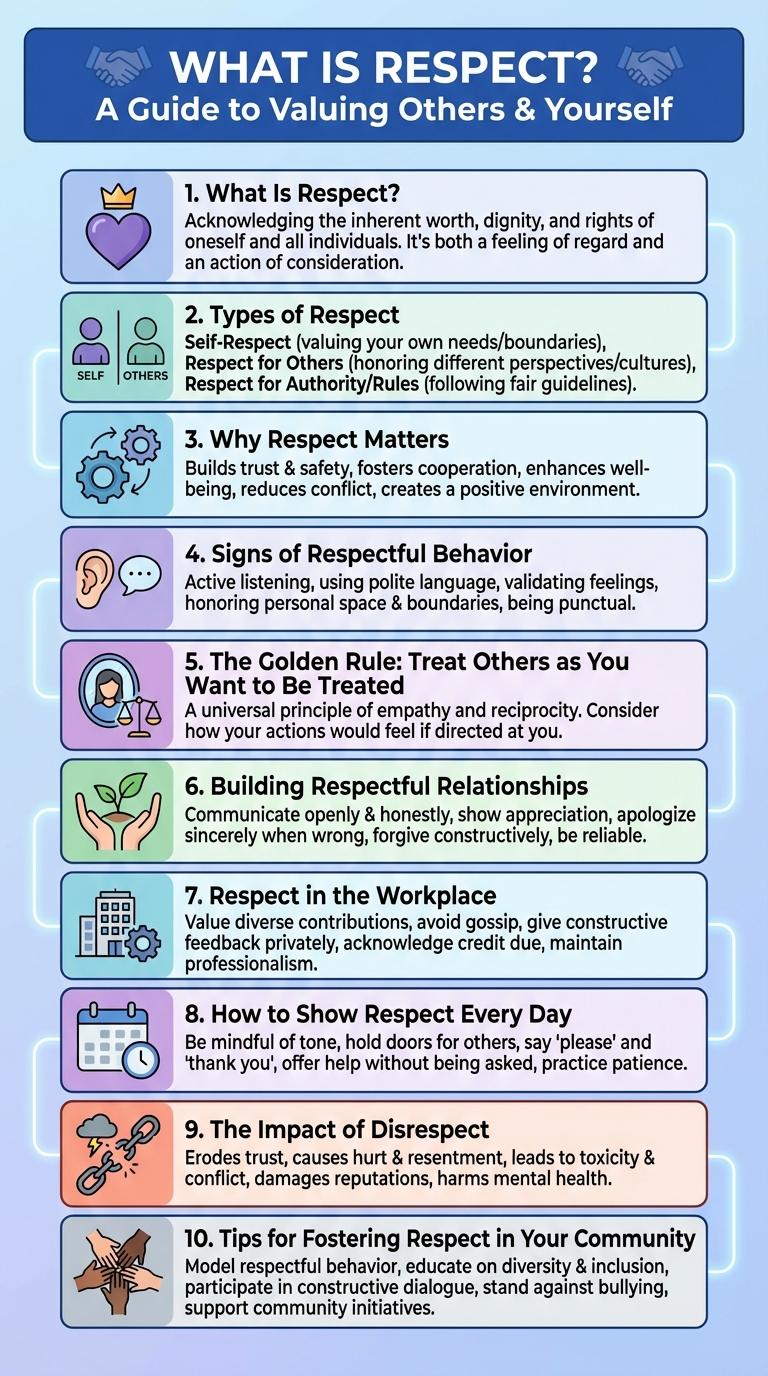
Respect is a fundamental value that fosters positive relationships and harmonious communities. Understanding its core principles enhances empathy, communication, and cooperation among individuals. Visualizing respect through an infographic simplifies its key concepts, making them accessible and impactful.
What Is Respect?
| Aspect | Description |
|---|---|
| Definition | Respect is the recognition and appreciation of the inherent worth of people, ideas, and things. |
| Key Elements | Listening actively, valuing differences, and treating others with kindness and fairness. |
| Types | Self-respect, interpersonal respect, and societal respect. |
| Importance | Builds trust, fosters positive relationships, and promotes peaceful coexistence. |
| Examples | Honoring agreements, acknowledging perspectives, and avoiding judgmental behavior. |
Types of Respect
Respect manifests in various forms, including self-respect, which involves valuing one's own dignity and well-being. Interpersonal respect emphasizes recognizing and honoring the feelings, rights, and traditions of others. Societal respect focuses on upholding laws and cultural values that promote harmony within communities.
Why Respect Matters
Respect forms the foundation of positive relationships and social harmony. Recognizing others' value promotes understanding and cooperation.
- Builds Trust - Mutual respect creates a reliable environment where people feel safe and valued.
- Enhances Communication - Respectful interactions encourage open and honest dialogue for better conflict resolution.
- Fosters Inclusivity - Valuing diverse perspectives helps cultivate a supportive and welcoming community.
Signs of Respectful Behavior
Respect is a fundamental value that strengthens relationships and fosters positive interactions. Recognizing signs of respectful behavior helps create a supportive and inclusive environment.
- Active Listening - Paying full attention shows you value the speaker's thoughts and feelings.
- Polite Language - Using courteous words demonstrates consideration and kindness.
- Accepting Differences - Embracing diverse opinions promotes mutual understanding and harmony.
Identifying respectful actions encourages everyone to contribute to a culture of dignity and mutual regard.
The Golden Rule: Treat Others as You Want to Be Treated
What does the Golden Rule teach about respect? The Golden Rule encourages treating others with the same kindness and fairness you wish to receive. It promotes empathy and mutual understanding in all relationships.
Building Respectful Relationships
Building respectful relationships is essential for fostering trust and understanding between individuals. It involves active listening, empathy, and valuing each other's perspectives.
Consistent respectful behavior creates a positive environment where communication thrives and conflicts are minimized. Setting clear boundaries and showing appreciation strengthen these connections over time.
Respect in the Workplace
Respect in the workplace fosters a positive environment where employees feel valued and motivated. It enhances collaboration, reduces conflicts, and boosts overall productivity.
Key elements include active listening, acknowledging diverse perspectives, and maintaining professional conduct. Organizations with a culture of respect experience higher employee retention and improved business outcomes.
How to Show Respect Every Day
Showing respect every day fosters positive relationships and creates a welcoming environment. Simple actions like listening attentively, using polite language, and acknowledging others' opinions demonstrate respect effectively. Consistently practicing these behaviors builds trust and mutual understanding in both personal and professional settings.
The Impact of Disrespect
Disrespect can significantly harm relationships and diminish trust between individuals and groups. Understanding its impact helps promote healthier and more productive interactions.
Experiencing disrespect often leads to decreased self-esteem and increased stress levels. In workplaces, it reduces employee morale and productivity, creating a toxic environment. Socially, disrespect fosters conflict and division, weakening community bonds.