
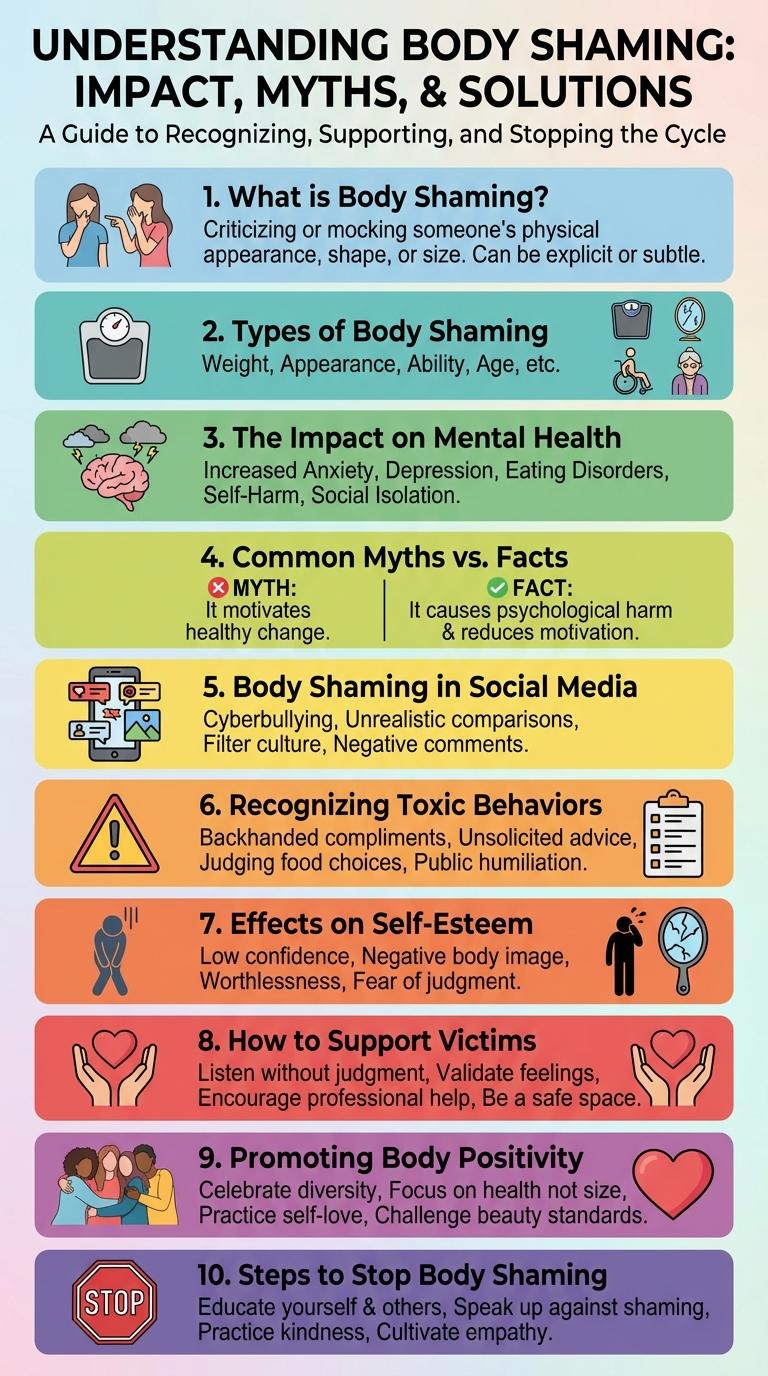
Body shaming negatively impacts mental health and self-esteem across all age groups. This infographic illustrates the widespread consequences and highlights the importance of fostering body positivity. Understanding these effects can promote empathy and encourage supportive social environments.
What is Body Shaming?
Body shaming is the act of criticizing or mocking someone's physical appearance. It often targets aspects such as weight, height, skin color, or body shape. This behavior can lead to emotional distress and negatively impact a person's self-esteem.
Types of Body Shaming
Body shaming involves criticizing or mocking an individual's physical appearance. It affects people of all ages, genders, and backgrounds, leading to emotional distress and lowered self-esteem.
Types of body shaming include weight shaming, which targets body size and shape. Other common types are height shaming, skin color shaming, and shaming based on physical disabilities or features.
The Impact on Mental Health
Body shaming significantly affects mental health by increasing risks of anxiety, depression, and low self-esteem. Victims often experience social withdrawal and heightened stress levels. Addressing body shaming promotes psychological well-being and fosters a more supportive community.
Common Myths vs. Facts
| Common Myths | Facts |
|---|---|
| Body shaming motivates people to improve their appearance. | Body shaming leads to low self-esteem, anxiety, and depression, hindering healthy behavior changes. |
| Only overweight or underweight individuals are affected by body shaming. | People of all body types and sizes experience body shaming, including those with average or athletic builds. |
| Body shaming encourages discipline and better lifestyle choices. | Body shaming damages mental health and does not promote sustainable lifestyle changes. |
| Body shaming is a harmless joke or teasing. | Body shaming causes real emotional harm and contributes to social stigma and discrimination. |
| Ignoring body shaming will make it go away. | Active efforts to challenge body shaming behaviors and promote body positivity are necessary for change. |
Body Shaming in Social Media
Body shaming on social media targets individuals based on their physical appearance, leading to negative self-esteem and mental health issues. This harmful behavior spreads rapidly due to the vast reach and anonymity of online platforms.
Social media users often face criticism for weight, skin conditions, or body shape, which can result in anxiety, depression, and social withdrawal. Platforms like Instagram, Facebook, and TikTok have implemented policies to combat body shaming, but enforcement remains inconsistent. Promoting body positivity and respectful communication online is essential to reduce the prevalence of body shaming.
Recognizing Toxic Behaviors
Body shaming involves critical comments or judgments about a person's body shape or size. Recognizing toxic behaviors helps foster a supportive and respectful environment for all body types.
- Negative Comparisons - Comparing someone's body unfavorably to others promotes insecurity and low self-esteem.
- Unsolicited Comments - Offering opinions about someone's appearance without consent invades personal boundaries and causes discomfort.
- Mocking or Teasing - Making fun of body features reinforces harmful stereotypes and emotional distress.
Effects on Self-Esteem
How does body shaming impact self-esteem? Body shaming directly lowers an individual's self-worth by fostering negative body image and self-doubt. This erosion of confidence can lead to long-lasting psychological effects and reduced motivation.
What are the mental health consequences of body shaming? Experiencing body shaming increases the risk of anxiety, depression, and eating disorders. These mental health challenges further damage an individual's self-esteem and overall well-being.
How does body shaming affect social interactions? Victims often withdraw from social activities due to fear of judgment and embarrassment. This isolation can reinforce feelings of loneliness and decrease self-esteem.
Can body shaming influence academic and professional performance? Negative self-perceptions from body shaming reduce focus, productivity, and ambition. Lower self-esteem often results in missed opportunities and underachievement.
What role does media play in body shaming and self-esteem? Unrealistic beauty standards promoted by media intensify feelings of inadequacy and body dissatisfaction. This cultural pressure significantly harms individual self-esteem globally.
How to Support Victims
Body shaming negatively impacts mental health, leading to anxiety, depression, and low self-esteem among victims. Support plays a crucial role in helping individuals regain confidence and well-being.
Encourage positive self-talk and promote body diversity in conversations to foster acceptance. Offer active listening without judgment, validating their feelings and experiences.
Promoting Body Positivity
Body shaming negatively impacts mental health and self-esteem globally. Promoting body positivity encourages acceptance and respect towards all body types.
- Encouraging Self-Love - Fostering self-acceptance helps individuals build confidence and resilience against negative comments.
- Media Representation - Diverse and realistic portrayals in media challenge harmful beauty standards.
- Community Support - Creating inclusive environments promotes empathy and reduces stigma around body image.
Embracing body positivity leads to healthier attitudes and improves overall well-being.