
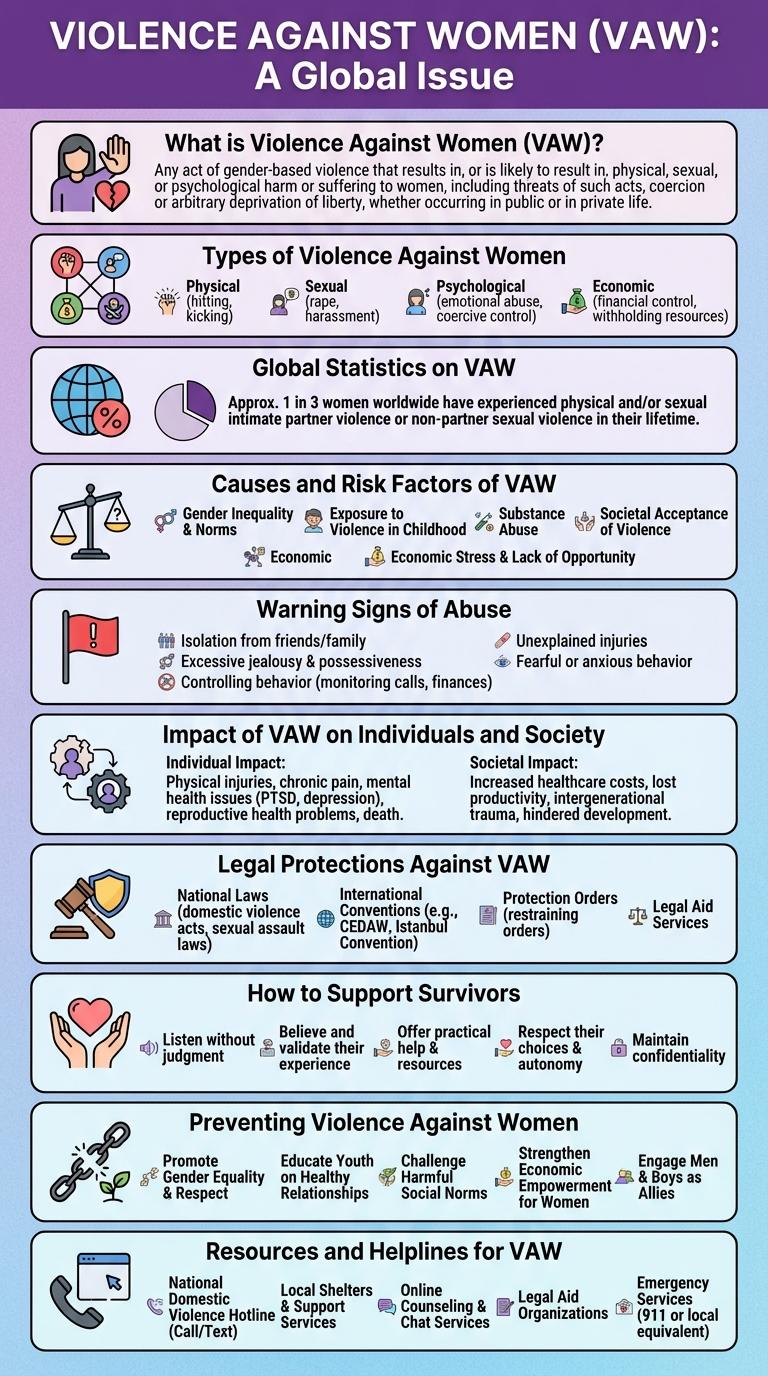
Visual representations of violence against women (VAW) reveal critical statistics and trends, highlighting the urgent need for awareness and intervention. Infographics distill complex data into impactful, easy-to-understand formats, making the information accessible to a broader audience. Understanding these visuals fosters informed advocacy and supports efforts to combat gender-based violence worldwide.
What is Violence Against Women (VAW)?
| Term | Description |
|---|---|
| Violence Against Women (VAW) | Any act of gender-based violence causing physical, sexual, or psychological harm to women. |
| Forms of VAW | Includes domestic violence, sexual assault, trafficking, femicide, and harassment. |
| Global Impact | One in three women worldwide experiences violence in her lifetime. |
| Underlying Causes | Gender inequality, cultural norms, power imbalances, and discrimination. |
| Legal Frameworks | International laws like CEDAW and local policies aim to prevent and combat VAW. |
Types of Violence Against Women
Violence Against Women (VAW) encompasses various forms of abuse that affect women globally. The main types include physical, sexual, emotional, psychological, and economic violence. Understanding these categories helps in identifying, preventing, and addressing the impact of VAW effectively.
Global Statistics on VAW
Violence Against Women (VAW) affects approximately 1 in 3 women worldwide, making it a critical global issue. The World Health Organization reports that 35% of women have experienced physical or sexual intimate partner violence or non-partner sexual violence.
Regions with the highest prevalence include South-East Asia and the Eastern Mediterranean, where rates exceed 37%. Efforts to combat VAW include legal reforms, awareness campaigns, and support services for survivors across over 70 countries.
Causes and Risk Factors of VAW
Violence Against Women (VAW) stems from deeply rooted gender inequality and societal norms that perpetuate discrimination and control over women. Risk factors include economic dependence, lack of education, and exposure to violence in childhood, which increase vulnerability. Substance abuse, cultural acceptance of violence, and inadequate legal protections further exacerbate the incidence of VAW.
Warning Signs of Abuse
Recognizing the warning signs of violence against women (VAW) is crucial for early intervention and support. These signs often manifest emotionally, physically, and behaviorally, indicating the need for help.
- Unexplained Injuries - Visible bruises, cuts, or fractures may suggest physical abuse even if explanations are inconsistent.
- Isolation from Friends and Family - Victims may be cut off from their support network due to controlling behavior by the abuser.
- Extreme Fear or Anxiety - Signs include nervousness, hypervigilance, or a sudden change in personality linked to potential abuse.
Impact of VAW on Individuals and Society
Violence Against Women (VAW) profoundly affects both individuals and society, leading to severe physical, emotional, and economic consequences. Understanding its impact is crucial for developing effective prevention and support strategies.
- Physical and Mental Health Consequences - Survivors often experience chronic pain, depression, anxiety, and post-traumatic stress disorder (PTSD).
- Economic Costs - VAW results in lost productivity, increased healthcare expenses, and legal costs, burdening economies worldwide.
- Social Fragmentation - Communities face weakened social cohesion, increased crime rates, and disrupted family structures due to VAW.
Addressing the impact of VAW requires comprehensive measures spanning healthcare, legal support, and community education.
Legal Protections Against VAW
Legal protections against Violence Against Women (VAW) are crucial for ensuring the safety and rights of women worldwide. These laws provide frameworks for prevention, protection, and punishment of offenders.
Many countries have enacted specific legislation such as the Domestic Violence Act and Sexual Harassment laws to address various forms of VAW. International agreements like the Istanbul Convention set standards for member states to combat violence and support victims effectively.
How to Support Survivors
How can you support survivors of violence against women (VAW)?
Listening with empathy and without judgment creates a safe space for survivors to share their experiences. Offering resources such as hotlines, counseling, and legal aid empowers them to seek help and rebuild their lives.
Preventing Violence Against Women
Violence Against Women (VAW) is a critical global issue affecting millions. Preventing VAW requires comprehensive strategies integrating education, legal reforms, and community support.
Education fosters awareness and challenges harmful gender norms that perpetuate violence. Strong legal frameworks ensure accountability and protection for survivors. Community programs provide safe spaces and resources to empower women and promote equality.