
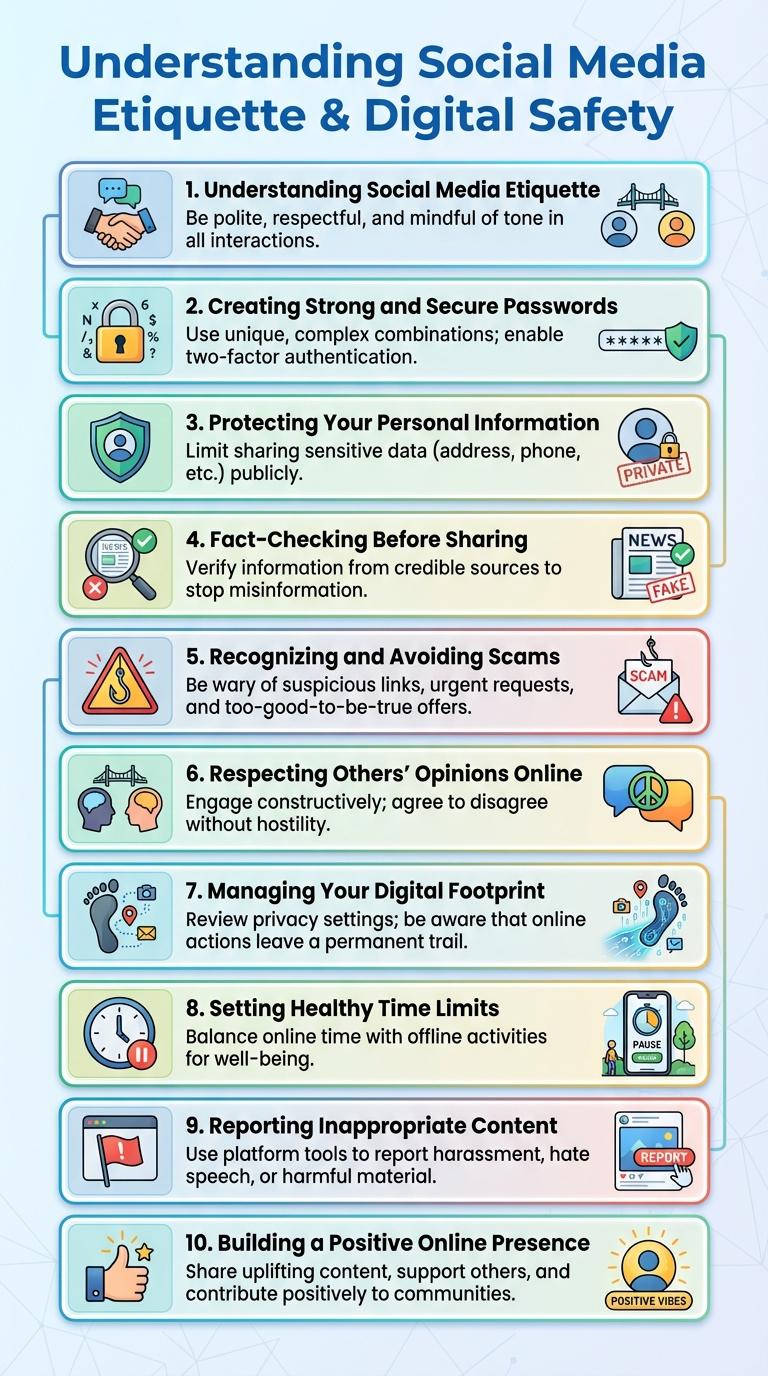
Effective social media use involves understanding platform-specific etiquette and privacy settings to enhance online presence while maintaining security. Visual guides like infographics can simplify complex information, making it easier to follow best practices. Embracing these strategies helps users communicate responsibly and build a positive digital footprint.
Understanding Social Media Etiquette
Understanding social media etiquette is essential for maintaining respectful and positive online interactions. Proper use of social media helps build trust and fosters meaningful connections across digital platforms.
- Respect Privacy - Always ask permission before sharing someone else's personal information or photos.
- Think Before You Post - Consider the impact of your words and images on others before publishing.
- Be Mindful of Tone - Use polite language and avoid sarcasm or negativity to prevent misunderstandings.
Creating Strong and Secure Passwords
Creating strong and secure passwords is essential for protecting your social media accounts from unauthorized access. Use a combination of uppercase letters, lowercase letters, numbers, and special characters to enhance password strength. Regularly update your passwords and avoid using easily guessable information like birthdays or common words.
Protecting Your Personal Information
How can you protect your personal information on social media? Use strong, unique passwords for each account to prevent unauthorized access. Adjust privacy settings to control who sees your content and personal details.
Why is it important to limit the personal information you share online? Sharing too much information increases the risk of identity theft and cyberstalking. Avoid posting sensitive details such as your address, phone number, or financial information.
What role do app permissions play in protecting your privacy? Review and restrict app permissions to limit data access from third-party apps connected to your social media accounts. Removing unnecessary permissions reduces the likelihood of your data being exploited.
How does being cautious about friend requests enhance security? Accept friend or follow requests only from people you know and trust. This reduces exposure to scams, phishing attempts, and malicious activities.
What steps should you take if your personal information is compromised? Immediately change your passwords and review account activity for any unauthorized actions. Report suspicious behavior to the social media platform's support team for assistance.
Fact-Checking Before Sharing
Fact-checking before sharing information on social media helps prevent the spread of false news and misinformation. Verifying facts ensures that your posts contribute to a trustworthy online environment.
Use reputable sources and cross-reference claims before posting. Taking time to check accuracy protects your reputation and supports informed discussions.
Recognizing and Avoiding Scams
Social media platforms can be a hotbed for scams designed to steal personal information or money. Recognizing the warning signs of these scams helps protect your digital identity and financial security.
Look out for unsolicited messages asking for personal details or urgent requests for money. Verify the sender's identity before clicking on links or downloading attachments. Report suspicious activity to the platform to help keep the community safe.
Respecting Others' Opinions Online
Respecting others' opinions online fosters healthy and constructive conversations on social media platforms. It encourages diverse perspectives and promotes empathy among users.
Engage with different viewpoints politely and avoid personal attacks or dismissive comments. Practicing respect online helps build a supportive and positive digital community for everyone.
Managing Your Digital Footprint
| Tip | Details |
|---|---|
| Review Privacy Settings | Adjust settings on social platforms to control who can view your content. Limit exposure to personal information. |
| Think Before You Post | Consider long-term impact of shared content. Avoid sharing sensitive or controversial information that may harm your reputation. |
| Regularly Audit Your Profiles | Remove outdated or inappropriate posts. Ensure your online persona aligns with your personal or professional image. |
| Use Strong, Unique Passwords | Protect accounts from unauthorized access. Enable two-factor authentication for added security. |
| Be Mindful of Public Interactions | Comments and shares contribute to your digital footprint. Engage respectfully to maintain a positive online presence. |
Setting Healthy Time Limits
Setting healthy time limits on social media prevents digital fatigue and encourages balanced daily activities. Understanding and managing screen time enhances mental well-being and productivity.
- Define Daily Usage Goals - Establish specific time frames to control social media engagement and avoid excessive usage.
- Use Built-In App Timers - Leverage smartphone features to receive reminders when approaching set limits.
- Prioritize Quality over Quantity - Focus on meaningful interactions instead of prolonged scrolling sessions.
Consistent monitoring and adjusting of social media time supports healthier digital habits and improved lifestyle balance.
Reporting Inappropriate Content
Reporting inappropriate content on social media helps maintain a safe online environment. Users can flag posts, comments, or messages that violate community guidelines or contain harmful material. Prompt reporting enables platforms to review and remove damaging content efficiently.