
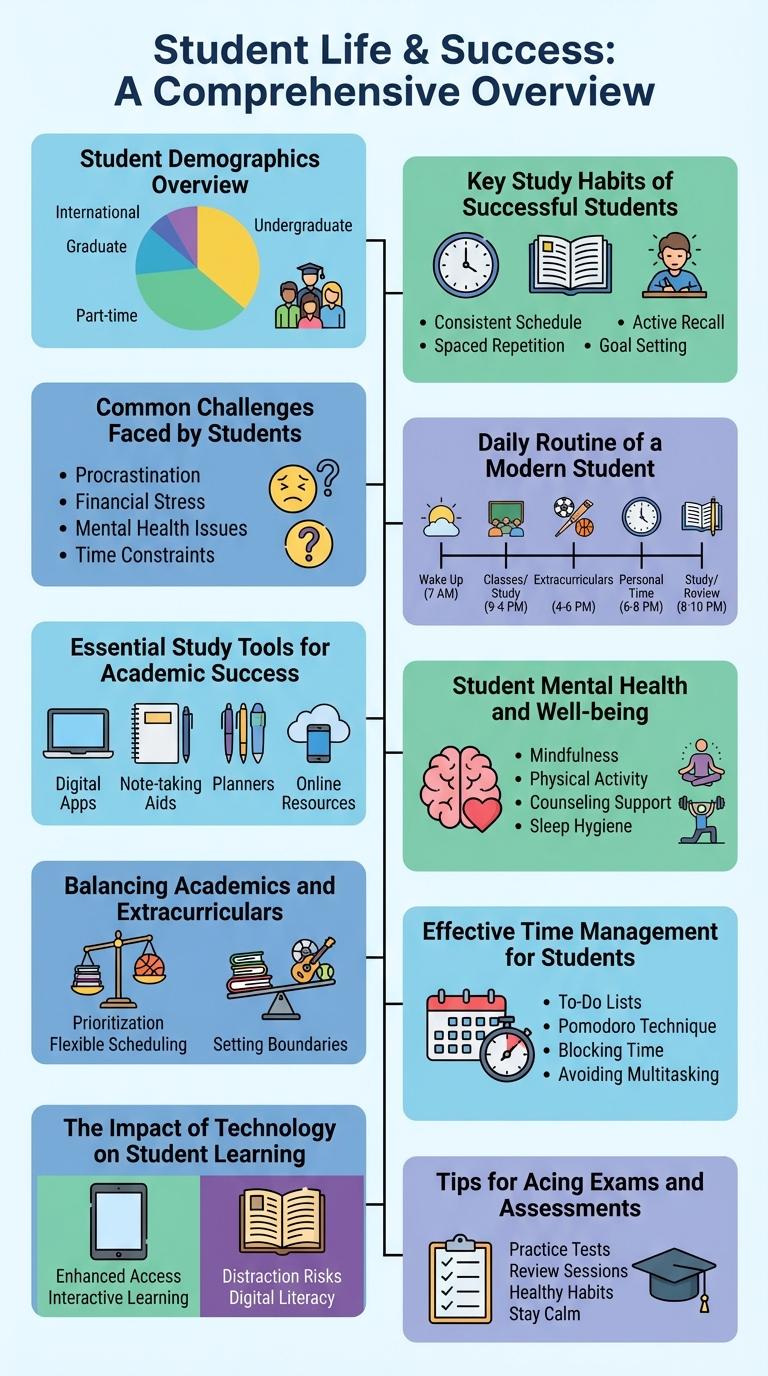
Infographics about students provide a visually engaging way to present key data on academic performance, study habits, and demographic trends. They highlight important insights into student behavior, learning preferences, and educational challenges. Clear visuals and concise statistics help educators and stakeholders make informed decisions to improve student outcomes.
Student Demographics Overview
| Category | Percentage |
|---|---|
| Gender | Female: 52%, Male: 48% |
| Age Group | 18-24: 65%, 25-34: 25%, 35+: 10% |
| Ethnicity | Hispanic: 20%, White: 40%, Black: 15%, Asian: 15%, Other: 10% |
| Enrollment Status | Full-time: 70%, Part-time: 30% |
| Residency | In-state: 60%, Out-of-state: 30%, International: 10% |
Key Study Habits of Successful Students
Successful students consistently develop key study habits that enhance learning and retention. Effective time management, active note-taking, and regular review sessions are core strategies that lead to higher academic achievement. Implementing these habits fosters discipline and promotes a deeper understanding of the material.
Common Challenges Faced by Students
Students encounter a range of challenges that impact their academic and personal lives. Understanding these common obstacles can help in providing better support and resources.
- Time Management - Balancing study, work, and social activities often leads to stress and missed deadlines.
- Financial Pressure - Tuition fees, living expenses, and educational materials create significant financial burdens.
- Mental Health Issues - Anxiety, depression, and stress are prevalent among students due to academic and social demands.
- Academic Difficulties - Struggling with coursework, exams, and comprehension affects performance and motivation.
- Social Adjustment - Adapting to new environments and building relationships can be challenging for many students.
Daily Routine of a Modern Student
Modern students balance academics, extracurricular activities, and personal time within their daily routines. Their typical day involves attending classes, studying, participating in clubs or sports, and utilizing digital tools for learning. Efficient time management and technology integration are essential to their success.
Essential Study Tools for Academic Success
Effective study tools enhance learning efficiency and academic performance. Choosing the right resources can transform your study sessions into productive experiences.
- Digital Note-Taking Apps - Tools like Evernote and OneNote help organize and access notes quickly across devices.
- Time Management Tools - Apps such as Todoist and Google Calendar assist in scheduling study sessions and deadlines effectively.
- Flashcard Systems - Platforms like Anki and Quizlet utilize spaced repetition to improve memory retention of key concepts.
Student Mental Health and Well-being
Student mental health significantly impacts academic performance and social interactions. Increasing awareness and support systems can improve overall well-being.
Common challenges include stress, anxiety, and depression among students. Access to counseling and wellness resources promotes a healthier campus environment.
Balancing Academics and Extracurriculars
Balancing academics and extracurricular activities is essential for student success. Effective time management helps maintain high performance in both areas.
Students who engage in extracurricular activities develop valuable skills like teamwork and leadership. Prioritizing tasks and setting realistic goals ensures steady progress in studies and hobbies.
Effective Time Management for Students
Effective time management is essential for student success and stress reduction. It helps in balancing academic responsibilities with personal activities.
Students can improve productivity by creating a daily schedule that prioritizes important tasks. Using tools like planners or digital apps ensures deadlines are met. Avoiding procrastination increases focus and academic performance.
The Impact of Technology on Student Learning
Technology has transformed student learning by enhancing access to information and enabling interactive educational experiences. The integration of digital tools supports personalized learning paths and improves engagement.
- Increased Access to Resources - Students can utilize online libraries, educational apps, and multimedia content to deepen their knowledge beyond textbooks.
- Personalized Learning - Adaptive software adjusts to individual learning speeds and styles, catering to diverse student needs.
- Improved Collaboration - Digital platforms facilitate group projects and communication, fostering teamwork among students globally.
Technology continues to shape the future of education by making learning more dynamic and accessible for all students.