
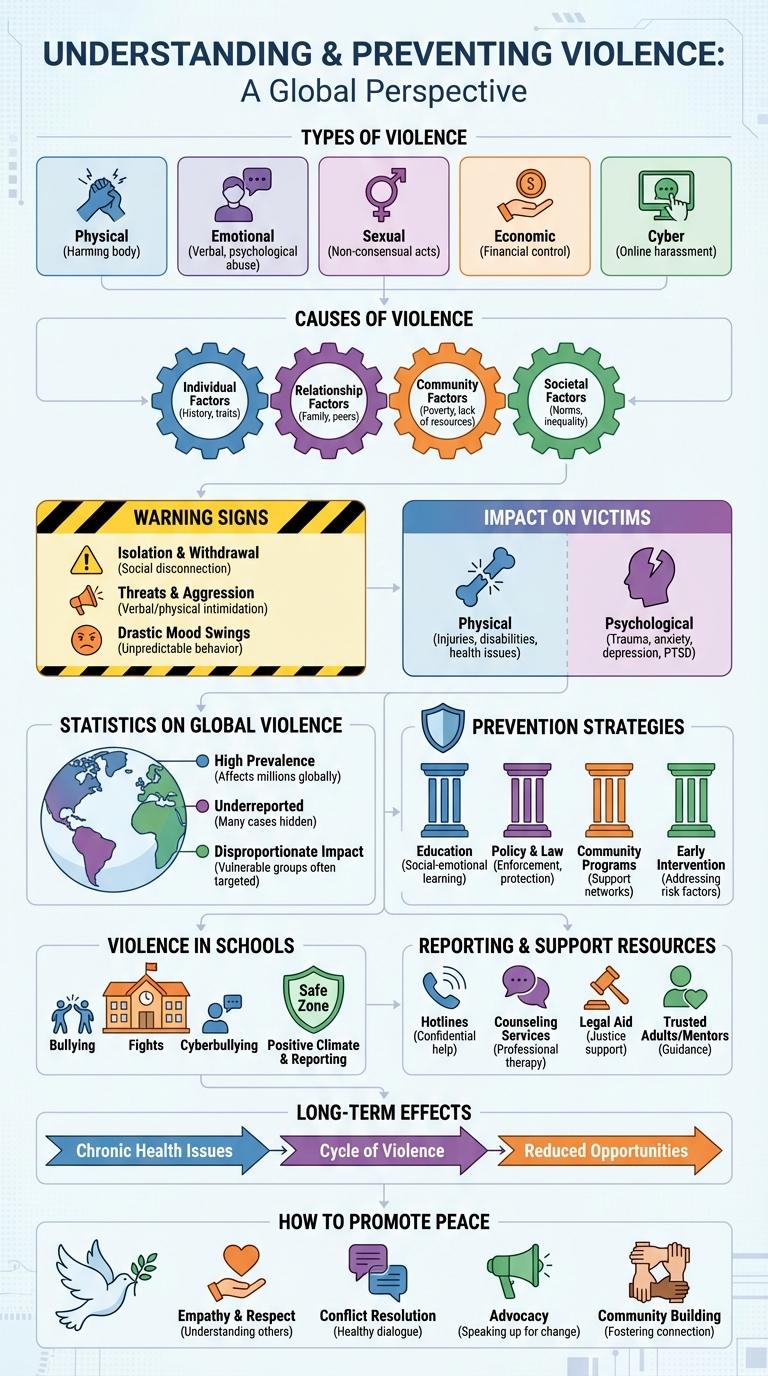
Violence affects communities worldwide, impacting physical safety and mental health. Understanding key statistics and patterns helps to raise awareness and promote prevention strategies. Infographics visually present this critical data for greater accessibility and comprehension.
Types of Violence
Violence manifests in various forms, affecting individuals and communities worldwide. Understanding the types of violence is crucial for effective prevention and intervention strategies.
Physical violence involves bodily harm or injury, including hitting, slapping, and other forms of assault. Psychological violence includes emotional abuse, threats, and intimidation, damaging mental well-being. Sexual violence encompasses any non-consensual sexual act or behavior, posing severe physical and emotional consequences.
Causes of Violence
Violence stems from a complex interplay of social, psychological, and economic factors. Identifying the root causes helps in developing effective prevention strategies.
- Poverty - Economic hardship often increases stress and frustration, leading to higher risks of violent behavior.
- Social Inequality - Discrimination and marginalization can cause feelings of injustice that trigger aggression.
- Exposure to Violence - Witnessing or experiencing violence in childhood can normalize aggressive responses in adulthood.
Warning Signs of Violence
Recognizing warning signs of violence is crucial for early intervention and prevention. These signs often manifest in behavioral changes, emotional distress, and aggressive actions.
Common indicators include increased irritability, withdrawal from social interactions, and unexplained injuries. Awareness of these symptoms enables timely support and reduces the risk of escalation.
Impact on Victims
Violence profoundly affects victims, causing both immediate and long-lasting harm. The psychological, physical, and social consequences vary but often disrupt lives permanently.
- Psychological Trauma - Victims frequently suffer from anxiety, depression, and post-traumatic stress disorder following violent incidents.
- Physical Injuries - Many victims experience injuries ranging from minor wounds to life-threatening conditions requiring medical intervention.
- Social Isolation - Violence can lead to withdrawal from social networks, resulting in loss of support and increased vulnerability.
The impact on victims underscores the urgent need for comprehensive support systems and prevention measures.
Statistics on Global Violence
| Statistic | Data |
|---|---|
| Global Homicide Rate (2022) | 6.1 per 100,000 people |
| Number of Homicide Victims Worldwide (2022) | 464,000 |
| Percentage of Violence Against Women (Global) | 1 in 3 women (35%) experience physical or sexual violence |
| Rate of Violent Crimes in Urban Areas | Urban rates are 1.5 times higher than rural areas |
| Economic Cost of Violence Globally | Approximately $14.3 trillion USD annually |
Prevention Strategies
Effective violence prevention strategies focus on community engagement, early intervention, and education. Implementing programs that teach conflict resolution and emotional regulation significantly reduces violent behavior. Collaboration between schools, law enforcement, and social services strengthens these preventive efforts and promotes safer environments.
Violence in Schools
What are the common types of violence in schools? Physical fights, bullying, and verbal abuse are the most frequently reported forms of violence in educational settings. These acts create unsafe environments that disrupt learning and affect students' mental health.
How does violence in schools impact student performance? Exposure to violence can lead to decreased academic achievement and increased absenteeism. Students often experience stress, anxiety, and fear, which interfere with concentration and participation in class.
Who is most at risk of experiencing school violence? Students aged 12 to 17 are the most vulnerable group facing incidents of bullying and physical aggression. Vulnerable populations, including those with disabilities or from minority backgrounds, face higher rates of victimization.
What measures can schools take to reduce violence effectively? Implementing anti-bullying programs, providing counseling services, and promoting conflict resolution skills contribute to safer school environments. Training staff to recognize and address signs of violence is essential for prevention.
How prevalent is school violence globally? The World Health Organization reports that about 1 in 3 students worldwide experience bullying or physical violence at school each year. This highlights the need for global efforts to protect children and promote peace in educational spaces.
Reporting and Support Resources
Reporting violence promptly is crucial to ensure safety and access to justice. Various organizations offer confidential channels for victims to report incidents securely.
Support resources provide emotional, legal, and medical assistance to survivors of violence. Accessing these services can significantly aid in recovery and protection.
Long-term Effects of Violence
Exposure to violence can lead to lasting psychological effects such as chronic anxiety, depression, and PTSD. Victims often experience impaired social relationships and difficulties in emotional regulation. Long-term physical health issues, including heart disease and weakened immune systems, are also commonly observed.