
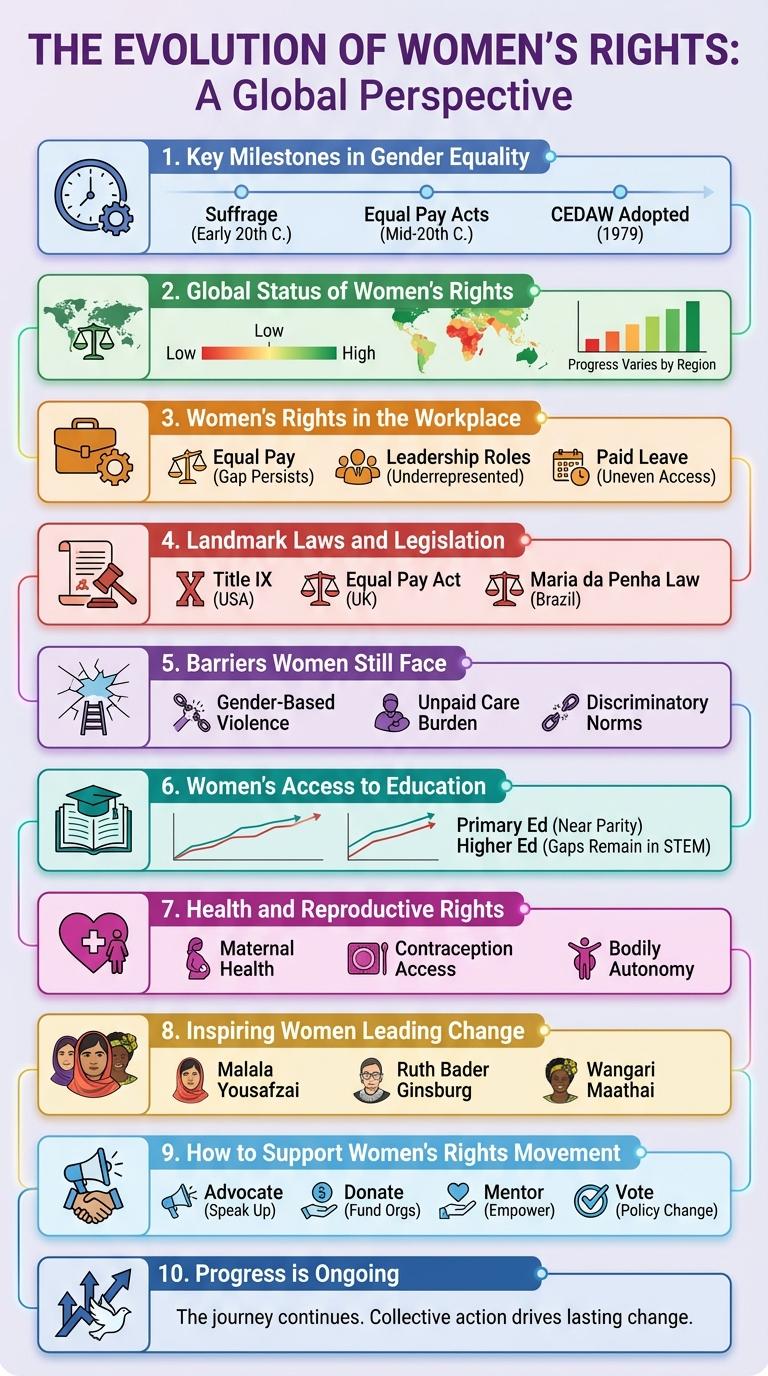
Women's rights have undergone significant transformations, reflecting ongoing struggles for equality and justice worldwide. This infographic highlights key milestones and current issues shaping the fight for gender equality. Understanding these pivotal moments empowers continued advocacy and informed action.
The Evolution of Women's Rights
The evolution of women's rights marks a significant journey toward equality and justice worldwide. Early milestones include the 19th-century suffrage movements that secured voting rights for women in various countries. Recent advances focus on combating workplace discrimination, promoting reproductive rights, and ensuring equal representation in politics and leadership roles.
Key Milestones in Gender Equality
Women's rights have seen significant progress through key milestones in gender equality. These milestones represent historic achievements that have paved the way for equal opportunities and legal protections.
The 19th Amendment in 1920 granted women in the United States the right to vote, marking a pivotal step. The adoption of the Convention on the Elimination of All Forms of Discrimination Against Women (CEDAW) in 1979 further established international legal standards for gender equality.
Global Status of Women's Rights
How does the global status of women's rights vary across different regions? Women's rights remain unevenly distributed worldwide, with significant disparities in legal protection, economic participation, and political representation. Progress in some countries contrasts sharply with persistent inequalities and legal restrictions in others.
| Region | Key Women's Rights Indicators |
|---|---|
| North America | High political participation, strong legal protections, wage gap persists |
| Sub-Saharan Africa | Limited legal rights, low political representation, high gender-based violence rates |
| Europe | Strong gender equality laws, high female education levels, growing leadership roles |
| South Asia | Restrictive customs, improving education access, low workforce participation |
| Middle East & North Africa | Severe legal restrictions, low female labor force participation, progressing reforms |
Women's Rights in the Workplace
Women's rights in the workplace have seen significant progress over the past decades, yet challenges like wage gaps and underrepresentation in leadership roles persist. Ensuring equal opportunities and combating discrimination remain crucial goals for achieving true workplace equality.
Legislation such as the Equal Pay Act and Title VII of the Civil Rights Act provides legal protection against gender-based discrimination. Women still earn approximately 82 cents for every dollar earned by men, highlighting ongoing pay disparities. Increasing women's representation in executive positions and boardrooms is essential to fostering inclusive work environments.
Landmark Laws and Legislation
Women's rights have been advanced through several landmark laws and legislation worldwide. These legal milestones have significantly contributed to gender equality and protection against discrimination.
- 19th Amendment (1920, USA) - Granted women the right to vote, marking a major victory in the suffrage movement.
- Equal Pay Act (1963, USA) - Prohibited wage disparity based on sex, promoting workplace equality.
- Convention on the Elimination of All Forms of Discrimination Against Women (CEDAW, 1979) - An international treaty committing states to end discrimination against women in all forms.
Barriers Women Still Face
Women continue to face significant barriers to equality in many areas of life. These challenges impact their social, economic, and political participation worldwide.
- Gender Pay Gap - Women earn approximately 20% less than men for equivalent work globally.
- Limited Leadership Roles - Women hold less than 30% of senior management positions worldwide.
- Access to Education - Over 130 million girls are out of school, restricting future opportunities.
Addressing these barriers is crucial for achieving gender equality and empowering women everywhere.
Women's Access to Education
Women's access to education has significantly improved worldwide, yet disparities remain in many regions. Globally, 90% of girls enroll in primary school, but only 60% complete secondary education. Increasing educational opportunities for women leads to higher economic growth and enhanced social development.
Health and Reproductive Rights
Women's health and reproductive rights are fundamental components of gender equality and essential for empowering women worldwide. Access to comprehensive healthcare services, including family planning, prenatal care, and safe abortion, significantly improves women's quality of life.
Legal protections and availability of reproductive health services help prevent maternal mortality and reduce unintended pregnancies. Ensuring women's autonomy over their bodies fosters social and economic development within communities.
Inspiring Women Leading Change
Women's rights have seen significant progress due to the efforts of inspiring leaders who challenge inequality. These trailblazers shape policies, raise awareness, and empower communities worldwide.
- Malala Yousafzai - Advocates for girls' education globally through activism and the Malala Fund.
- Ruth Bader Ginsburg - Pioneered gender equality in law as a U.S. Supreme Court Justice.
- Tarana Burke - Founded the #MeToo movement, amplifying voices against sexual harassment and violence.