
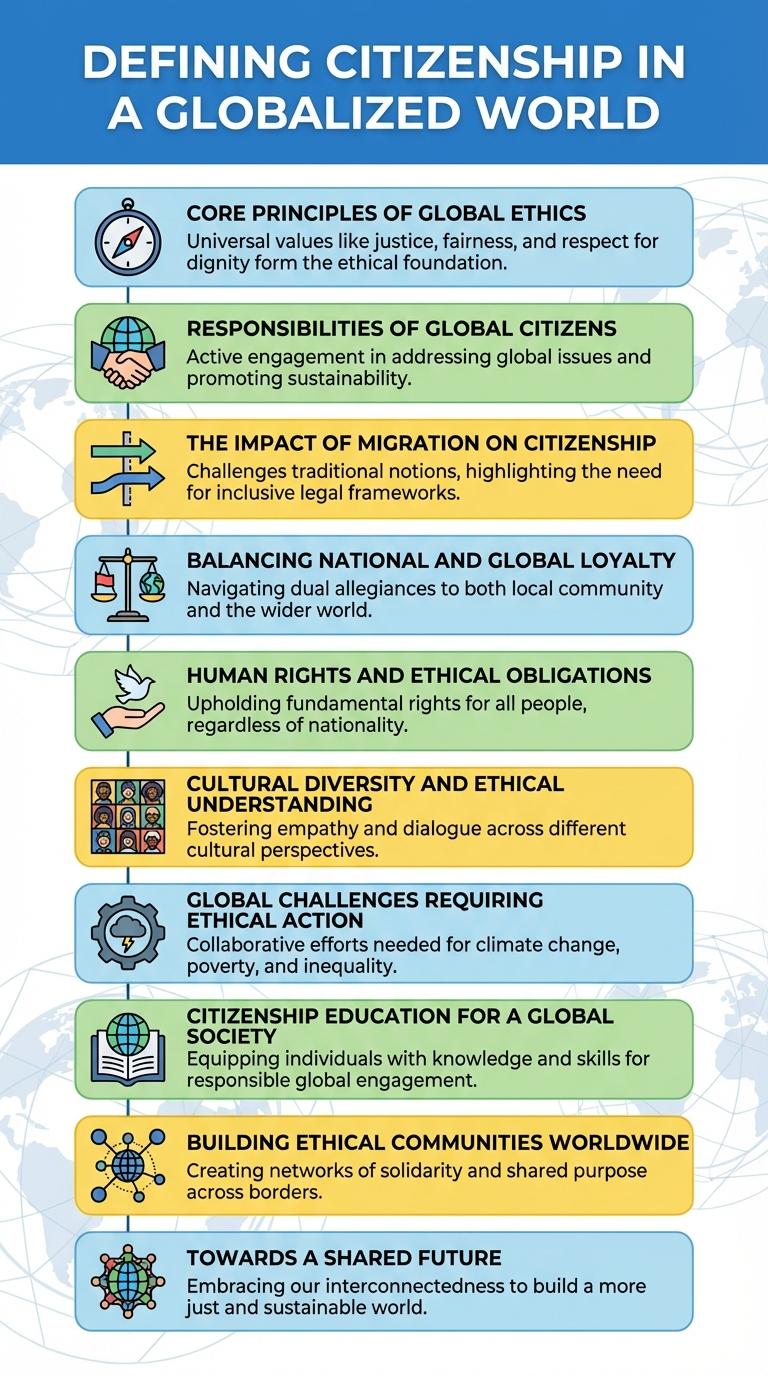
Citizenship and global ethics shape how individuals engage with the world, emphasizing responsibility beyond borders. Understanding these concepts fosters sustainable development, human rights, and social justice on a global scale. This infographic highlights key principles and actions that define ethical global citizenship in today's interconnected society.
Defining Citizenship in a Globalized World
What does citizenship mean in today's interconnected world?
Citizenship transcends legal status, embracing active participation in global communities. It involves responsibility, rights, and ethical engagement beyond national boundaries.
Core Principles of Global Ethics
Global ethics centers on principles that guide responsible and respectful behavior across cultures and nations. Core principles include respect for human dignity, promotion of justice, and commitment to sustainable development. These values foster cooperation and harmony in addressing global challenges.
Responsibilities of Global Citizens
Global citizenship involves recognizing our interconnectedness and acting responsibly within the global community. Embracing global ethics means respecting human rights, promoting equality, and protecting the environment.
Responsibilities of global citizens include advocating for social justice and sustainability. They must support cultural diversity and engage in informed, ethical decision-making. Active participation in addressing global challenges strengthens collective well-being.
The Impact of Migration on Citizenship
Migration shapes citizenship by influencing cultural diversity and social integration within host countries. It challenges traditional notions of national identity and fosters inclusive policies that reflect global interconnectedness.
Global ethics emphasize fairness, human rights, and shared responsibilities in managing migration. Ethical migration practices support both migrants' well-being and the sustainable development of societies worldwide.
Balancing National and Global Loyalty
| Aspect | Key Points |
|---|---|
| Definition | Balancing national allegiance with global responsibility in ethical decision-making and citizenship. |
| National Loyalty | Commitment to country's laws, culture, and values; protecting citizens' rights and interests. |
| Global Loyalty | Responsibility towards global welfare, human rights, environmental sustainability, and international cooperation. |
| Challenges | Conflicting interests between national policies and global ethical standards; managing patriotism and universal human rights. |
| Strategies | Promoting intercultural dialogue, supporting fair global policies, encouraging education in global citizenship and ethics. |
Human Rights and Ethical Obligations
Citizenship involves recognizing and upholding human rights as fundamental ethical obligations across global communities. Respect for these rights ensures dignity, equality, and justice for all individuals.
Ethical obligations extend beyond borders, requiring active participation in promoting fairness and protecting vulnerable populations. Embracing global ethics fosters cooperation, peace, and sustainable development worldwide.
Cultural Diversity and Ethical Understanding
Cultural diversity enriches global communities by fostering mutual respect and collaboration across different backgrounds. Ethical understanding promotes fairness and responsibility in addressing complex social and cultural challenges.
Citizenship requires recognizing and valuing diverse cultural perspectives to build inclusive societies.
- Embracing Cultural Diversity - Encourages open-mindedness and reduces prejudices by appreciating different traditions and beliefs.
- Promoting Ethical Awareness - Supports making decisions based on universal values like justice, equality, and human rights.
- Enhancing Global Responsibility - Motivates active participation in solving global issues through respect and ethical behavior.
Global Challenges Requiring Ethical Action
Global challenges demand a unified approach grounded in ethical responsibility and active citizenship. Addressing these issues requires understanding their complexity and prioritizing sustainable solutions.
- Climate Change - Rising global temperatures threaten ecosystems and human livelihoods, requiring ethical commitments to reduce carbon emissions and promote sustainability.
- Poverty and Inequality - Economic disparities create social tensions and hinder development, calling for fair resource distribution and inclusive policies.
- Human Rights Violations - Protecting fundamental freedoms worldwide necessitates ethical vigilance and advocacy against injustice.
- Global Health Crises - Epidemics and pandemics highlight the need for equitable healthcare access and international cooperation.
- Environmental Degradation - Loss of biodiversity and pollution demand ethical stewardship to preserve natural resources for future generations.
Ethical global citizenship promotes awareness, responsibility, and action to overcome these pressing challenges.
Citizenship Education for a Global Society
Citizenship Education for a Global Society empowers individuals to engage responsibly in an interconnected world. It fosters critical thinking, cultural awareness, and ethical decision-making for sustainable global development.
- Global Awareness - Encourages understanding of diverse cultures, global issues, and interdependence among nations.
- Ethical Responsibility - Promotes respect for human rights, social justice, and environmental stewardship.
- Active Participation - Inspires civic engagement and collaboration to address global challenges effectively.