
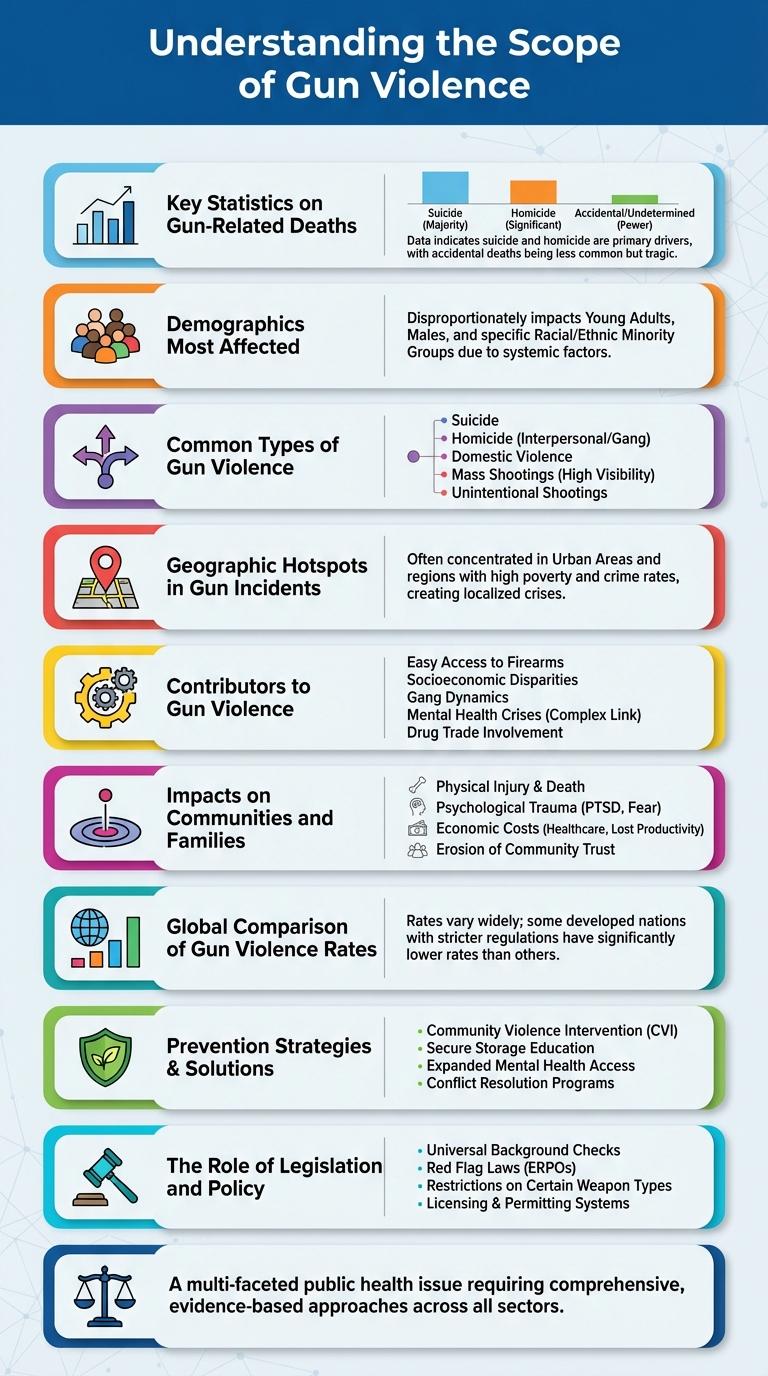
Gun violence remains a critical public safety issue, impacting communities across the nation with devastating consequences. This infographic presents key statistics, trends, and facts to illuminate the scope and severity of gun-related incidents. Understanding these data points is essential for informed discussions and effective policy-making.
Understanding the Scope of Gun Violence
Gun violence remains a critical public health issue affecting communities worldwide. Understanding its scope requires examining statistics on incidents, victims, and the impact on society.
- Prevalence of Gun Violence - Over 250,000 firearm-related deaths occur globally each year, encompassing homicides, suicides, and accidental shootings.
- Demographic Impact - Young adults and males are disproportionately affected, with higher rates of gun-related deaths among these groups.
- Societal Consequences - Gun violence results in significant medical costs, lost productivity, and lasting psychological trauma for survivors and communities.
Key Statistics on Gun-Related Deaths
Gun violence remains a critical issue, with over 45,000 gun-related deaths reported annually in the United States. The majority of these deaths are suicides, accounting for nearly 60% of the total. Homicides and accidental shootings contribute significantly, with young adults and minority communities disproportionately affected.
Demographics Most Affected
Gun violence disproportionately affects specific demographics, with young Black and Hispanic males facing the highest rates of firearm-related injuries and deaths. Urban areas report a significantly higher incidence of gun violence compared to rural regions, impacting community safety and public health. Socioeconomic factors, such as poverty and limited access to education, contribute to the increased vulnerability in these groups.
Common Types of Gun Violence
Gun violence presents a critical public safety issue with various common types impacting communities nationwide. Understanding these types helps inform prevention and response strategies.
- Homicides - Firearms are involved in the majority of homicides in the United States, accounting for more than 75% of all murder cases.
- Suicides - Approximately 60% of gun-related deaths are suicides, making it a leading cause of firearm fatalities.
- Mass Shootings - Incidents involving multiple victims, mass shootings cause significant casualties and psychological trauma in public spaces.
- Accidental Shootings - Unintentional firearm discharges lead to injuries and deaths, often involving children or inexperienced gun users.
- Domestic Violence - Firearms are frequently used in domestic violence incidents, increasing the risk of fatal outcomes for victims.
Geographic Hotspots in Gun Incidents
| Region | Gun Violence Incidents (Annual) |
|---|---|
| United States - Urban Centers | Approx. 75,000 gun-related incidents |
| Brazil - Major Cities | Around 50,000 firearm homicides |
| South Africa - Townships | About 20,000 gun-related injuries |
| Mexico - Northern States | Over 15,000 gun violence deaths |
| Philippines - Urban Regions | Close to 10,000 firearm incidents |
Contributors to Gun Violence
Gun violence remains a complex social issue influenced by multiple factors. Understanding these contributors is essential for effective prevention and policy-making.
- Economic Inequality - Disparities in income and opportunity foster environments where violence is more likely to occur.
- Access to Firearms - Easy availability of guns increases the likelihood of both impulsive and planned violent acts.
- Mental Health Challenges - Untreated mental health conditions can contribute to aggressive behaviors leading to gun violence.
Addressing these contributors requires comprehensive strategies targeting social, economic, and health-related factors.
Impacts on Communities and Families
Gun violence profoundly disrupts communities, leading to decreased safety and economic instability. Neighborhoods experiencing frequent shootings often face diminished property values and reduced local business activity.
Families affected by gun violence endure emotional trauma, long-term mental health challenges, and financial burdens. The loss or injury of a loved one can lead to increased stress, anxiety, and a lasting impact on family dynamics.
Global Comparison of Gun Violence Rates
Gun violence remains a significant public health issue worldwide, with rates varying drastically between countries. Understanding global disparities helps identify regions where intervention is most needed.
The United States experiences one of the highest gun violence rates among developed nations, with approximately 12 gun-related deaths per 100,000 people annually. In contrast, countries like Japan and Australia report fewer than 1 gun death per 100,000 people. Factors influencing these differences include gun ownership laws, enforcement intensity, and cultural attitudes toward firearms.
Prevention Strategies & Solutions
Gun violence remains a critical public health issue with widespread impact on communities worldwide. Effective prevention strategies focus on reducing access to firearms and promoting safe handling practices.
Implementing universal background checks and waiting periods lowers the risk of impulsive acts of violence. Community-based programs that provide education and conflict resolution skills further contribute to a decline in gun-related incidents.