
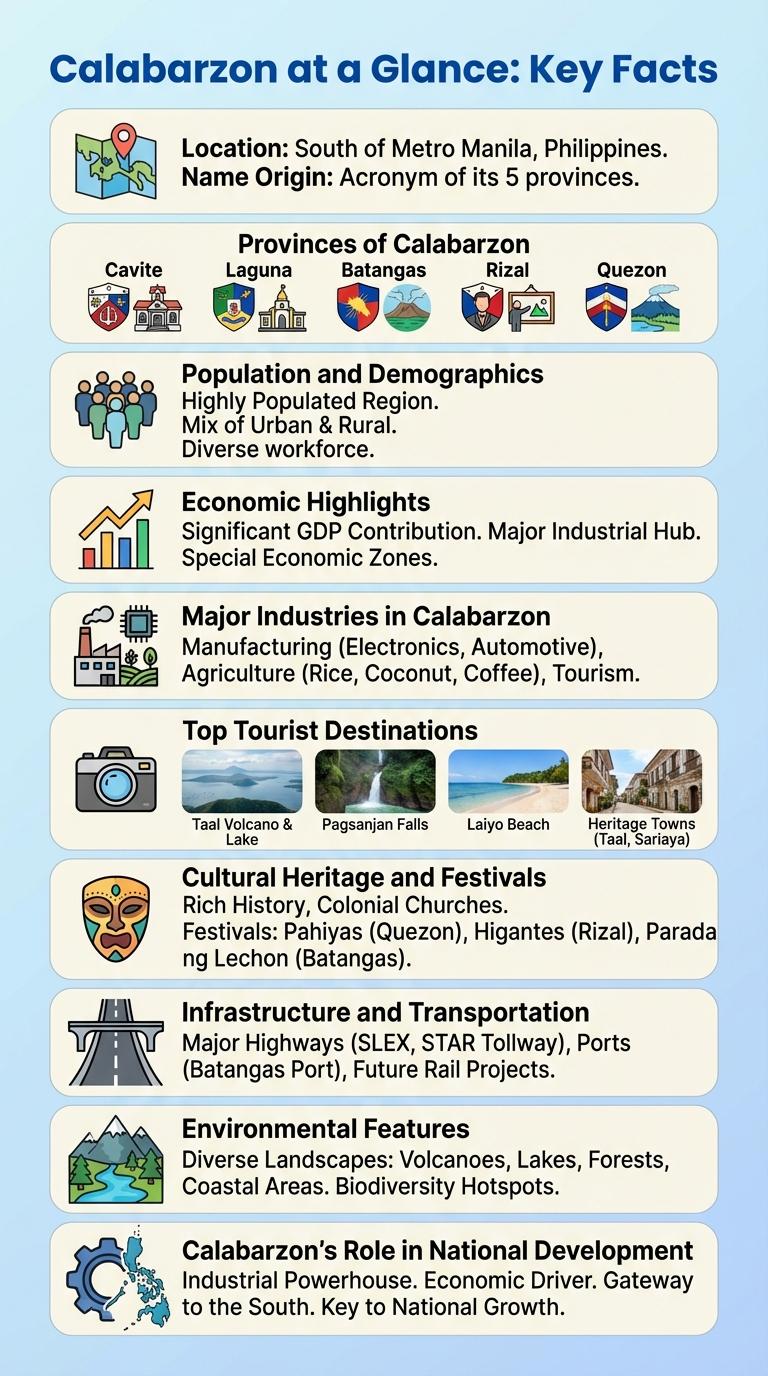
Calabarzon, known as Region IV-A, is a vibrant economic hub in the Philippines comprising five provinces: Cavite, Laguna, Batangas, Rizal, and Quezon. This infographic highlights its dynamic growth sectors, rich cultural heritage, and key tourist destinations that shape the region's identity. Exploring Calabarzon's development reveals its strategic importance in trade, industry, and agriculture within the country.
Calabarzon at a Glance: Key Facts
Calabarzon, officially designated as Region IV-A, is located in the southern part of Luzon, Philippines, comprising five provinces: Cavite, Laguna, Batangas, Rizal, and Quezon. It is the most populous region in the country and a vital economic hub, contributing significantly to the nation's manufacturing, agriculture, and tourism sectors. The region's strategic location near Metro Manila enhances its infrastructure development and accessibility, making it a focal point for investment and growth.
Provinces of Calabarzon
Calabarzon is a region in the Philippines composed of five provinces located in the southern part of Luzon. It is known for its economic growth, historical sites, and rich cultural heritage.
The provinces of Calabarzon play a vital role in the region's development and tourism industries.
- Batangas - Known for its beaches, dive spots, and the famous Taal Volcano.
- Laguna - Renowned for hot springs, waterfalls, and as the birthplace of national hero Jose Rizal.
- Quezon - Famous for the Kapeng Barako coffee and the historic town of Lucban.
- Rizal - Popular for its scenic views of Laguna de Bay and art communities in Angono.
- Cavite - Noted for significant historical sites related to the Philippine Revolution and vibrant food culture.
Population and Demographics
What is the population size of CALABARZON? CALABARZON is the most populous region in the Philippines, with over 16 million residents as of the latest census. The region's population density is notably high, reflecting rapid urbanization.
How diverse is the demographic composition of CALABARZON? The region features a youthful population, with a large percentage under the age of 30. It is culturally rich, home to various indigenous groups and a mix of Tagalog-speaking communities.
| Demographic Attribute | Data |
|---|---|
| Total Population | 16 million+ |
| Population Density | Approximately 840 persons/km2 |
| Median Age | 24 years |
| Major Ethnolinguistic Group | Tagalog |
| Growth Rate | 2.0% annually |
Economic Highlights
Calabarzon, composed of Cavite, Laguna, Batangas, Rizal, and Quezon, stands as a powerhouse in the Philippine economy. The region contributes significantly with a Gross Regional Domestic Product (GRDP) exceeding PHP 3 trillion annually, making it one of the fastest-growing areas.
Key industries include manufacturing, electronics, agriculture, and tourism, driving employment and investment. Its strategic location near Metro Manila enhances its role as a major industrial and commercial hub in the country.
Major Industries in Calabarzon
Calabarzon, also known as Region IV-A, is a key economic hub in the Philippines, housing several major industries that drive regional and national growth. The region's strategic location near Metro Manila contributes to its prominence in manufacturing, agriculture, and services sectors.
The manufacturing industry in Calabarzon is highly developed, with automotive, electronics, and semiconductor production leading the sector. Agriculture remains vital, producing crops like rice, coffee, and bananas, alongside fishing and livestock farming. Technology and business process outsourcing (BPO) sectors have also seen significant expansion, making Calabarzon an important center for employment and innovation.
Top Tourist Destinations
Calabarzon is a vibrant region in the Philippines known for its rich cultural heritage and natural beauty. It features a variety of tourist destinations that showcase both historical sites and breathtaking landscapes.
- Tagaytay City - Famous for its cooler climate and stunning views of Taal Volcano and Lake, Tagaytay offers a perfect escape from the urban heat.
- Enchanted Kingdom - A popular amusement park in Santa Rosa, Laguna, it provides thrilling rides and entertainment for families and tourists.
- Liliw, Laguna - Known as the footwear capital of the Philippines, Liliw is a must-visit for shopping locally made shoes and exploring charming, old town streets.
Cultural Heritage and Festivals
Calabarzon, a region in the Philippines, is rich in cultural heritage and vibrant festivals that showcase its historical and social traditions. These celebrations reflect the diverse influences and local customs of Cavite, Laguna, Batangas, Rizal, and Quezon provinces.
- Pahiyas Festival - Held in Lucban, Quezon, this colorful event honors San Isidro Labrador with houses decorated in agricultural produce.
- Kawayanan Festival - Celebrated in Calauan, Laguna, it highlights the town's bamboo crafts and cultural artistry.
- Caracol Festival - In Batangas City, this parade of dancers and musicians celebrates devotion to the Virgen de la Inmaculada Concepcion.
These vibrant festivals contribute significantly to preserving Calabarzon's cultural identity and attracting tourism.
Infrastructure and Transportation
Calabarzon, a key economic region in the Philippines, boasts a robust infrastructure network that supports its growing industries. The region's transport systems are vital for connecting urban and rural areas within its provinces.
Major highways such as the South Luzon Expressway (SLEX) facilitate efficient movement of goods and commuters across Calabarzon. Infrastructure projects include modernizing ports like the Batangas Port, crucial for trade and logistics. Public transportation options continue to expand, improving accessibility and reducing travel time for residents.
Environmental Features
| Environmental Feature | Details |
|---|---|
| Location | Situated in the southern part of Luzon, Philippines |
| Topography | Mixture of coastal plains, rolling hills, and mountains |
| Major Rivers | Pulangui River, Calumpang River, and Marikina River |
| Climate | Tropical rainforest climate with significant rainfall year-round |
| Biodiversity | Home to multiple protected areas, diverse flora and fauna including endemic species |