
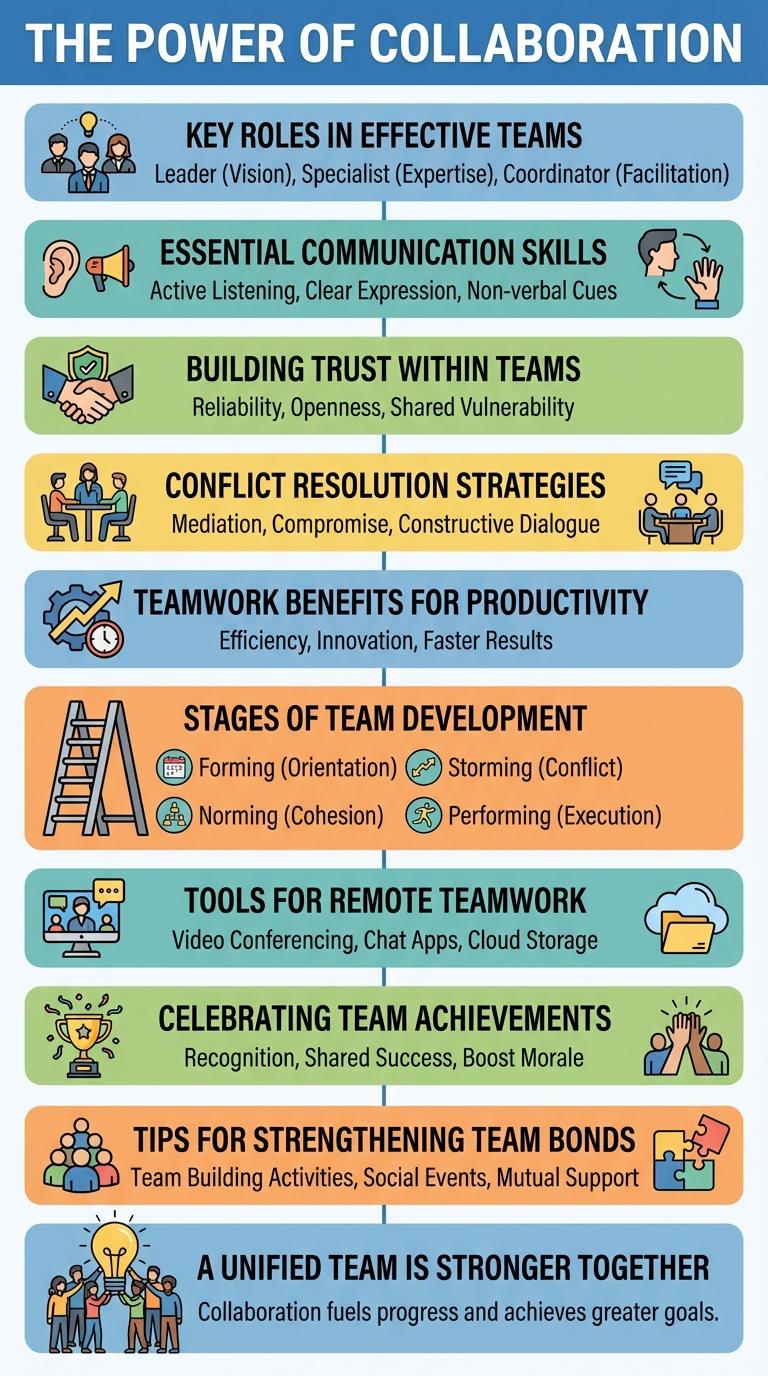
Effective teamwork drives project success by enhancing communication, fostering collaboration, and combining diverse skills to achieve common goals. Understanding key elements such as trust, accountability, and clear roles is essential for building strong teams. Infographics visually simplify these concepts, making it easier to implement and improve teamwork strategies in any organization.
The Power of Collaboration
What makes teamwork a powerful tool in achieving success? Effective collaboration combines diverse skills and perspectives, leading to innovative solutions. The power of teamwork lies in its ability to amplify individual strengths and overcome challenges collectively.
Key Roles in Effective Teams
Effective teamwork relies on clearly defined roles that enhance collaboration and productivity. Each member contributes unique skills, ensuring the team operates smoothly toward common goals.
Key roles include the Leader, who guides the team and makes strategic decisions, and the Facilitator, who manages communication and conflict resolution. The Analyst assesses data to inform decisions, while the Implementer executes plans efficiently.
Essential Communication Skills
Effective teamwork relies on essential communication skills to enhance collaboration and achieve shared goals. Clear communication minimizes misunderstandings and fosters a productive team environment.
- Active Listening - Engaging fully with team members' messages ensures better understanding and response.
- Clear Messaging - Conveying ideas precisely helps avoid confusion and aligns team efforts.
- Constructive Feedback - Offering positive and actionable feedback promotes continuous improvement and trust.
Mastering these communication skills strengthens team dynamics and drives successful project outcomes.
Building Trust Within Teams
Building trust within teams is essential for effective collaboration and achieving common goals. Trust fosters open communication, reduces conflicts, and boosts overall team performance.
Trust develops through consistent actions, transparency, and mutual respect among team members. Encouraging accountability and recognizing contributions strengthens the foundation of teamwork.
Conflict Resolution Strategies
Effective teamwork relies on strong conflict resolution strategies to maintain collaboration and productivity. Key approaches include active listening, open communication, and finding common ground to address disagreements. Implementing these methods helps teams overcome challenges and achieve shared goals efficiently.
Teamwork Benefits for Productivity
| Teamwork Benefit | Impact on Productivity |
|---|---|
| Enhanced Problem Solving | Teams combine diverse skills, leading to faster and more effective solutions. |
| Increased Efficiency | Collaborative workflows reduce redundancy and speed up task completion. |
| Better Communication | Clear information exchange minimizes errors and accelerates decision-making. |
| Shared Workload | Distributing tasks prevents burnout and maintains steady productivity levels. |
| Motivation and Engagement | Team support fosters commitment, improving overall output quality. |
Stages of Team Development
Team development progresses through distinct stages: forming, storming, norming, and performing. Each phase plays a crucial role in building trust, resolving conflicts, and enhancing collaboration among team members. Understanding these stages helps improve productivity and fosters a cohesive work environment.
| Stage | Description |
|---|---|
| Forming | Team members get to know each other and establish initial goals. |
| Storming | Conflicts arise as members assert opinions and roles are challenged. |
| Norming | Consensus is reached, and team cohesion strengthens. |
| Performing | The team operates efficiently towards shared objectives. |
Tools for Remote Teamwork
Effective remote teamwork relies on specialized tools that enhance communication, collaboration, and project management. These tools help bridge the gap created by physical distance, ensuring team members stay connected and productive.
Communication tools like Slack and Microsoft Teams facilitate instant messaging and video calls, enabling real-time interaction. Collaboration platforms such as Google Workspace and Trello allow teams to co-edit documents and track project progress seamlessly. Time management and task tracking tools like Asana improve accountability and ensure deadlines are met efficiently.
Celebrating Team Achievements
Recognizing team achievements boosts morale and fosters a positive work environment. Celebrating successes strengthens collaboration and motivates continued excellence.
- Public Recognition - Highlighting accomplishments in meetings or newsletters increases visibility and appreciation.
- Reward Systems - Offering incentives or awards encourages ongoing commitment and effort.
- Shared Celebrations - Organizing events like team lunches or outings builds camaraderie and reinforces group identity.