
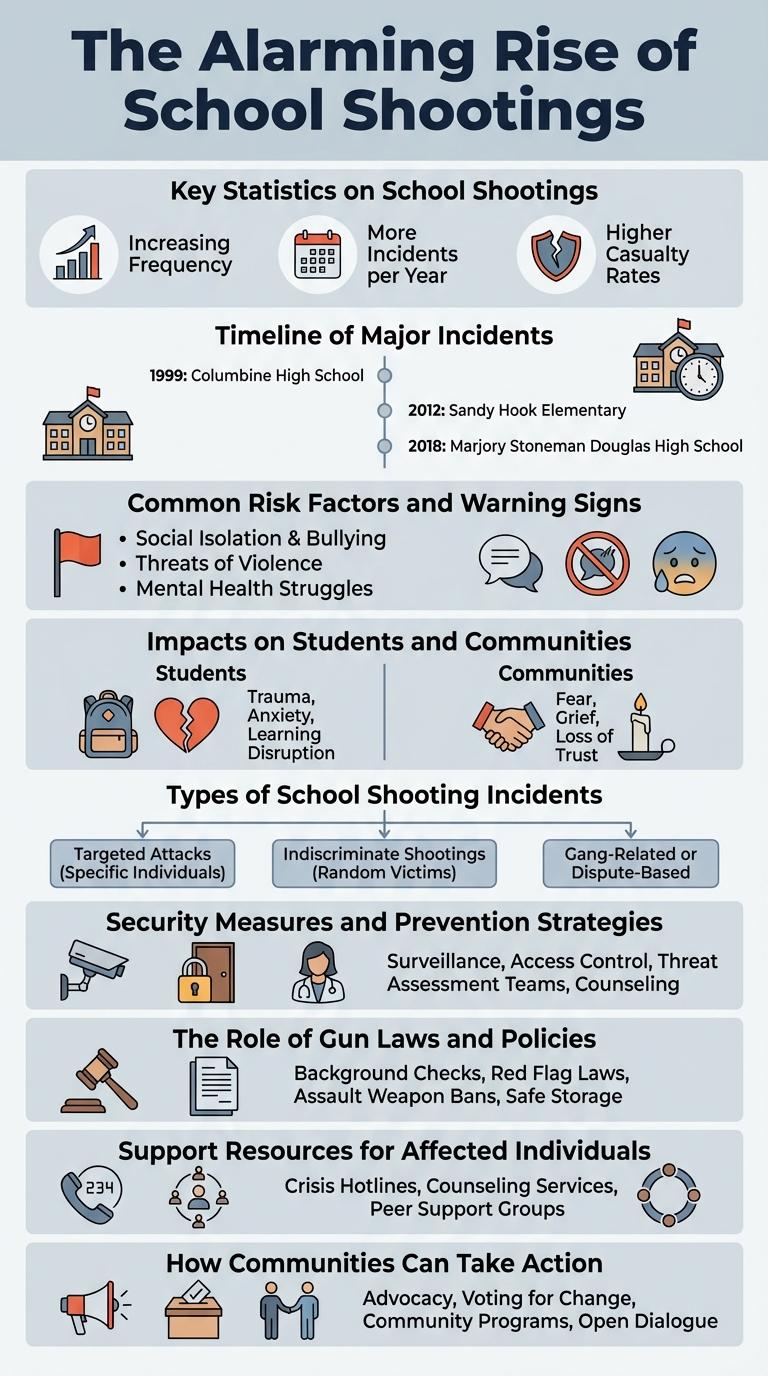
School shootings have become a pressing concern in recent years, highlighting the urgent need for awareness and preventative measures. This infographic presents key statistics, trends, and impacts related to these tragic events in educational settings. Understanding this information is crucial for fostering safer schools and communities.
The Alarming Rise of School Shootings
School shootings have dramatically increased in frequency and severity over the past two decades. This trend poses a significant threat to student safety and community well-being nationwide.
- Rising Incidents - The number of reported school shootings in the United States has nearly doubled since 2000, with over 100 incidents recorded annually in recent years.
- Casualty Rates - Fatalities and injuries from school shootings have escalated, resulting in over 300 deaths and 1,000 injuries between 2010 and 2023.
- Geographic Spread - School shootings now affect both urban and rural areas across more than 40 states, reflecting a widespread national crisis.
Key Statistics on School Shootings
School shootings have tragically increased in frequency, with over 300 incidents occurring in the United States since 2000. According to recent data, approximately 60% of these shootings happen during school hours, affecting students and staff directly. The average number of casualties per incident is rising, highlighting an urgent need for enhanced safety measures and intervention strategies.
Timeline of Major Incidents
| Year | Major Incident |
|---|---|
| 1999 | Columbine High School, Colorado - Two students carried out a mass shooting, killing 13 and injuring 24. |
| 2007 | Virginia Tech, Virginia - A student killed 32 people and wounded 17 in the deadliest school shooting in U.S. history. |
| 2012 | Sandy Hook Elementary, Connecticut - A gunman killed 26 people, including 20 children, sparking national debate on gun control. |
| 2018 | Marjory Stoneman Douglas High School, Florida - A former student killed 17 and injured 17, leading to student-led activism. |
| 2022 | Robb Elementary School, Texas - An attacker killed 19 students and 2 teachers in one of the deadliest attacks on an elementary school. |
Common Risk Factors and Warning Signs
School shootings often stem from a combination of individual, social, and environmental risk factors. Common risk factors include a history of bullying, mental health issues, and access to firearms. Warning signs to watch for include changes in behavior, threats of violence, and social withdrawal.
Impacts on Students and Communities
School shootings cause profound trauma that affects students' mental health and academic performance. Communities experience long-lasting emotional and social repercussions following these violent events.
- Increased Anxiety and PTSD - Students often develop anxiety disorders and post-traumatic stress symptoms after witnessing or hearing about shootings.
- Decline in Academic Achievement - Exposure to school shootings correlates with decreased concentration and lower test scores among affected students.
- Community Distrust - School shootings lead to erosion of trust between community members and institutions, impacting social cohesion.
Effective support systems and preventive measures are critical to mitigate the impacts on students and communities after school shootings.
Types of School Shooting Incidents
School shootings can be categorized into various types based on the intent and circumstances surrounding the incident. Understanding these types helps in developing targeted prevention strategies.
Targeted shootings involve a perpetrator aiming at specific individuals, often due to personal grievances. Rampage shootings typically involve indiscriminate attacks within the school environment, affecting multiple victims. Other types include accidental shootings and domestic violence incidents that spill into school premises.
Security Measures and Prevention Strategies
School shootings pose a serious threat to student safety, making effective security measures essential for prevention. Implementing metal detectors, controlled access points, and surveillance cameras helps deter potential attackers and monitor suspicious activities.
Prevention strategies include active shooter drills, mental health support, and anonymous tip lines to identify risks early. Collaboration between school staff, law enforcement, and community members strengthens overall preparedness and response to incidents.
The Role of Gun Laws and Policies
Gun laws and policies play a critical role in shaping the frequency and severity of school shootings. States with stricter firearm regulations tend to report fewer incidents of gun violence on school campuses.
Policies such as background checks, safe storage laws, and restrictions on assault weapons have shown measurable effects in reducing access to firearms by at-risk individuals. School safety programs combined with legislative measures contribute to lowering the risk of school shootings nationwide.
Support Resources for Affected Individuals
School shootings deeply affect students, families, and communities, creating a critical need for comprehensive support resources. These resources aim to address trauma, provide counseling, and foster healing in the aftermath of violence.
- Crisis Counseling Services - Immediate psychological support is offered to help individuals process trauma and build coping strategies.
- Peer Support Groups - Facilitated group sessions allow survivors and their families to share experiences and find mutual understanding.
- Educational and Community Programs - Workshops and initiatives promote awareness, resilience, and long-term mental health recovery among affected populations.