
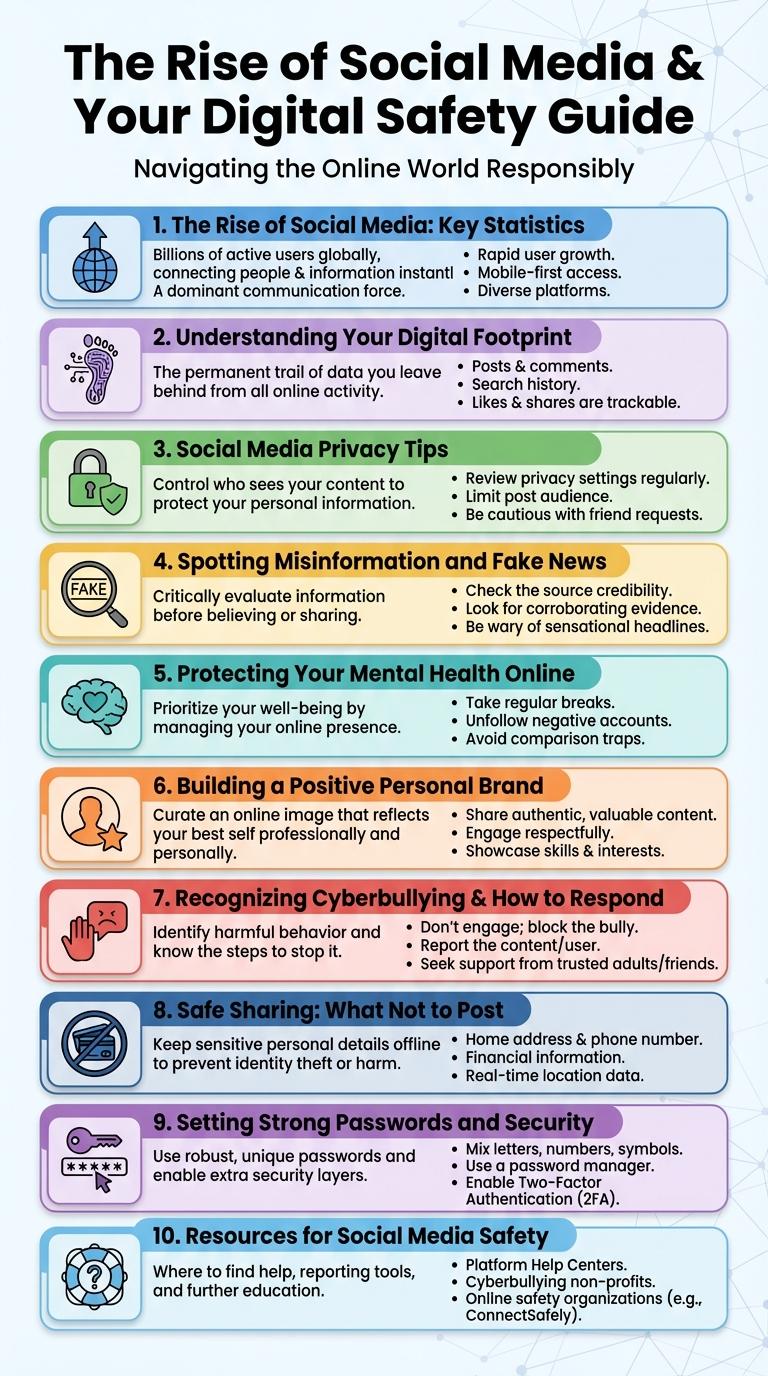
Social media awareness plays a crucial role in navigating online platforms safely and responsibly. Understanding privacy settings, recognizing misinformation, and managing online behavior protects users from potential risks. This infographic highlights essential tips and facts to enhance your social media literacy effectively.
The Rise of Social Media: Key Statistics
Social media usage has surged globally, with over 4.9 billion users as of 2024, reflecting a significant increase from previous years. Platforms like Facebook, Instagram, and TikTok dominate, accounting for more than 60% of user engagement worldwide. Mobile devices drive 98% of social media access, highlighting the shift towards on-the-go connectivity.
Understanding Your Digital Footprint
Understanding your digital footprint is essential for maintaining online privacy and security. Every action on social media, from posts to likes, contributes to a permanent digital record. Being aware of this footprint helps you control your personal data and protect your online reputation.
Social Media Privacy Tips
Social media platforms collect extensive personal data, making privacy protection essential. Users must understand how to manage their information to prevent unauthorized access and misuse.
Adjusting privacy settings regularly helps limit data exposure to third parties. Avoid sharing sensitive details and use strong, unique passwords to enhance account security.
Spotting Misinformation and Fake News
Social media platforms are critical sources of information but also hotspots for misinformation and fake news. Recognizing false information helps protect your online experience and promotes accurate knowledge sharing.
- Check the Source - Verify the credibility of the website or author before trusting the content.
- Analyze the Content - Look for sensational language, inconsistent facts, or lack of evidence.
- Cross-Verify Facts - Compare information with multiple trusted sources to confirm accuracy.
Developing awareness and critical evaluation skills strengthens your ability to spot and avoid misinformation on social media platforms.
Protecting Your Mental Health Online
Social media impacts mental health in both positive and negative ways. Protecting your well-being online requires mindful habits and awareness.
- Set Time Limits - Restrict daily social media usage to reduce anxiety and avoid digital fatigue.
- Curate Your Feed - Follow positive, supportive accounts to foster a healthy online environment.
- Recognize Triggers - Identify content or interactions that cause stress and take action to limit exposure.
Building a Positive Personal Brand
Building a positive personal brand on social media enhances your professional reputation and attracts valuable opportunities. Consistent, authentic content portrays your unique skills and values effectively.
Engage with your audience by sharing insightful posts and responding thoughtfully to comments. Showcase your expertise through well-crafted profiles and regular updates. Positive interactions foster trust and expand your network organically.
Recognizing Cyberbullying & How to Respond
Cyberbullying involves using digital platforms to harass, threaten, or humiliate others. Recognizing signs such as sudden changes in behavior, withdrawal from social media, or distress after online interactions is crucial.
Responding effectively includes documenting incidents, blocking or reporting the bully on the platform, and seeking support from trusted individuals or professionals. Promoting positive online behavior helps create safer digital communities.
Safe Sharing: What Not to Post
Understanding what not to post on social media is crucial for protecting personal privacy and security. Safe sharing helps prevent identity theft, cyberbullying, and unwanted digital footprints.
- Personal Information - Avoid sharing details like your home address, phone number, or financial data to protect against identity theft and fraud.
- Location Data - Refrain from posting real-time location updates to prevent stalking or burglary risks.
- Sensitive Content - Do not share passwords, personal conflicts, or inappropriate photos to maintain a safe and respectful online presence.
Setting Strong Passwords and Security
How can setting strong passwords enhance your social media security? Creating complex passwords with a combination of letters, numbers, and symbols reduces the risk of unauthorized access. Regularly updating passwords and avoiding reuse across multiple accounts further strengthens your protection.
Why is two-factor authentication essential for social media? Enabling two-factor authentication adds an extra layer of security by requiring a second form of verification. This helps prevent hackers from accessing your account even if your password is compromised.
What role does password management play in online safety? Password managers securely store and generate strong passwords, eliminating the need to remember multiple complex codes. Using these tools can improve overall account security and simplify your login process.
How often should passwords be changed on social media platforms? Experts recommend changing passwords every three to six months to minimize vulnerabilities. Frequent updates lower the chances of long-term exposure to cyber threats and unauthorized breaches.
What are common mistakes to avoid when setting social media passwords? Avoid using easily guessable information such as birthdays or common words. Creating unique, lengthy passwords with mixed character types improves security and protects your personal information.