
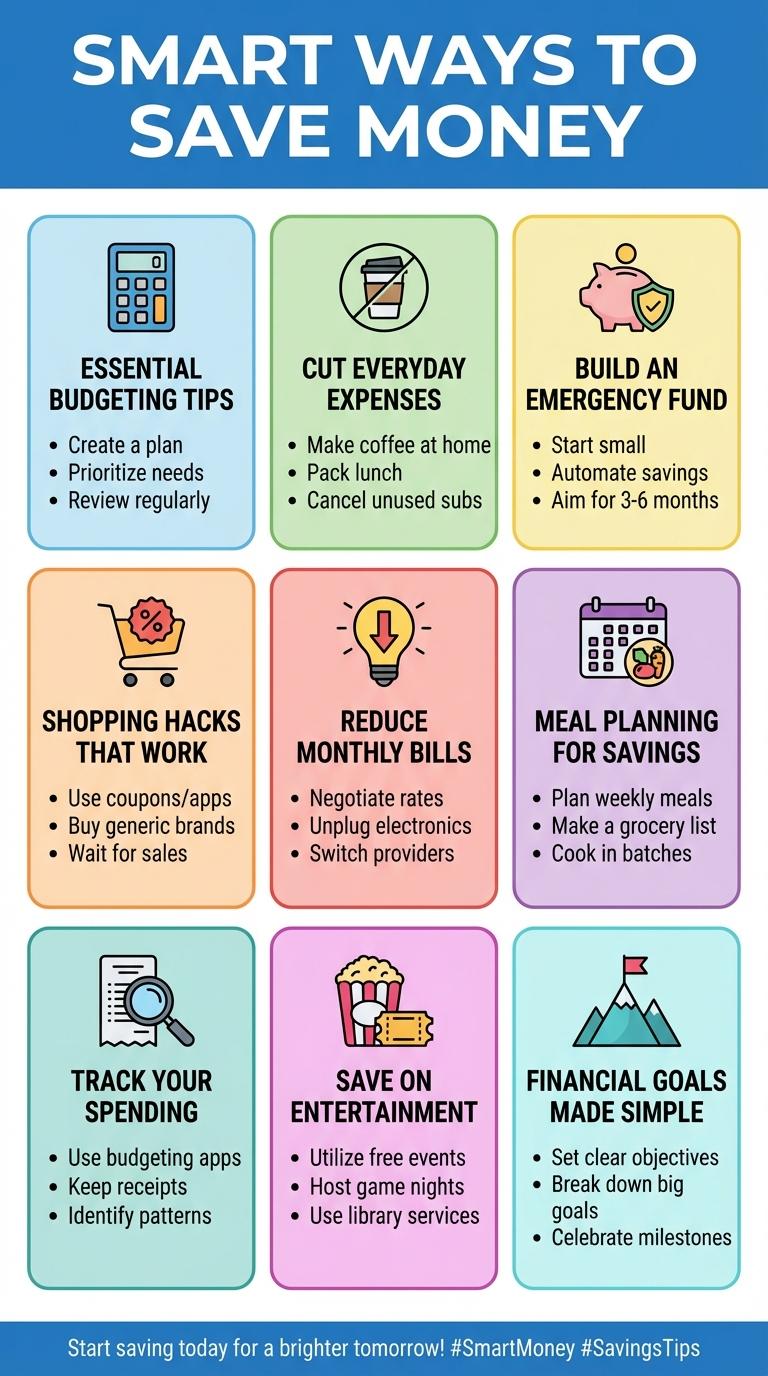
Saving money is essential for achieving financial stability and reaching long-term goals. Visual guides like infographics simplify complex budgeting strategies and highlight practical tips for reducing expenses. These resources make it easier to understand and implement effective saving techniques in daily life.
Smart Ways to Save Money
Saving money is essential for financial security and achieving long-term goals. Implementing smart strategies helps maximize savings without sacrificing daily comfort.
- Create a Budget - Track income and expenses to identify areas where you can cut costs and allocate funds efficiently.
- Automate Savings - Set up automatic transfers to a savings account to ensure consistent money growth over time.
- Reduce Unnecessary Spending - Limit impulse purchases by planning shopping lists and avoiding high-interest debts.
Essential Budgeting Tips
How can you start saving money effectively today? Creating a budget helps identify income and expenses, making it easier to manage finances. Tracking spending habits reveals areas to cut costs and increase savings.
What is the most important tip for budgeting? Prioritize needs over wants to avoid unnecessary expenses. Allocating funds for essentials first secures your financial stability.
Why should you set savings goals? Clear goals provide motivation and direction for saving efforts. Short-term and long-term targets help measure progress and adjust plans accordingly.
How does automating savings benefit your budget? Automation ensures consistent saving without manual effort. Direct transfers to savings accounts reduce temptation to spend.
What role does emergency fund play in budgeting? Emergency funds safeguard against unexpected expenses like medical bills or repairs. Aim to save three to six months' worth of living costs for security.
Cut Everyday Expenses
Saving money starts with smart choices in daily spending habits. Small reductions in everyday expenses significantly boost your savings over time.
- Track Your Spending - Monitor daily purchases to identify unnecessary expenses and areas to cut back.
- Prepare Meals at Home - Cooking instead of dining out reduces food costs and promotes healthier habits.
- Limit Subscription Services - Cancel unused or rarely used subscriptions to lower monthly bills.
Consistently applying these strategies helps build a stronger financial foundation and accelerates your savings growth.
Build an Emergency Fund
Building an emergency fund provides a financial safety net for unexpected expenses like medical bills or car repairs. Aim to save at least three to six months' worth of living expenses in a separate, easily accessible account. Regularly contribute a fixed amount from your income to gradually grow your fund and ensure peace of mind during financial emergencies.
Shopping Hacks That Work
Saving money while shopping is easier with smart strategies that maximize your budget. Implementing simple hacks can help you avoid overspending and make the most of every purchase.
Look for seasonal sales and use price comparison tools to find the best deals. Combine coupons and cashback offers for additional savings on essential items.
Reduce Monthly Bills
Reducing monthly bills is a key strategy for saving money consistently. Assess your recurring expenses to identify unnecessary or overpriced services.
Switching to energy-efficient appliances can lower utility costs significantly. Negotiate with service providers for better rates on internet, cable, and phone plans.
Meal Planning for Savings
| Meal Planning Tip | Saving Benefit |
|---|---|
| Create Weekly Menus | Reduces impulse purchases and food waste |
| Shop with a List | Prevents overspending and buying unnecessary items |
| Buy in Bulk | Lower unit cost and fewer trips to the store |
| Prep Meals in Advance | Saves time and reduces temptation to eat out |
| Use Seasonal Ingredients | Costs less and ensures fresher, nutritious meals |
Track Your Spending
Tracking your spending is essential for effective money management and achieving savings goals. Monitoring expenses helps identify unnecessary costs and improve financial habits.
- Record Every Expense - Keep a daily log of all purchases to understand where your money goes.
- Use Budgeting Apps - Employ tools like Mint or YNAB to automate and simplify spending tracking.
- Analyze Spending Patterns - Review your expenses weekly to spot trends and areas to cut back.
Save on Entertainment
Saving money on entertainment helps boost your overall budget without sacrificing fun. Choose free or low-cost activities like community events, outdoor adventures, and streaming services over expensive outings. Prioritize planning and set monthly entertainment limits to keep spending in check while enjoying quality experiences.