
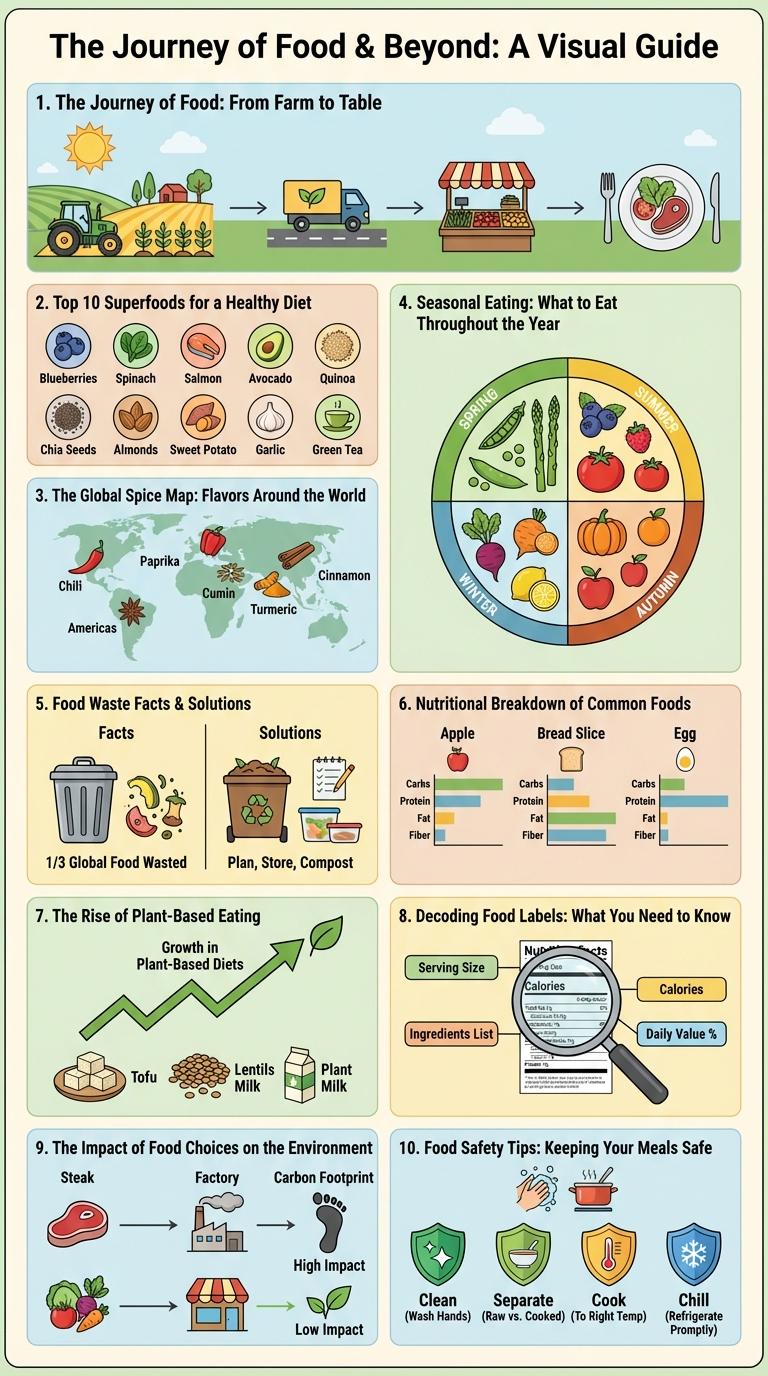
Infographics about food visually present key nutritional information, helping readers make healthier choices quickly. They often highlight calorie counts, vitamin content, and portion sizes for various ingredients and meals. This visual approach simplifies complex data, making it accessible and engaging for diverse audiences.
The Journey of Food: From Farm to Table
The journey of food from farm to table involves multiple stages ensuring quality and safety. Understanding this process highlights the efforts behind every meal we enjoy.
- Harvesting - Crops and livestock are carefully gathered from farms, marking the beginning of the supply chain.
- Processing - Raw food materials undergo cleaning, packaging, and preparation for distribution.
- Distribution - Food is transported using controlled environments to maintain freshness until reaching markets and stores.
Each step in the food journey is essential to deliver nutritious and safe products to consumers worldwide.
Top 10 Superfoods for a Healthy Diet
Incorporating superfoods into your diet can significantly boost your health and provide essential nutrients. These nutrient-dense foods are rich in vitamins, minerals, antioxidants, and fiber.
Here are the top 10 superfoods that promote overall wellness and help prevent chronic diseases. Including a variety of these foods supports a balanced and nutritious diet.
The Global Spice Map: Flavors Around the World
| Region | Popular Spices |
|---|---|
| Asia | Turmeric, Ginger, Cardamom |
| Middle East | Cumin, Sumac, Za'atar |
| Europe | Rosemary, Sage, Paprika |
| Africa | Berbere, Harissa, Cloves |
| Americas | Chili Powder, Cinnamon, Allspice |
Seasonal Eating: What to Eat Throughout the Year
Seasonal eating promotes consuming fruits and vegetables at their peak freshness and nutritional value throughout the year. Different months offer unique produce, such as strawberries in spring, tomatoes in summer, pumpkins in fall, and citrus fruits in winter. Eating seasonally supports local farmers, reduces environmental impact, and enhances flavor and health benefits.
| Season | Recommended Produce |
|---|---|
| Spring | Asparagus, Strawberries |
| Summer | Tomatoes, Zucchini |
| Fall | Pumpkins, Apples |
| Winter | Citrus Fruits, Kale |
Food Waste Facts & Solutions
Food waste affects 1.3 billion tons of food globally each year, accounting for one-third of all food produced. This waste contributes significantly to environmental issues such as greenhouse gas emissions and resource depletion.
Approximately 30% of food produced for human consumption is lost or wasted. Solutions include improving supply chain efficiency, donating surplus food, and educating consumers on proper food storage. Reducing food waste can save money, conserve resources, and combat hunger worldwide.
Nutritional Breakdown of Common Foods
What are the key nutrients found in common foods? Understanding the nutritional breakdown helps in making healthier dietary choices. Below is an infographic highlighting essential nutrients like calories, proteins, fats, and carbohydrates in everyday foods.
| Food Item | Nutritional Breakdown per 100g |
|---|---|
| Apple | Calories: 52 kcal Carbohydrates: 14g Protein: 0.3g Fat: 0.2g |
| Chicken Breast | Calories: 165 kcal Protein: 31g Fat: 3.6g Carbohydrates: 0g |
| Brown Rice | Calories: 111 kcal Carbohydrates: 23g Protein: 2.6g Fat: 0.9g |
| Broccoli | Calories: 55 kcal Carbohydrates: 11g Protein: 3.7g Fat: 0.6g |
| Almonds | Calories: 579 kcal Protein: 21g Fat: 50g Carbohydrates: 22g |
The Rise of Plant-Based Eating
Plant-based eating has seen significant growth worldwide, driven by health, environmental, and ethical concerns. More consumers are adopting plant-based diets, influencing food markets and product development.
- Health Benefits - Plant-based diets are linked to lower risks of heart disease, diabetes, and certain cancers.
- Environmental Impact - Reducing animal product consumption decreases greenhouse gas emissions and conserves water.
- Market Expansion - The plant-based food market is projected to reach $74 billion by 2027, reflecting rising consumer demand.
Decoding Food Labels: What You Need to Know
Understanding food labels is essential for making informed and healthy choices. Food labels provide crucial information about ingredients, nutritional value, and potential allergens.
- Ingredient List - Lists all ingredients in descending order by weight, highlighting additives and preservatives.
- Nutritional Facts - Displays calories, macronutrients, vitamins, and minerals to guide balanced eating.
- Expiration Date - Indicates food safety and freshness, essential for preventing foodborne illness.
- Allergen Information - Identifies common allergens like nuts, dairy, and gluten for consumer safety.
- Serving Size - Clarifies portion control and helps accurately interpret nutritional values.
The Impact of Food Choices on the Environment
Food choices significantly influence environmental sustainability, affecting resources such as water, land, and energy. Animal-based products generally require more resources and generate higher greenhouse gas emissions than plant-based foods.
Reducing meat consumption and increasing plant-based food intake can lower carbon footprints and conserve water. Sustainable food systems promote biodiversity and reduce pollution, benefiting both the planet and human health.