
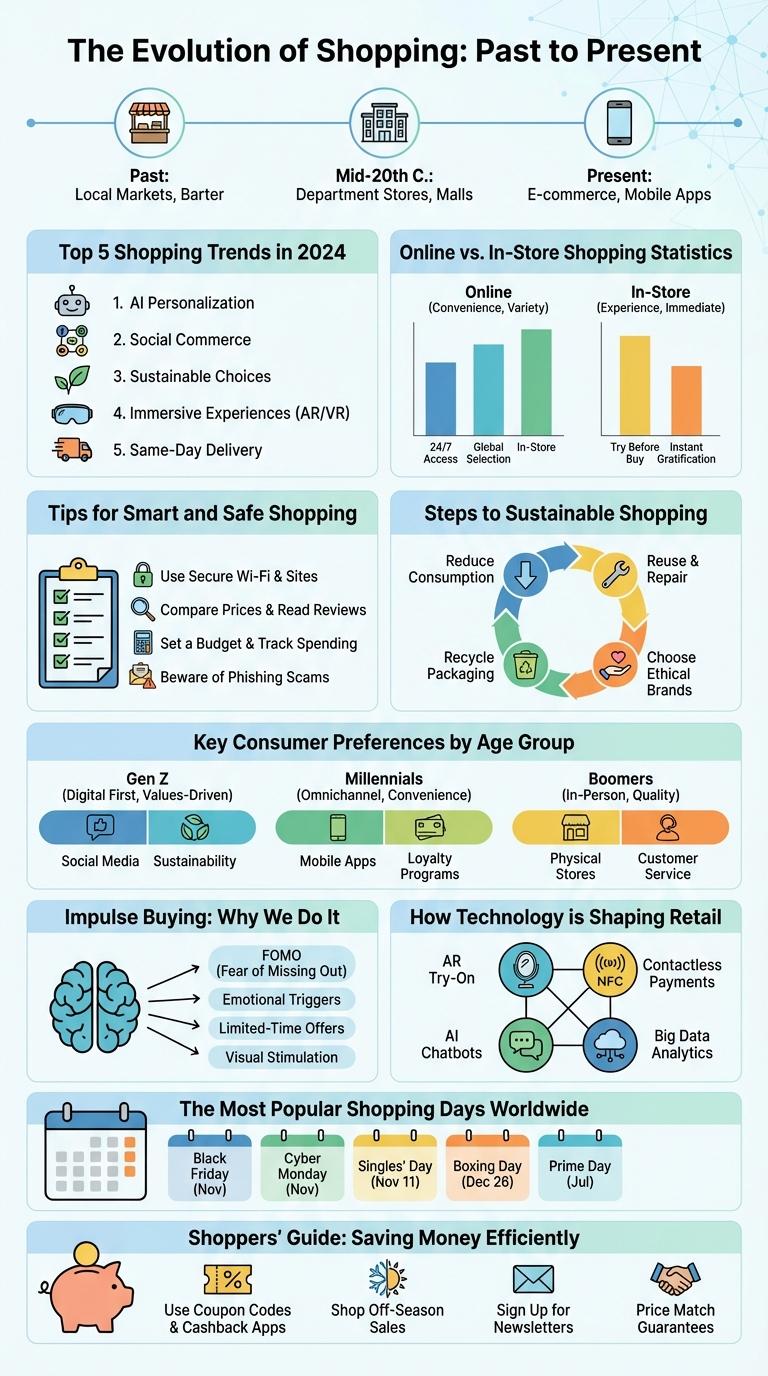
Shopping habits have evolved significantly with the rise of digital platforms and changing consumer preferences. Infographics visually represent key data, making complex shopping trends more accessible and easier to understand. This approach helps consumers and retailers grasp spending patterns, popular products, and seasonal fluctuations effectively.
The Evolution of Shopping: Past to Present
The evolution of shopping reflects significant changes in consumer behavior and technology. From traditional marketplaces to digital platforms, shopping experiences have continuously transformed.
In the past, shopping was predominantly done in physical stores with face-to-face interactions. The rise of catalogs and telephone orders introduced convenience but limited variety. Today, online shopping offers vast product selections, personalized recommendations, and seamless payment methods, shaping the future of retail.
Top 5 Shopping Trends in 2024
Shopping in 2024 is evolving rapidly due to technology and changing consumer preferences. Retailers focus on personalization, sustainability, and innovative experiences to stay competitive.
- Personalized Shopping Experiences - AI-driven recommendations and customized offers enhance customer satisfaction and increase sales.
- Sustainable and Ethical Shopping - Consumers prioritize eco-friendly products and demand transparency from brands about sourcing and production.
- Omnichannel Retailing - Seamless integration of online and offline channels delivers convenience and flexibility to shoppers.
- Augmented Reality (AR) Integration - AR tools allow customers to virtually try products, improving decision-making and reducing returns.
- Subscription Services Growth - Subscription models for products and services offer convenience, personalization, and ongoing customer engagement.
Online vs. In-Store Shopping Statistics
Online shopping continues to grow, with 79% of consumers making purchases via the internet in 2023. The convenience and variety available online drive a steady increase in digital sales year over year.
In-store shopping remains strong, especially for items needing physical inspection, with 65% of shoppers preferring to buy certain products offline. Retailers report that in-store experiences and immediate product availability influence these preferences significantly.
Tips for Smart and Safe Shopping
Smart and safe shopping combines careful planning with awareness to maximize value and minimize risk. Prioritize creating a detailed shopping list to avoid impulse buys and manage your budget effectively. Always check product reviews and verify seller authenticity online to ensure quality and secure transactions.
Steps to Sustainable Shopping
How can you make your shopping more sustainable?
Start by choosing products with minimal packaging and eco-friendly materials. Opt for brands committed to ethical production and environmental responsibility.
What role does buying local play in sustainable shopping?
Supporting local businesses reduces carbon emissions from transportation. It also strengthens community economies and encourages sustainable practices.
Why is checking product labels important?
Labels indicate if items are organic, recycled, or cruelty-free. This information helps buyers select environmentally safe and socially responsible products.
How does reducing waste contribute to sustainability?
Choosing reusable bags, containers, and avoiding single-use plastics minimizes landfill impact. Waste reduction conserves resources and lowers pollution.
What is the benefit of buying durable products?
Durable items last longer, reducing the need for frequent replacements. Investing in quality decreases overall consumption and environmental footprint.
Key Consumer Preferences by Age Group
Shopping behaviors vary significantly across age groups, reflecting diverse preferences and priorities. Understanding these distinctions helps retailers tailor experiences to meet consumer expectations effectively.
- Gen Z values mobile convenience - They prefer shopping through apps and social media platforms for quick, seamless purchases.
- Millennials focus on brand authenticity - This group seeks transparent and ethical brands that align with their values.
- Baby Boomers prioritize in-store experiences - They favor personalized customer service and the ability to see products before buying.
Retail strategies that adapt to age-specific shopping preferences drive greater customer satisfaction and loyalty.
Impulse Buying: Why We Do It
| Aspect | Description |
|---|---|
| Definition | Impulse buying is the spontaneous, unplanned purchase of products or services without prior intention or consideration. |
| Psychological Triggers | Emotional appeal, scarcity, social proof, and immediate rewards drive impulse purchases. |
| Common Settings | Retail stores, online shopping platforms, and promotional events encourage impulse actions. |
| Consumer Impact | Impulse buying can lead to increased spending, buyer's remorse, or satisfaction depending on the purchase context. |
| Retail Strategies | Use of product placement, limited-time offers, and sensory stimuli boost impulse buying behavior. |
How Technology is Shaping Retail
Technology is revolutionizing retail by enhancing personalized shopping experiences through AI-driven recommendations and virtual try-ons. Mobile payment systems and contactless checkout streamline the purchase process, increasing convenience and reducing wait times. Data analytics enable retailers to optimize inventory management and tailor marketing strategies to consumer behavior.
The Most Popular Shopping Days Worldwide
Shopping habits vary globally, influenced by cultural events and seasonal trends. Certain days stand out as the most popular for consumer spending worldwide.
- Black Friday - Originating in the United States, Black Friday occurs the day after Thanksgiving and marks the beginning of the holiday shopping season with massive discounts.
- Singles' Day - Celebrated on November 11th primarily in China, Singles' Day is the largest online shopping day globally, driven by e-commerce promotions.
- Cyber Monday - The Monday following Black Friday focuses on online deals and has grown into a significant shopping event internationally.