
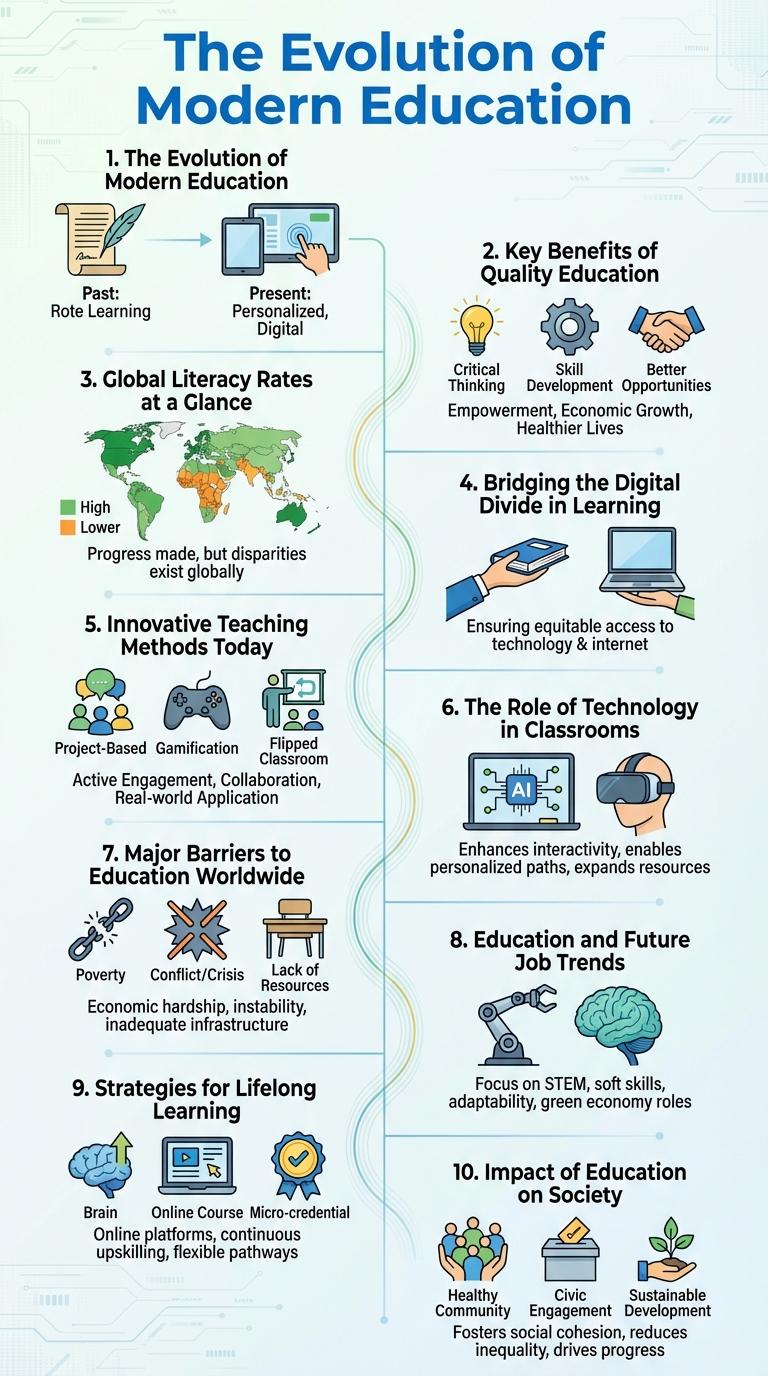
Infographics about education present complex data and trends in a visually engaging way that enhances understanding and retention. By combining charts, icons, and concise text, these visual tools highlight key statistics and insights critical to educators, policymakers, and learners. Effective educational infographics simplify challenging concepts, making information accessible and actionable.
The Evolution of Modern Education
Modern education has transformed significantly over centuries, adapting to changing societal needs and technological advances. This evolution reflects shifts in teaching methods, accessibility, and learning environments.
- Industrial Revolution Impact - Education systems expanded to support workforce skills during rapid industrialization.
- Introduction of Public Schooling - Universal education became a priority, promoting literacy and civic responsibility.
- Digital Age Influence - Technology integration revolutionized learning with online resources and interactive tools.
Continued innovation in education aims to enhance student engagement and prepare individuals for a dynamic global future.
Key Benefits of Quality Education
Quality education serves as a powerful tool for personal and societal growth by equipping individuals with essential knowledge and skills. It fosters critical thinking, innovation, and equal opportunities across diverse communities.
Investing in education promotes sustainable development and economic prosperity worldwide.
- Enhances Employment Opportunities - Quality education improves access to better jobs and career advancement by developing relevant skills.
- Promotes Social Equality - Education reduces social disparities by empowering marginalized groups and encouraging inclusive participation.
- Supports Health and Well-being - Educated individuals are more informed about health practices, leading to healthier lifestyles and communities.
Global Literacy Rates at a Glance
Global literacy rates have steadily increased over the past decades, reflecting major advances in education access worldwide. As of 2023, the average global adult literacy rate stands at approximately 87%, with notable variations between regions.
Developed countries typically report literacy rates above 95%, while some low-income regions struggle with rates below 60%. Improving literacy remains a key priority for achieving sustainable development and economic growth across all nations.
Bridging the Digital Divide in Learning
Access to technology is essential for modern education and lifelong learning. Bridging the digital divide ensures equitable opportunities for all students regardless of socioeconomic background.
Efforts to close the digital gap focus on providing devices, improving internet access, and enhancing digital literacy worldwide.
- Device Accessibility - Distributing affordable, reliable devices enables students to participate fully in digital learning environments.
- Infrastructure Improvement - Expanding broadband internet coverage in rural and underserved areas supports consistent online educational access.
- Digital Skills Training - Integrating digital literacy programs prepares learners and educators to effectively utilize technology tools.
Innovative Teaching Methods Today
Innovative teaching methods today revolve around integrating technology and interactive learning to enhance student engagement. Techniques such as flipped classrooms and gamified lessons create dynamic environments that promote critical thinking and collaboration.
Educators increasingly use virtual reality and AI-driven tools to tailor instruction and provide real-time feedback. These advancements foster personalized learning experiences that adapt to individual student needs and learning styles.
The Role of Technology in Classrooms
Technology in classrooms transforms traditional teaching by integrating digital tools that enhance interactive learning and student engagement. Devices like tablets, interactive whiteboards, and educational software facilitate personalized instruction tailored to individual learning styles. This technological integration prepares students with essential digital skills for future academic and career success.
Major Barriers to Education Worldwide
What are the major barriers to education worldwide? Access to quality education is hindered by various economic, social, and political factors. Understanding these obstacles is crucial for developing effective solutions.
| Barrier | Impact |
|---|---|
| Poverty | Limits access to school supplies, uniforms, and transportation, causing low enrollment and high dropout rates. |
| Gender Inequality | Restricts girls' education due to cultural norms, early marriage, and safety concerns. |
| Conflict and Instability | Disrupts schooling through displacement, damaged infrastructure, and teacher shortages. |
| Disability | Lack of inclusive facilities and trained staff excludes children with disabilities from educational opportunities. |
| Geographical Barriers | Remote and rural areas face challenges such as long travel distances and insufficient school availability. |
Education and Future Job Trends
| Education Aspect | Future Job Trend |
|---|---|
| STEM Education | High demand in AI, robotics, and data science careers |
| Digital Literacy | Essential for remote work and IT-related jobs |
| Soft Skills Development | Critical for leadership, teamwork, and customer service roles |
| Lifelong Learning | Adapts to rapid technology changes in various industries |
| Vocational Training | Growth in skilled trades and technical professions |
Strategies for Lifelong Learning
Lifelong learning enables continuous personal and professional development. Embracing effective strategies enhances knowledge retention and skill acquisition throughout life.
Setting clear goals helps maintain focus and motivation during the learning process. Utilizing diverse resources such as online courses, books, and workshops broadens understanding. Consistent self-assessment ensures progress and identifies areas for improvement.