
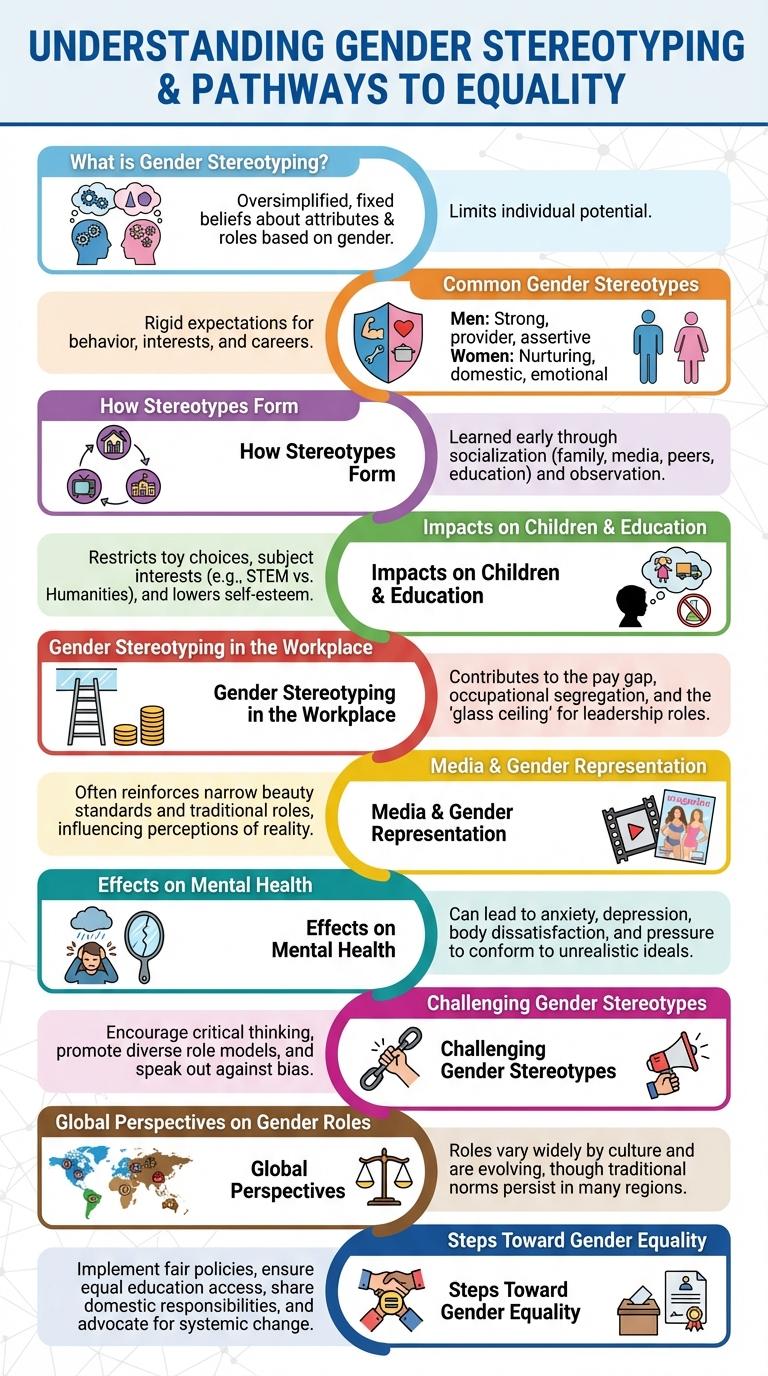
Gender stereotyping limits individual potential by assigning fixed traits and roles based on one's sex. This infographic highlights common stereotypes and their impact on society, revealing how these preconceived notions shape behavior and opportunities. Understanding these patterns is key to fostering equality and challenging biased perceptions.
What is Gender Stereotyping?
Gender stereotyping involves assigning specific roles, behaviors, and attributes to individuals based solely on their gender. These preconceived notions influence expectations in personal, social, and professional contexts.
Such stereotypes contribute to inequality by limiting opportunities and reinforcing discriminatory attitudes. Understanding gender stereotyping is essential to promoting inclusivity and diversity in society.
Common Gender Stereotypes
Gender stereotyping involves assigning fixed traits and roles to individuals based solely on their gender. These stereotypes influence societal expectations and limit personal expression.
Common gender stereotypes depict men as strong, assertive, and career-driven. Women are often stereotyped as nurturing, emotional, and focused on family responsibilities.
How Stereotypes Form
| Factor | Explanation |
|---|---|
| Family Influence | Early interactions shape beliefs on gender roles through parental modeling and expectations. |
| Media Representation | Television, movies, and advertisements portray gendered behaviors that reinforce stereotypes. |
| Peer Pressure | Social groups encourage conformity to traditional gender norms during development. |
| Education System | Curricula and teacher attitudes can subtly promote gender-specific skills and interests. |
| Cultural Traditions | Longstanding societal roles and customs dictate expected behaviors for different genders. |
Impacts on Children and Education
How does gender stereotyping affect children's development and learning in schools? Gender stereotyping limits children's opportunities by reinforcing traditional roles and expectations. These stereotypes can influence academic performance, self-esteem, and career aspirations, hindering equal educational outcomes.
Gender Stereotyping in the Workplace
Gender stereotyping in the workplace limits opportunities and perpetuates inequality between men and women. Recognizing these stereotypes is crucial for fostering a diverse and inclusive environment.
Gender stereotypes influence hiring decisions, promotion rates, and workplace dynamics.
- Women are often perceived as less competent in leadership roles - This bias reduces their chances for executive positions despite qualifications.
- Men are expected to avoid caregiving responsibilities - This stereotype pressures men to prioritize work over family, impacting work-life balance.
- Technical roles are commonly viewed as male-dominated - Women face barriers entering STEM fields due to persistent stereotypes.
Media and Gender Representation
Media plays a critical role in shaping gender stereotypes by often portraying men and women in traditional, limiting roles. Female characters are frequently depicted as passive or decorative, while male characters are shown as dominant or adventurous. This biased representation reinforces societal gender norms and affects audience perceptions worldwide.
Effects on Mental Health
Gender stereotyping imposes rigid expectations on individuals, limiting their emotional expression and self-identity. These constraints contribute to increased stress, anxiety, and depression across different age groups.
Studies show that people subjected to gender stereotypes often experience low self-esteem and social isolation. Mental health disorders, including anxiety and depression, are more prevalent among those facing these societal pressures. Breaking these stereotypes promotes healthier emotional well-being and fosters an inclusive environment for all genders.
Challenging Gender Stereotypes
Challenging gender stereotypes is essential for creating an inclusive society where individuals can express themselves freely. Breaking these stereotypes promotes equality and empowers people to pursue their true interests and talents.
- Encourage Diverse Role Models - Showcasing individuals from all genders in various professions helps dismantle traditional roles.
- Promote Inclusive Education - Teaching children about gender equality reduces biases and fosters respect from an early age.
- Support Media Representation - Diverse and non-stereotypical portrayals in media challenge societal norms and influence perceptions.
Global Perspectives on Gender Roles
Global perspectives on gender roles reveal significant cultural differences in expectations and behaviors assigned to men and women. In many societies, traditional gender stereotypes dictate career paths, family responsibilities, and social interactions. Understanding these global variations is essential for addressing gender equality and promoting inclusive policies worldwide.