
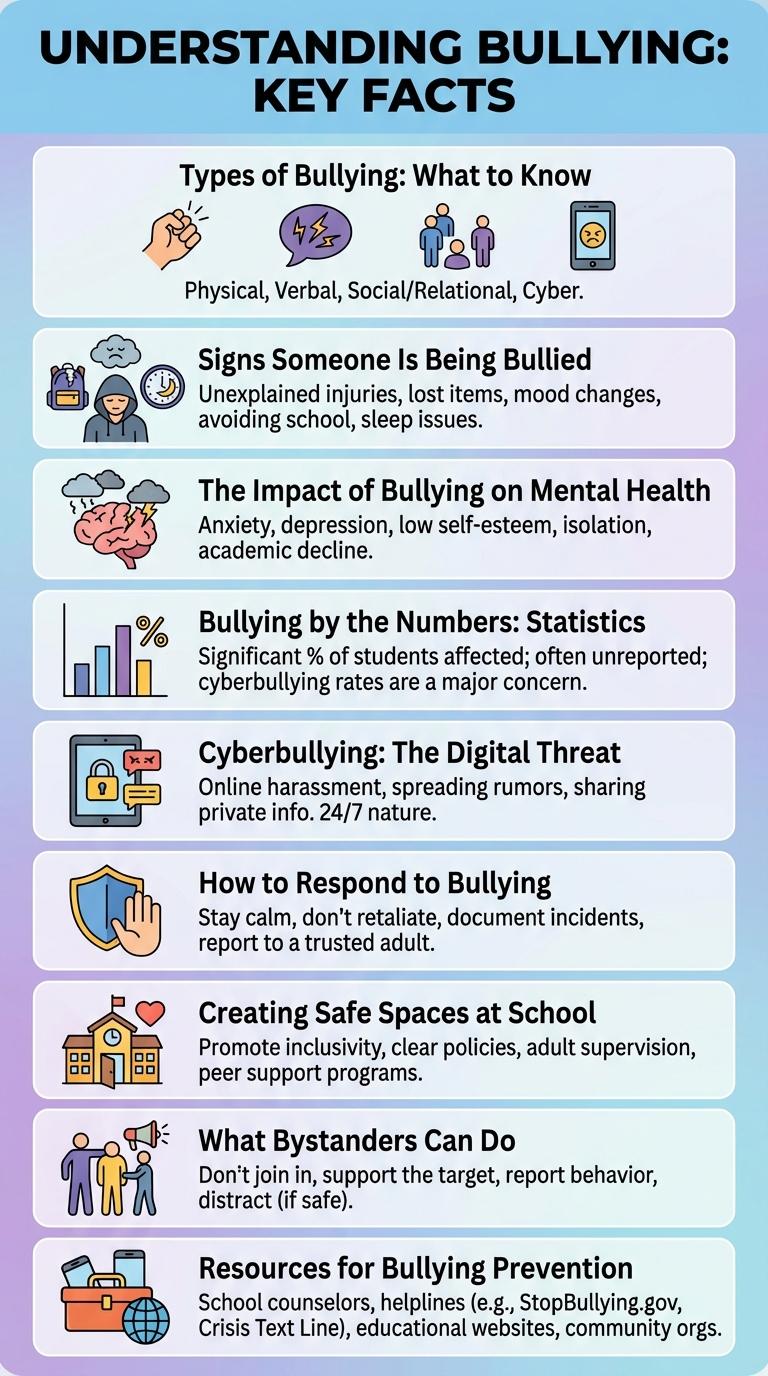
Bullying awareness infographics visually highlight the impact of bullying and essential prevention strategies. They effectively communicate key statistics, signs of bullying, and ways to support victims. Such visual tools empower communities to foster safer, more compassionate environments.
Understanding Bullying: Key Facts
| Key Fact | Detail |
|---|---|
| Definition of Bullying | Intentional aggressive behavior repeated over time, involving a power imbalance. |
| Types of Bullying | Physical, verbal, social exclusion, cyberbullying. |
| Prevalence | Approximately 30% of students experience bullying during school years. |
| Impact on Victims | Increased risks of anxiety, depression, lowered academic performance. |
| Role of Bystanders | Bystanders can either contribute to bullying or help stop it through intervention. |
Types of Bullying: What to Know
Bullying takes many forms, each impacting victims differently. Recognizing types of bullying is crucial for effective prevention and support.
Physical bullying involves harming someone's body or possessions, like hitting or stealing. Verbal bullying includes name-calling, insults, and threats that damage emotional well-being.
Social bullying excludes or humiliates individuals, damaging relationships and social standing. Cyberbullying uses technology to harass, spread rumors, or intimidate anonymously.
Understanding these types helps schools, parents, and communities create safer environments. Awareness empowers victims to seek help and encourages bystanders to intervene.
Signs Someone Is Being Bullied
Recognizing the signs that someone is being bullied is crucial for timely intervention. Awareness helps create a supportive environment where victims feel safe to seek help.
- Unexplained Injuries - Frequent bruises or cuts without clear explanations may indicate physical bullying.
- Emotional Distress - Sudden mood swings, anxiety, or depression can be signs of emotional or verbal bullying.
- Social Withdrawal - Avoiding friends, skipping school, or reluctance to participate in social activities often suggests bullying.
The Impact of Bullying on Mental Health
Bullying significantly affects mental health, leading to increased risks of anxiety, depression, and low self-esteem. Victims often experience long-term psychological trauma that can impact their academic performance and social relationships. Raising awareness about the mental health consequences of bullying is essential for creating supportive environments and promoting intervention strategies.
Bullying by the Numbers: Statistics
Bullying affects approximately 30% of students aged 12-18 worldwide, with verbal bullying being the most common form. Nearly 20% of students report experiencing cyberbullying through social media platforms.
Victims of bullying are twice as likely to experience depression and anxiety compared to their peers. Schools with anti-bullying programs report a 25% reduction in bullying incidents within the first year of implementation.
Cyberbullying: The Digital Threat
Cyberbullying poses a significant threat in the digital age, affecting millions of individuals worldwide. Understanding its impact and prevention is crucial for fostering a safer online environment.
- Definition of Cyberbullying - Cyberbullying involves using digital platforms to harass, threaten, or humiliate others.
- Common Platforms - Social media, messaging apps, and online gaming are primary channels where cyberbullying occurs.
- Psychological Effects - Victims often experience anxiety, depression, and lowered self-esteem as a result of cyberbullying.
Raising awareness and promoting digital etiquette help combat the harmful effects of cyberbullying.
How to Respond to Bullying
Bullying affects millions of students worldwide, causing emotional and physical harm. Recognizing the signs early can help prevent long-term damage and promote a safer environment.
Respond calmly and firmly when confronted with bullying, showing that it is unacceptable. Report incidents to trusted authorities such as teachers or school counselors. Encourage bystanders to support victims and foster a culture of respect and kindness.
Creating Safe Spaces at School
Creating safe spaces at school is essential for preventing bullying and promoting inclusion. Schools can establish clear anti-bullying policies and provide designated areas where students feel supported and protected. Encouraging open communication between students, teachers, and staff helps build trust and fosters a positive school environment.
What Bystanders Can Do
What can bystanders do to help stop bullying?
Bystanders have the power to make a difference by speaking up or seeking help from trusted adults. Standing against bullying creates a safer environment for everyone.