
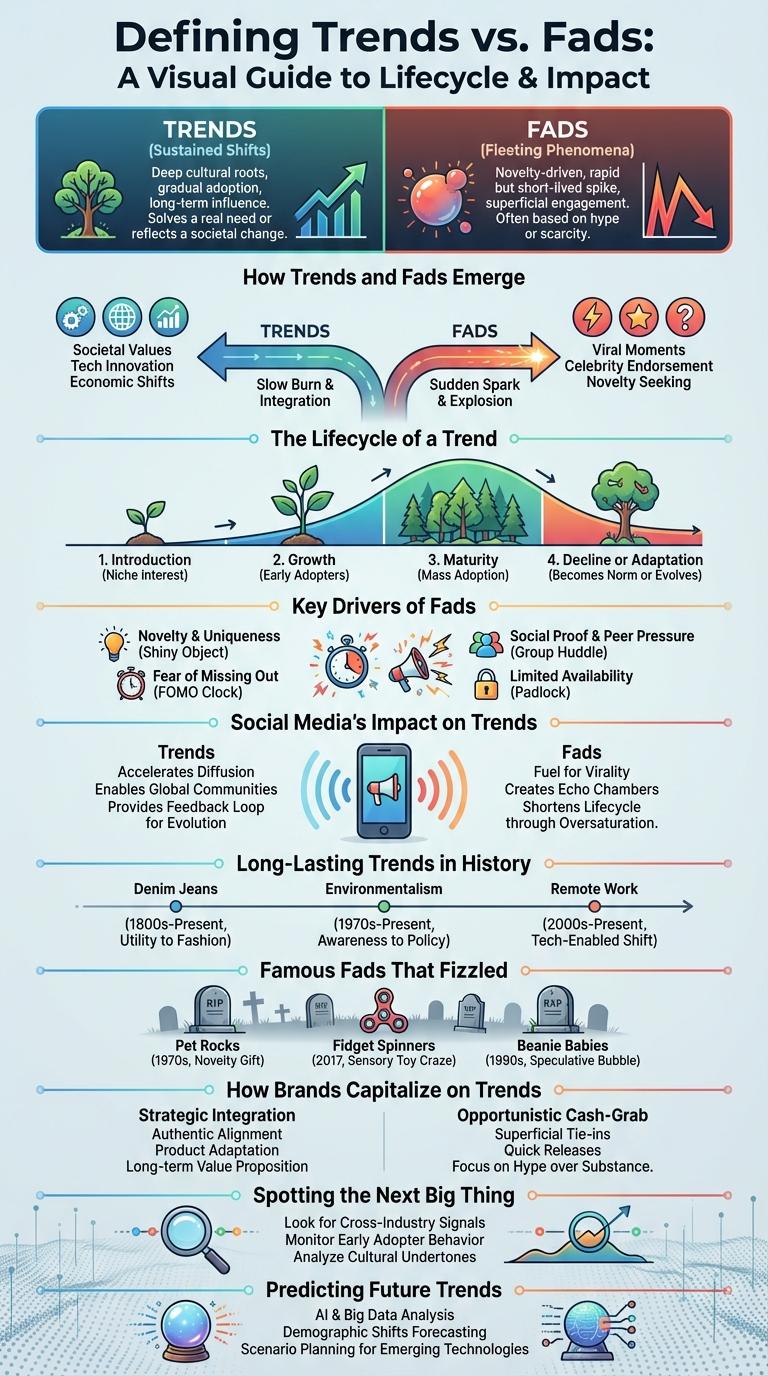
Infographics highlight the dynamic nature of trends and fads by visually capturing their rapid rise and fall across various industries. These compelling graphics reveal patterns in consumer behavior and cultural shifts, making complex data easily digestible. Businesses and marketers leverage these insights to anticipate market demands and tailor their strategies effectively.
Defining Trends vs. Fads
Trends represent long-lasting shifts in consumer behavior or cultural preferences that evolve gradually over time. Fads are short-lived phenomena that experience rapid popularity but fade quickly.
Trends influence industries for years by shaping markets, products, and lifestyles. Fads tend to spike suddenly and often rely on novelty or hype rather than substantial value. Understanding the distinction helps businesses focus on sustainable growth versus temporary buzz.
How Trends and Fads Emerge
Trends and fads emerge through rapid adoption of new ideas, styles, or behaviors, often influenced by social media, celebrities, and cultural events. Trends typically develop gradually, gaining widespread acceptance over time, while fads experience swift popularity followed by a rapid decline. Early adopters and influencers play a crucial role in spreading these phenomena within communities and markets.
The Lifecycle of a Trend
What defines the lifecycle of a trend? A trend begins with early adoption by innovators, followed by rapid growth as it captures mainstream attention. Eventually, it reaches saturation before declining, often replaced by new trends or evolving into a lasting cultural shift.
| Stage | Description |
|---|---|
| Emergence | Early adopters discover and experiment with the trend. |
| Growth | Popularity rapidly increases as more people join. |
| Maturity | Trend reaches peak adoption and widespread recognition. |
| Decline | Interest wanes as the trend becomes oversaturated. |
| Legacy | The trend either fades or transforms into a lasting movement. |
Key Drivers of Fads
Fads and trends shape consumer behavior and cultural dynamics rapidly. Understanding the key drivers behind these phenomena helps predict their lifespan and impact.
- Social Media Influence - Platforms like TikTok and Instagram accelerate the spread of new ideas, making trends go viral quickly.
- Cultural Shifts - Changes in societal values and lifestyle create fertile ground for new fads that resonate with the public.
- Celebrity Endorsements - Influencers and celebrities boost trend visibility, encouraging mass adoption and rapid growth.
Social Media's Impact on Trends
| Aspect | Details |
|---|---|
| Trend Acceleration | Social media platforms enable rapid spread of trends, drastically shortening adoption cycles. |
| Global Reach | Social networks connect diverse audiences, allowing trends to cross cultural and geographic boundaries swiftly. |
| Influencer Power | Influencers and content creators drive trend visibility and consumer behavior through curated content. |
| Real-Time Feedback | Instant user engagement and reactions shape trend evolution and fade-out speeds. |
| Data-Driven Insights | Social media analytics identify emerging patterns, guiding brands on trend adoption and marketing strategies. |
Long-Lasting Trends in History
Long-lasting trends shape culture and society by influencing lifestyles, fashion, and technology over extended periods. These trends often evolve gradually, gaining deeper roots compared to short-lived fads.
Examples include the rise of sustainable living, the enduring popularity of classic fashion styles, and the continuous growth of digital connectivity. Such trends reflect shifting values and technological advancements that persist through decades.
Famous Fads That Fizzled
Fads capture public excitement rapidly but often vanish just as quickly. Understanding famous fads that fizzled reveals patterns in fleeting popularity.
Focusing on iconic examples highlights why some trends fail to sustain momentum.
- Pet Rocks - These novelty items became a humorous craze in 1975 before interest sharply declined.
- Fidget Spinners - Initially marketed as stress-relief tools, their popularity peaked in 2017 and quickly diminished.
- Google Glass - Despite technological innovation, poor public reception and privacy concerns led to its commercial failure.
How Brands Capitalize on Trends
Brands capitalize on trends by quickly adapting their products and marketing strategies to align with current consumer interests. This agility allows them to capture attention and increase sales while the trend is still popular.
Social media platforms play a crucial role in identifying and amplifying trends, providing brands with valuable data to tailor their outreach. Collaborations with influencers further enhance brand visibility and credibility during peak trend periods.
Spotting the Next Big Thing
Identifying emerging trends early is crucial for businesses and innovators aiming to stay ahead of the curve. Recognizing the difference between fleeting fads and lasting trends drives smarter decision-making and strategic investments.
- Monitoring Social Media Buzz - Analyzing platforms like TikTok and Instagram reveals rising interests and viral content signaling potential trends.
- Tracking Influencer Endorsements - Influencers often spotlight new products or ideas that can quickly gain widespread popularity.
- Analyzing Consumer Behavior Data - Purchasing patterns and search queries help detect growing demand for specific products or services.
Combining data analytics with cultural insights enables accurate forecasting of the next big thing before it hits the mainstream.