
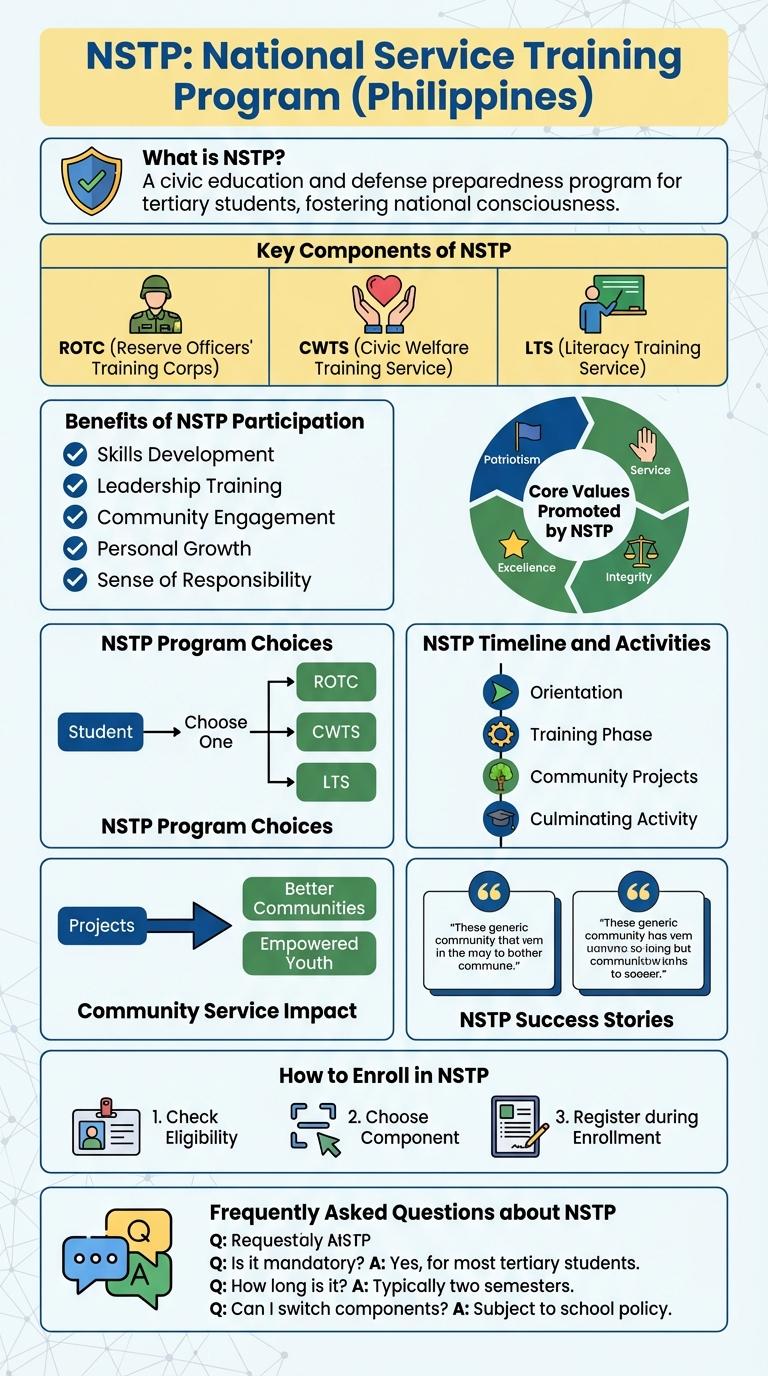
An infographic about NSTP example visually presents key components and benefits of the National Service Training Program. It highlights real-life scenarios and effective implementation strategies that engage youth in community service. This format simplifies complex information, making it accessible and impactful for students and educators alike.
What is NSTP?
The National Service Training Program (NSTP) is a civic education and defense preparedness program in the Philippines. It aims to enhance the youth's involvement in public service.
NSTP consists of three components: Reserve Officers' Training Corps (ROTC), Literacy Training Service (LTS), and Civic Welfare Training Service (CWTS). Each component develops different skills, from military training to community service and literacy efforts. The program is mandatory for all Filipino college students, fostering patriotism and national development.
Key Components of NSTP
The National Service Training Program (NSTP) enhances civic consciousness and defense preparedness among Filipino youth. NSTP consists of structured components designed to develop essential skills and social responsibility.
- Civic Welfare Training Service (CWTS) - Focuses on activities that contribute to the general welfare and betterment of community life.
- Literacy Training Service (LTS) - Prepares students to become educators in literacy and numeracy to school children and out-of-school youths.
- Reserve Officers' Training Corps (ROTC) - Trains students for national defense and equips them with military discipline and leadership skills.
Benefits of NSTP Participation
The National Service Training Program (NSTP) cultivates civic responsibility and enhances community engagement among Filipino youth. Participation equips students with essential skills and promotes nation-building efforts.
- Community Development - NSTP participants actively contribute to local projects that drive sustainable growth and social progress.
- Leadership Skills - The program fosters leadership qualities through hands-on activities and organized community service.
- Civic Awareness - Students gain a deeper understanding of societal issues and their role in addressing them responsibly.
Core Values Promoted by NSTP
The National Service Training Program (NSTP) nurtures essential core values that shape responsible citizens. These values empower Filipino youth to contribute effectively to community development and nation-building.
- Patriotism - Fosters love for country and dedication to its welfare through civic engagement.
- Discipline - Develops the habit of following rules and maintaining self-control for community order.
- Cooperation - Encourages teamwork and collaboration among participants for successful project implementation.
- Social Responsibility - Instills awareness of societal issues and motivates service to marginalized sectors.
- Integrity - Promotes honesty and ethical behavior in all activities and interactions.
NSTP equips youth with moral values that strengthen community ties and national resilience.
NSTP Program Choices
The National Service Training Program (NSTP) offers students three primary program choices aimed at developing civic consciousness and defense preparedness. These choices allow participants to engage in community service, military training, or literacy programs.
The three NSTP program components include the Reserve Officers' Training Corps (ROTC), Literacy Training Service (LTS), and Civic Welfare Training Service (CWTS). Each program provides unique skills and experiences tailored to different interests and community needs.
NSTP Timeline and Activities
| NSTP Timeline | Key Activities |
|---|---|
| Year 2001 - NSTP Law Enacted | Implementation of the National Service Training Program in Philippine colleges and universities. |
| 50-hour Basic Literacy Training | Conduct of literacy campaigns for underserved communities as part of Civic Welfare Training Service (CWTS). |
| Community Immersion Projects | Engagement of students in community development and disaster response initiatives. |
| Leadership and Team Building Workshops | Training sessions enhancing students' leadership, discipline, and teamwork skills. |
| Final Reporting and Reflection | Presentation of community service accomplishments and evaluation of personal and social impact. |
Community Service Impact
The National Service Training Program (NSTP) fosters community development through student-led initiatives addressing local needs. Community service projects under NSTP enhance environment conservation, health awareness, and education. These efforts significantly improve the quality of life and promote civic responsibility among youth participants.
NSTP Success Stories
The NSTP program empowers Filipino youth through community service, promoting civic responsibility and leadership skills. One success story features a group that established a sustainable feeding program in a remote barangay, significantly reducing child malnutrition. Another example highlights student volunteers who organized disaster preparedness workshops, enhancing their community's resilience during typhoons.
How to Enroll in NSTP
How do I enroll in the NSTP program? Enrolling in the National Service Training Program (NSTP) typically involves submitting an application form at your school's student affairs or registrar's office. You may also need to attend orientation sessions before classes begin.
What are the requirements for NSTP enrollment? Requirements often include being a registered student, filling out the NSTP application, and providing valid identification. Some schools may require a medical clearance or additional documents before enrollment is confirmed.
Where can I get more information about NSTP courses? Information is usually available on your school's official website or through the student affairs department. Guidance counselors and NSTP coordinators can also provide detailed instructions on the enrollment process.