
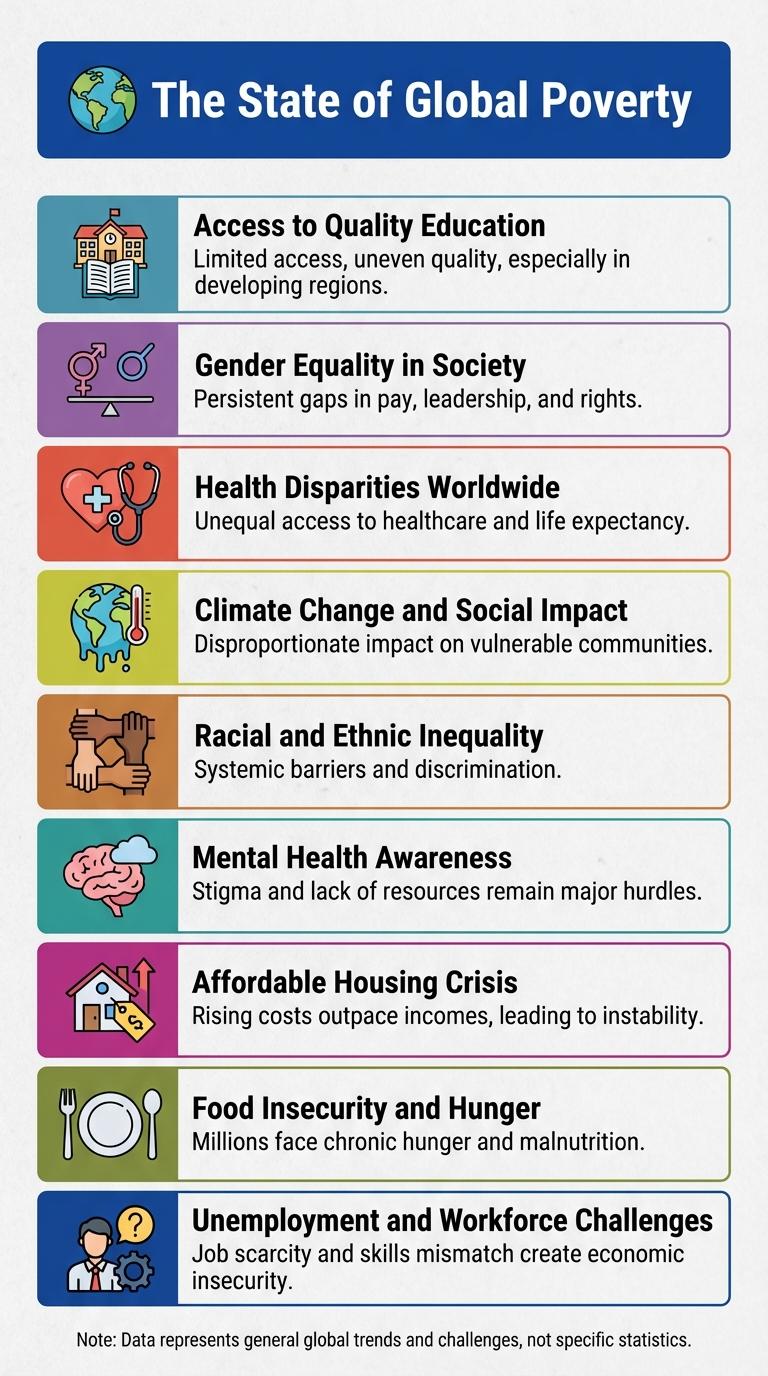
Social issues impact communities by highlighting challenges such as poverty, inequality, and access to education. Visualizing data through infographics makes complex social problems easier to understand and increases public awareness. Engaging graphics and clear statistics foster informed discussions and encourage collective action.
The State of Global Poverty
Global poverty remains a critical social issue affecting millions worldwide. Understanding its current state helps in driving targeted interventions and policy changes.
- Extreme Poverty - Over 700 million people live on less than $1.90 a day, primarily in Sub-Saharan Africa and South Asia.
- Child Poverty - Nearly 1 in 6 children worldwide experience multidimensional poverty, lacking basic health, education, and living standards.
- Progress Rate - The global poverty rate has decreased from 36% in 1990 to 8.4% in 2022, though pandemic setbacks have slowed progress.
Targeted global efforts are essential to reduce poverty and improve living conditions for vulnerable populations.
Access to Quality Education
What barriers prevent equal access to quality education worldwide?
Millions of children face obstacles such as poverty, lack of infrastructure, and social discrimination. Addressing these challenges is essential to ensure inclusive and equitable learning opportunities for all.
Gender Equality in Society
Gender equality is a fundamental human right and essential for a fair and just society. It aims to provide equal opportunities, rights, and responsibilities to all genders.
Despite progress, gender disparities persist in education, employment, and political representation worldwide. Addressing these challenges promotes economic growth and social development.
Health Disparities Worldwide
Health disparities worldwide reveal significant inequalities in access to medical care, affecting millions of lives. Understanding these disparities helps target resources and improve global health outcomes.
- Access to Healthcare - Over half of the global population lacks essential health services, limiting treatment options and preventive care.
- Mortality Rates - Low-income regions experience higher mortality rates from preventable diseases compared to high-income areas.
- Chronic Conditions - Disadvantaged populations face increased prevalence of chronic illnesses, including diabetes and heart disease, due to socio-economic factors.
Climate Change and Social Impact
Climate change accelerates environmental disruptions, directly affecting vulnerable populations worldwide. Rising temperatures and extreme weather events increase food insecurity, health risks, and displacement. Addressing climate change is essential to mitigate its profound social impacts and promote sustainable development.
Racial and Ethnic Inequality
Racial and ethnic inequality remains a pervasive social issue worldwide, affecting access to education, employment, and healthcare. This infographic highlights key data points to better understand the scope and impact of these disparities.
- Income Disparity - Minority groups often earn significantly less than their white counterparts, with median household incomes varying widely among races.
- Educational Attainment - Students from marginalized ethnic backgrounds have lower graduation rates and reduced access to higher education opportunities.
- Healthcare Inequity - Racial minorities experience higher rates of chronic illnesses and face barriers in receiving quality healthcare services.
Mental Health Awareness
Mental health awareness is crucial for recognizing and addressing the challenges faced by millions worldwide. Promoting understanding reduces stigma and encourages individuals to seek help.
One in four people experience mental health issues each year, yet many suffer in silence due to fear or lack of support. Early intervention and education improve outcomes and quality of life. Community programs and accessible resources are vital in fostering mental well-being and resilience.
Affordable Housing Crisis
| Affordable Housing Crisis Statistics | Data |
|---|---|
| Number of Severely Cost-Burdened Renters | Nearly 20 million households in the U.S. |
| Median Rent Increase (Past Decade) | Up 30% nationally |
| Affordable Rental Units Shortfall | 7 million units short |
| Percentage of Income Spent on Housing (Low-Income Families) | Over 50% |
| Impact on Homelessness Rates | Homeless population rose 12% since 2010 |
Food Insecurity and Hunger
Food insecurity affects over 900 million people worldwide, leading to chronic hunger and malnutrition. Vulnerable populations, including children and the elderly, face increased health risks due to insufficient access to nutritious food. Addressing food insecurity requires coordinated efforts in food distribution, sustainable agriculture, and social safety nets.