
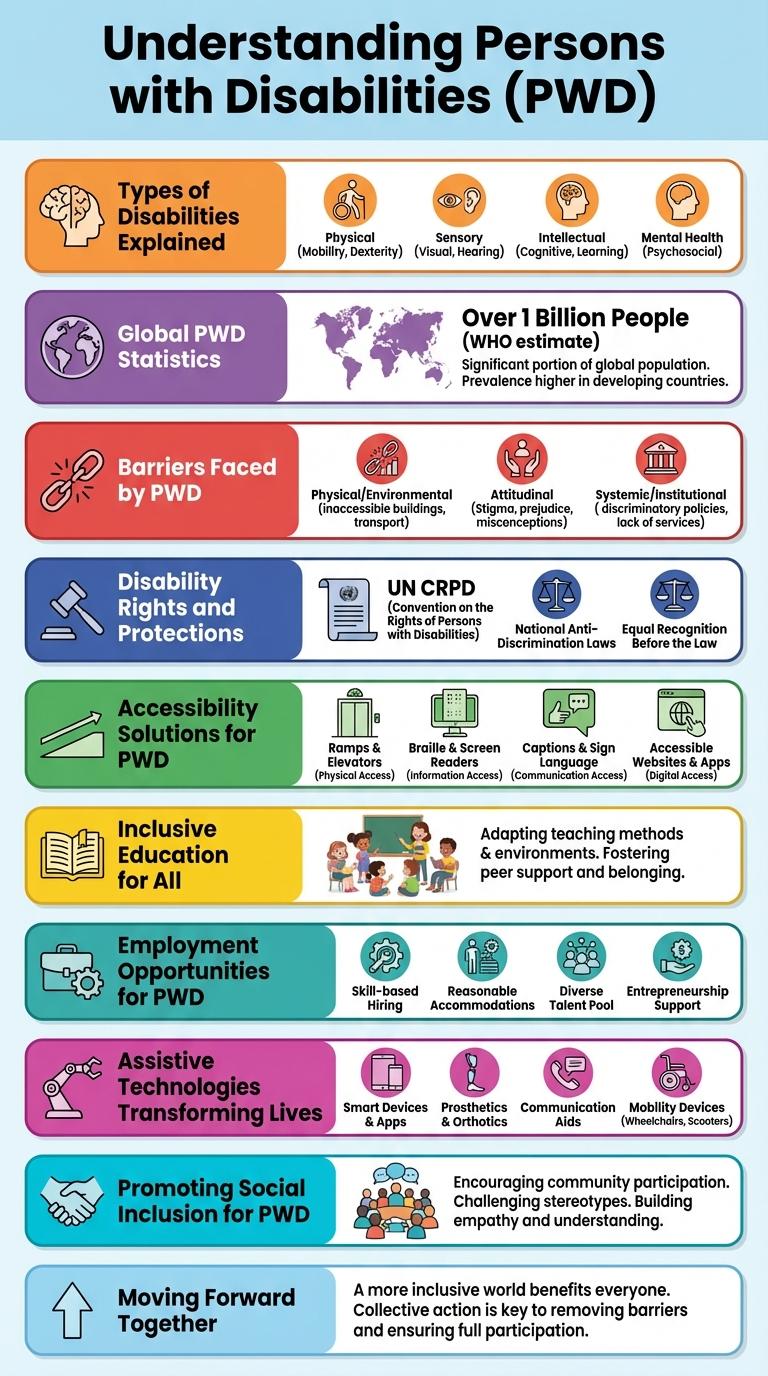
An infographic about persons with disabilities (PWD) visually highlights key statistics, challenges, and resources related to this community. It presents data on accessibility, employment, and social inclusion to raise awareness and foster understanding. Clear and concise visuals help communicate the importance of equal opportunities and support for PWD.
Understanding Persons with Disabilities (PWD)
Persons with Disabilities (PWD) refer to individuals who experience long-term physical, mental, intellectual, or sensory impairments. These impairments can hinder full participation in society on an equal basis with others.
Understanding PWD involves recognizing diverse challenges such as mobility issues, communication barriers, and social exclusion. Inclusive support and accessibility measures promote empowerment and equal opportunities for PWD across all aspects of life.
Types of Disabilities Explained
People with disabilities (PWD) experience a wide range of physical, sensory, intellectual, and mental health challenges. Physical disabilities may include mobility impairments like paralysis or amputation, while sensory disabilities cover vision and hearing loss. Intellectual and developmental disabilities affect cognitive functioning, whereas mental health disabilities relate to conditions such as anxiety or depression.
Global PWD Statistics
Persons with disabilities (PWD) comprise a significant portion of the global population, facing diverse challenges and opportunities. Understanding the statistics surrounding PWD helps drive inclusive policies and accessibility improvements worldwide.
Global data reveals the prevalence, distribution, and impact of disabilities across regions and age groups, emphasizing the need for targeted support and equal rights.
- 1 Billion PWD Globally - Over one billion people, approximately 15% of the world's population, live with some form of disability according to the World Health Organization.
- Higher Prevalence in Low-Income Countries - Disability rates are higher in low- and middle-income countries due to poorer access to healthcare, sanitation, and injury prevention.
- Age and Disability Correlation - The percentage of people with disabilities rises significantly with age, with nearly 46% of people over 60 experiencing some form of disability.
Barriers Faced by PWD
People with disabilities (PWD) encounter various barriers that limit their access to opportunities and services. These barriers impact their social inclusion, education, employment, and healthcare access.
Physical barriers include inaccessible buildings and transportation, preventing PWD from moving freely. Communication barriers arise from the lack of accessible formats like braille or sign language interpretation. Attitudinal barriers involve stigma and discrimination, leading to social exclusion and reduced opportunities.
Disability Rights and Protections
| Aspect | Details |
|---|---|
| Legal Frameworks | Americans with Disabilities Act (ADA), Rehabilitation Act, Individuals with Disabilities Education Act (IDEA) |
| Key Protections | Prohibition of discrimination in employment, education, public services, and accommodations |
| Accessibility Requirements | Accessible public buildings, transportation, communication systems, and digital content |
| Enforcement Agencies | U.S. Department of Justice (DOJ), Equal Employment Opportunity Commission (EEOC), Office for Civil Rights (OCR) |
| Rights Awareness | Public education campaigns, legal assistance programs, and advocacy organizations promote awareness of disability rights |
Accessibility Solutions for PWD
Accessibility solutions for persons with disabilities (PWD) enhance independence and inclusion in daily activities. These solutions address physical, sensory, and cognitive barriers to improve quality of life.
- Assistive Technologies - Devices like screen readers and hearing aids support communication and information access for PWD.
- Accessible Infrastructure - Ramps, tactile paving, and accessible restrooms enable mobility and physical access.
- Inclusive Digital Design - Websites and apps following WCAG guidelines ensure content is usable by people with various disabilities.
Implementing comprehensive accessibility solutions fosters equal opportunities for PWD in all environments.
Inclusive Education for All
Inclusive education ensures that students with disabilities (PWD) have equal access to quality learning opportunities alongside their peers. Schools that adopt inclusive practices use adaptive technologies and personalized teaching methods to accommodate diverse learning needs. Creating supportive environments fosters social integration, enhances academic success, and promotes respect for diversity among all students.
Employment Opportunities for PWD
Persons with disabilities (PWD) face unique challenges and opportunities in the workforce. Employment opportunities for PWD are expanding across various industries, promoting inclusivity and diverse talents.
Companies adopting inclusive hiring practices benefit from increased innovation and productivity. Government programs and accessibility initiatives support PWD in gaining meaningful employment and career growth.
Assistive Technologies Transforming Lives
How do assistive technologies improve the daily lives of persons with disabilities (PWD)? Assistive technologies provide essential tools that enhance communication, mobility, and independence for PWD. Devices like screen readers, hearing aids, and adaptive keyboards enable greater access to education and employment opportunities.