
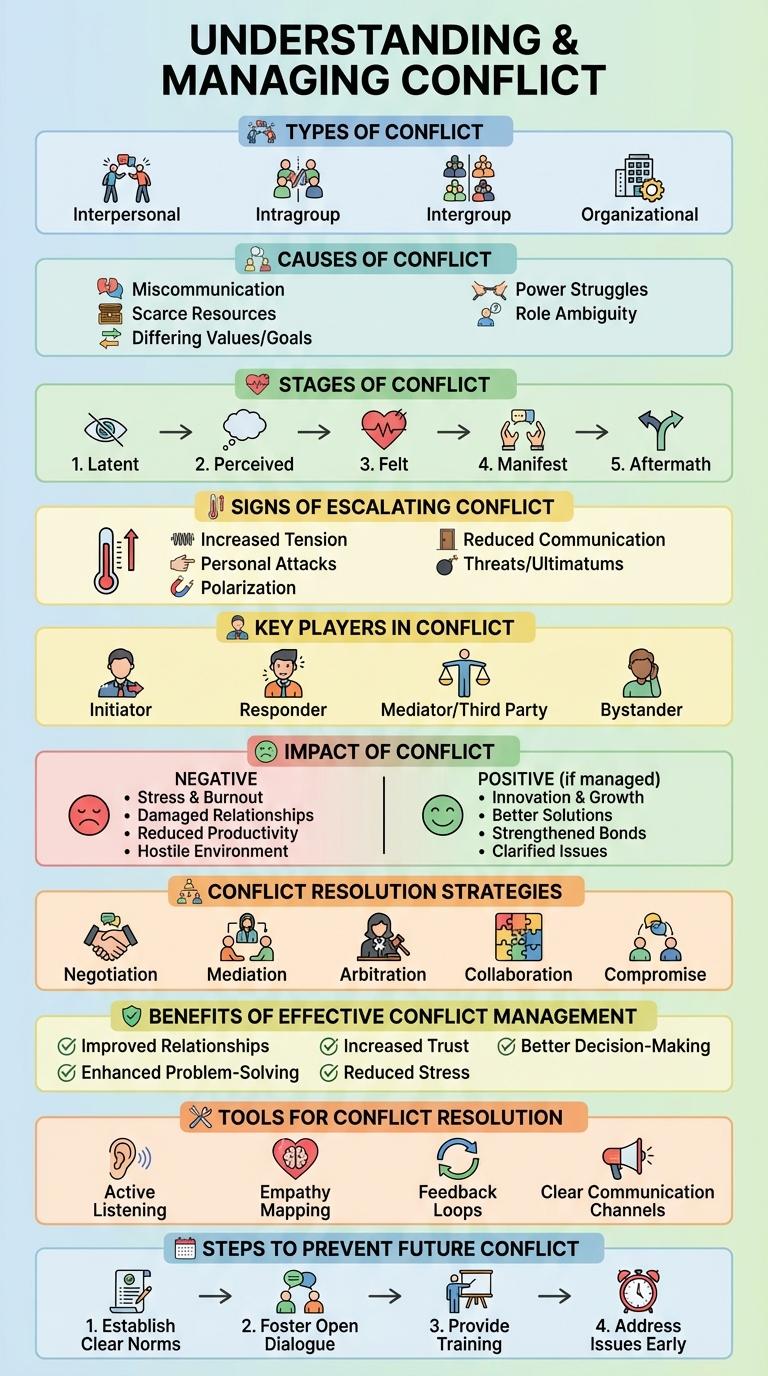
Conflicts arise from differing perspectives and interests, making understanding their root causes essential for effective resolution. Visualizing conflict dynamics through infographics simplifies complex information, highlighting key factors and consequences. This approach enhances comprehension, supports strategic communication, and facilitates collaborative problem-solving efforts.
Types of Conflict
Conflict arises from differing interests, values, or goals among individuals or groups. Understanding the types of conflict helps in managing and resolving disputes effectively.
Common types of conflict include interpersonal, intrapersonal, intergroup, organizational, and international conflicts. Each type presents unique challenges and requires tailored strategies for resolution.
Causes of Conflict
Conflict arises from various underlying causes that impact relationships and environments. Understanding these causes helps in managing and resolving disputes effectively.
- Resource Scarcity - Limited access to essential resources such as water, land, or money often triggers competition and disagreements.
- Communication Breakdown - Misunderstandings and lack of clear communication lead to conflicts between individuals or groups.
- Value Differences - Clashing beliefs, cultural norms, or personal values create tension and hinder consensus.
Stages of Conflict
| Stage of Conflict | Description |
|---|---|
| Latent Conflict | Underlying tensions or differences exist but have not yet surfaced. |
| Perceived Conflict | Parties become aware of the potential disagreement or threat. |
| Felt Conflict | Emotional involvement grows as participants feel stress, anxiety, or hostility. |
| Manifest Conflict | Open expression of conflict through actions, words, or behaviors. |
| Conflict Aftermath | Resolution or deterioration shapes future relationships and conflicts. |
Signs of Escalating Conflict
Recognizing signs of escalating conflict helps prevent misunderstandings and promotes resolution. Early detection is key to managing tensions before they intensify.
- Increased Tension - Communication becomes more strained and defensive as emotions heighten.
- Frequent Disagreements - Small issues trigger repeated arguments, showing patterns of unresolved conflict.
- Hostile Body Language - Non-verbal cues like crossed arms or avoiding eye contact indicate growing discomfort.
Addressing these signs proactively creates opportunities for effective conflict resolution.
Key Players in Conflict
Conflicts typically involve key players such as individuals, groups, and organizations, each influencing the dispute's dynamics. Understanding the roles and motivations of these players is essential for effective conflict resolution. Insight into key players helps identify the root causes and potential solutions to conflicts.
Impact of Conflict
Conflict influences both individuals and organizations, often resulting in stress, decreased productivity, and damaged relationships. Understanding its impact is essential for effective resolution strategies.
Emotional consequences include anxiety, anger, and reduced morale, which impair decision-making and creativity. Organizational impacts involve disrupted communication, lowered team cohesion, and increased turnover rates. Addressing conflict proactively can enhance collaboration and improve overall performance.
Conflict Resolution Strategies
What are the most effective conflict resolution strategies? Conflict resolution strategies help individuals and groups address disagreements constructively. These methods promote understanding and collaboration to achieve positive outcomes.
How does active listening aid in resolving conflicts? Active listening ensures all parties feel heard and understood. This approach reduces misunderstandings and fosters trust during resolution.
Why is compromising important in conflict resolution? Compromising allows both sides to make concessions for mutual benefit. It creates solutions where all involved parties gain some satisfaction.
How does mediation facilitate conflict resolution? Mediation introduces an impartial third party to guide negotiations. This neutral intervention helps find common ground and peaceful agreements.
What role does clear communication play in resolving conflicts? Clear communication minimizes confusion and prevents escalation. It helps express needs and concerns transparently to reach consensus.
Benefits of Effective Conflict Management
Effective conflict management promotes a healthier work environment by reducing stress and fostering collaboration among team members. It helps in resolving misunderstandings quickly, leading to improved communication and productivity.
Organizations with strong conflict resolution strategies experience higher employee satisfaction and retention rates. Addressing conflicts constructively also drives innovation by encouraging diverse viewpoints and problem-solving techniques.
Tools for Conflict Resolution
Conflict resolution involves using specialized tools to manage and resolve disputes effectively. Techniques such as active listening, negotiation, and mediation facilitate understanding and cooperation between conflicting parties. These tools empower individuals and organizations to reach mutually beneficial agreements and maintain healthy relationships.